Fixed Rope and Jumar Skills for Nepal's Peaks
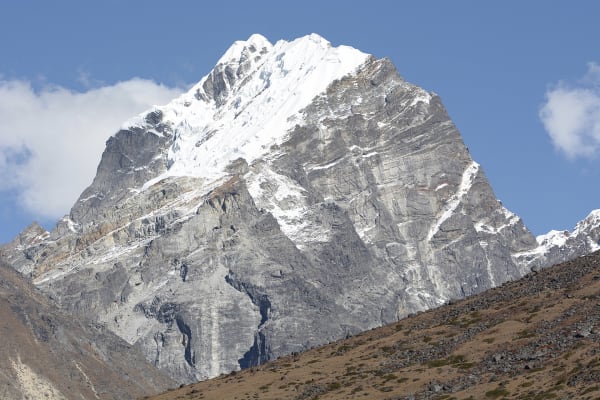
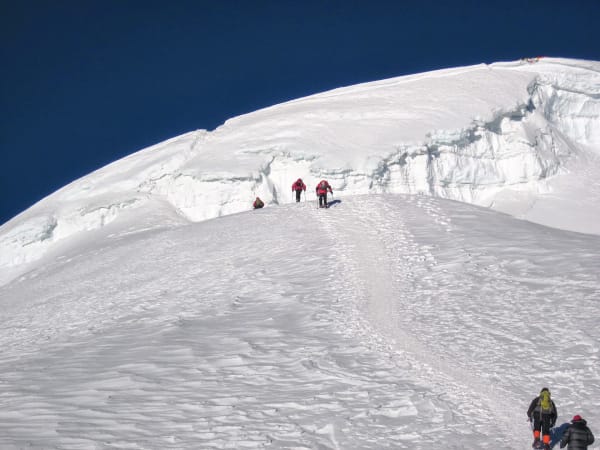
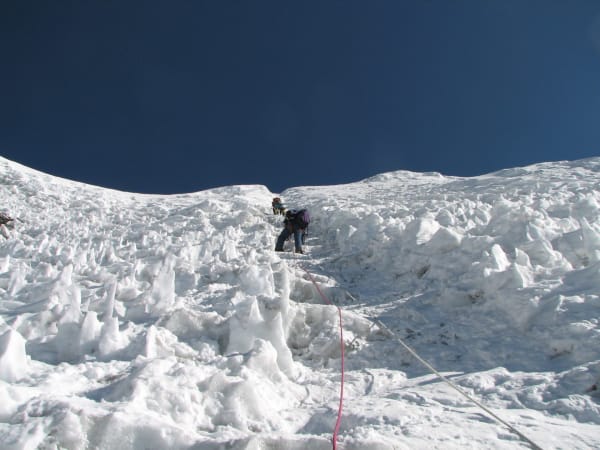
The technique that decides whether you summit: moving efficiently on fixed rope. Jumar mechanics, clipping past anchors, abseiling down, and the drills worth practising at home before you fly.
Founder & Trek Leader, Green Compass Treks
Bishow has been organising treks, peak climbs, and tours across Nepal for over a decade, from the teahouse trails of Annapurna and Everest to the restricted valleys of Mustang, Manaslu, and Dolpo. He writes the guides on this site from the trail itself — the permit desks, the lodge dining rooms, the pass crossings, and the questions guests actually ask before they book.
Every article here is written to answer a real planning question: when to go, what it costs, how hard it is, and which route fits the time you have. If something on the site is out of date or you need advice on a specific itinerary, get in touch — the team replies within 24 hours.

Showing 169–180 of 257 articles
The technique that decides whether you summit: moving efficiently on fixed rope. Jumar mechanics, clipping past anchors, abseiling down, and the drills worth practising at home before you fly.
Everything you need for a 6,000 m trekking peak — technical equipment, boots, clothing for a -25 °C summit morning — with clear notes on what we supply, what to hire in Kathmandu, and what must come from home.
Trekking peaks, expedition peaks and eight-thousanders all use different permit systems in Nepal. Current fees by group and season, the garbage deposit, liaison officers, the climbing guide requirement, and what insurance must say.
5,520 m in Langtang, reached by road from Kathmandu, with a short summit day and basic rope work — the gentlest genuine Himalayan climb in Nepal, and the right place to find out whether mountaineering suits you.
6,119 m above the Khumbu glacier, with mixed rock and ice, a long summit ridge and a genuine alpine feel — the trekking peak experienced climbers pick over Island Peak, and the standard warm-up for Ama Dablam.
Nepal's two most popular 6,000 m trekking peaks, compared on altitude, technical difficulty, summit day, approach, crowds and views — with a clear recommendation depending on your experience and what you want out of it.
6,476 m, the highest of Nepal's trekking peaks, and technically the most accommodating at that altitude. The Hinku valley approach, the glacier route, the summit view of five eight-thousanders, and why it suits a first climb.
Imja Tse, 6,189 m, in the Imja valley below Lhotse — the most climbed trekking peak in Nepal. The route, the headwall, summit day hour by hour, what can go wrong, and how it combines with Everest Base Camp.
Nepal's trekking peaks let a fit trekker reach 6,000 m with a week of skills rather than years of experience. Which peaks suit a first climb, what the summit day involves, what you need to learn, and how the permits work.
Everest and Annapurna take most of Nepal's trekkers. These fifteen routes take almost none — ranked by how remote they actually are, with honest notes on what you trade for the solitude.
A valley between Everest and Langtang with Gaurishankar above it, the Tsho Rolpa glacial lake, and a 5,755 m pass crossing into the Khumbu. One of the last genuinely wild valleys in central Nepal.
The base camp of a 7,132 m peak in Darchula, Nepal's most remote district, inside a conservation area almost no trekker has heard of. Fifteen days, a long approach, and a region where you will be the only foreigner for days.