

Gosaikunda Lake Trek
The Gosaikunda Lake Trek climbs from the Trishuli valley to a chain of high alpine lakes that are among the most importa
Porter
$193 $175/porter
No payment required yet
Trip Overview
The Gosaikunda Lake Trek climbs from the Trishuli valley to a chain of high alpine lakes that are among the most important pilgrimage sites in Nepal. Gosaikunda (4,380 m) is held in Hindu tradition to have been created by Shiva striking the mountainside with his trident, and each August during the Janai Purnima festival thousands of pilgrims walk up to bathe in its freezing water.
The trail leaves the road at Dhunche and climbs steeply through rhododendron and oak forest to the monastery settlement of Sing Gompa (3,330 m), known for its yak cheese factory, before breaking above the treeline onto a bare, rocky shelf where the lakes sit beneath the Langtang range. With only three walking days and a road head at both ends, it is one of the most efficient ways to reach 4,380 m from Kathmandu.
Trip Highlights
The Sacred Lakes of Gosaikunda (4,380 m): Reach a chain of high alpine lakes revered by Hindus and Buddhists alike, set in a bare rocky basin.
Sing Gompa and the Cheese Factory: Stay at a monastery settlement in the forest that has produced yak cheese for decades.
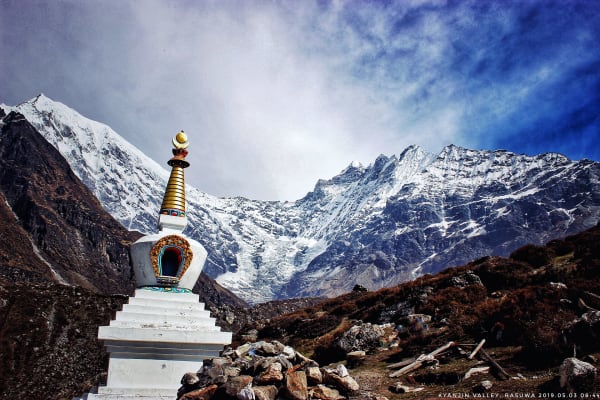
Langtang and Ganesh Himal Views: Take in Langtang Lirung, Ganesh Himal, and the Tibetan border ranges from the ridge above the lakes.
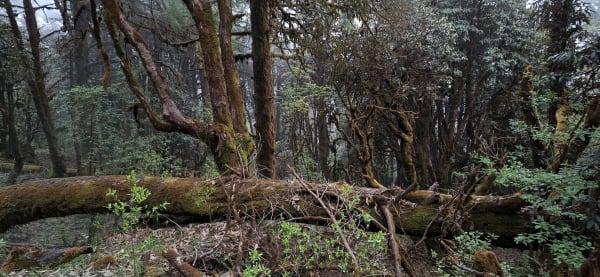
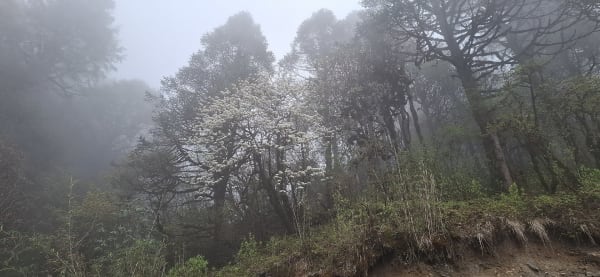
Rhododendron and Oak Forest: Climb through dense middle-hill forest rich in birdlife and, in spring, full of flowering rhododendron.
High Altitude in Seven Days: Reach 4,380 m and return to Kathmandu inside a week with only three walking days.
Itinerary
A 7-day trek from Dhunche through Sing Gompa to the sacred alpine lakes of Gosaikunda at 4,380 m, with only three walking days.
1Day 1Arrival in Kathmandu (1,400 m)
Arrival in Kathmandu (1,400 m)
You arrive at Tribhuvan International Airport in Kathmandu (1,400 m) and are met by our representative for the transfer to your hotel in Thamel.
Your guide runs the pre-trek briefing. The Gosaikunda trek is short, steep and high — it climbs from 1,950 m to a sacred alpine lake at 4,380 m in two walking days, which is a fast rate of ascent by any standard. We go through the plan carefully, because the altitude here catches people out precisely because the trek is short.
Gosaikunda is one of the most important pilgrimage sites in Nepal. In Hindu tradition the lake was created when Shiva struck the mountainside with his trident to slake his thirst after swallowing poison to save the world, and tens of thousands of pilgrims walk up during the Janai Purnima festival in August. Kit is checked; warm layers matter, as nights at the lake are cold year-round. Overnight in Kathmandu.
2Day 2Drive from Kathmandu (1,400 m) to Dhunche (1,950 m) via Trishuli
Drive from Kathmandu (1,400 m) to Dhunche (1,950 m) via Trishuli
A long day on the road north toward the Tibetan border. We leave Kathmandu early, climb the valley rim at Kakani — with a fine Himalayan view on a clear morning — and descend to the Trishuli river.
The road follows the Trishuli north through Trishuli Bazaar, then begins the long climb into Rasuwa district on a narrow route cut into steep hillsides. Terraced farmland falls away below and the Ganesh Himal rises to the west. This is Tamang country, and the villages along the way have a distinctly Tibetan-influenced character.
Dhunche (1,950 m) is the district headquarters of Rasuwa and the entry point for Langtang National Park, where trekking permits are registered. The drive takes six to seven hours. Arriving in the afternoon leaves time to walk around the town and get an early night. Overnight in Dhunche.
3Day 3Trek from Dhunche (1,950 m) to Sing Gompa/Chandanbari (3,330 m)
Trek from Dhunche (1,950 m) to Sing Gompa/Chandanbari (3,330 m)
A serious climbing day — nearly 1,400 m of ascent, and the biggest single gain of the trek.
The trail leaves Dhunche, drops briefly to cross the Trishuli Khola, and then climbs steeply and almost continuously through dense forest. The vegetation changes as you gain height: oak and rhododendron give way to hemlock, fir and blue pine, and the air cools noticeably. In spring the rhododendrons flower right along this section.
Sing Gompa (3,330 m), also called Chandanbari, sits on a forested shoulder with an old Buddhist monastery and a small yak cheese factory that has been running since the 1950s — the cheese is genuinely good and worth buying. From the clearing there are views west toward the Ganesh Himal and Manaslu. The climb has been steep and you have gained a lot of height quickly, so drink plenty and eat well. Overnight in Sing Gompa.
4Day 4Trek from Sing Gompa/Chandanbari (3,330 m) to Gosaikunda Lake (4,380 m)
Trek from Sing Gompa/Chandanbari (3,330 m) to Gosaikunda Lake (4,380 m)
The day you reach the lakes, and another big climb — a further 1,050 m to well over 4,000 m.
The trail climbs steadily out of the forest to Lauribina (3,910 m), where the trees stop and the landscape becomes open alpine ridge. From here the walking is exposed and the views are immense: south and west across a sea of foothills to Manaslu (8,163 m), the Ganesh Himal and, on clear days, the Annapurnas far in the distance.
Continuing along the ridge, the trail passes the first two lakes — Saraswati Kunda and Bhairav Kunda — before Gosaikunda (4,380 m) itself comes into view, a deep blue lake held in a bowl of bare rock beneath Surya Peak. A cluster of simple lodges sits on the shore, and a large white boulder in the water is said by pilgrims to be the shrine of Shiva. It is cold, thin-aired and genuinely striking. Overnight at Gosaikunda.
5Day 5Trek from Gosaikunda Lake (4,380 m) to Dhunche (1,950 m)
Trek from Gosaikunda Lake (4,380 m) to Dhunche (1,950 m)
Worth waking for sunrise: first light on the peaks reflected in the lake, before any wind disturbs the surface, is the image most people take away from this trek.
After breakfast we begin the long descent, retracing the ridge past Bhairav Kunda and Saraswati Kunda to Lauribina (3,910 m) and down into the forest. The relief in your breathing as you drop below 3,500 m is immediate and obvious.
The trail continues down through Sing Gompa (3,330 m) and then descends steeply through hemlock and rhododendron all the way to Dhunche (1,950 m). This is around 2,400 m of descent in a single day, almost all of it steep, and it is hard on the knees — trekking poles are strongly recommended and a steady pace beats speed. Overnight in Dhunche.
6Day 6Drive from Dhunche (1,950 m) to Kathmandu (1,400 m)
Drive from Dhunche (1,950 m) to Kathmandu (1,400 m)
The drive back to the capital, retracing the route in. We check out at the Langtang National Park office in Dhunche and then follow the road south along the high hillsides of Rasuwa.
The views over terraced farmland toward the Ganesh Himal are excellent for the first hour or two, before the road drops to the Trishuli river and follows it down to Trishuli Bazaar. The last section climbs over the Kakani ridge, which on a clear day gives a final long view of the Himalayan skyline before the descent into the Kathmandu Valley.
The journey takes six to seven hours with a lunch stop, arriving in Kathmandu in the afternoon. After transferring to your hotel the evening is free — a hot shower, a proper meal and a wander through Thamel. Overnight in Kathmandu.
7Day 7Departure from Kathmandu (1,400 m)
Departure from Kathmandu (1,400 m)
Your last day in Nepal. If your flight leaves later there is time for one more site. Given that you have just walked to a lake sacred to Shiva, Pashupatinath — the most important Shiva temple in the country, on the banks of the Bagmati — is the obvious choice; Boudhanath and Swayambhunath are both close by.
Our representative will collect you from your hotel and transfer you to Tribhuvan International Airport approximately three hours before departure.
The Gosaikunda Lake trek packs a remarkable amount into a week: no domestic flight, a climb from 1,950 m to 4,380 m, a ridge walk with Manaslu and the Ganesh Himal laid out below, and one of the most significant pilgrimage lakes in the Himalaya. If you would like to link it with the Langtang valley, the two combine over the Lauribina La. Safe travels.
Inclusions & Exclusions
Private transport to and from Dhunche, Kathmandu accommodation, teahouse lodging, all trekking meals, national park permits, a licensed guide, trekking map, first aid, and government taxes are included, while international flights, visa, insurance, personal gear, porter service, city meals, personal expenses, and tips are excluded.
What's Included
Airport pickup and drop-off services in Kathmandu.
Private transportation from Kathmandu to Dhunche and back to Kathmandu as per the itinerary.
Accommodation in Kathmandu with breakfast.
Accommodation in local teahouses during the trek.
Langtang National Park Entry Permit and required trekking permits.
Professional English-speaking licensed trekking guide.
Three meals a day (breakfast, lunch, and dinner) during the trek.
Group trekking map for route guidance.
First aid kit carried by the guide.
All government taxes, permit fees, and service charges.
What's Excluded
International flight tickets to and from Nepal.
Nepal entry visa fees.
Travel insurance, including emergency helicopter evacuation coverage.
Personal trekking equipment and clothing.
Porter services (available at an additional cost).
Lunch and dinner in Kathmandu.
Snacks, bottled water, hot showers, Wi-Fi, charging fees, and alcoholic or soft drinks.
Personal expenses such as laundry, phone calls, and souvenirs.
Tips for guides, drivers, and support staff.
Any additional accommodation, transportation, or expenses caused by unforeseen circumstances beyond the itinerary.
Route Map
Explore the terrain map showing the trek route.
Loading map...
Altitude Profile
Pricing
Transparent per-person pricing based on group size, covering the services listed in the itinerary with no hidden charges.
Add-ons
Customize your trek with optional services such as porter support and other personalized arrangements at an additional cost.
Best Time to Trek
March to May and October to November are the two main seasons. Spring brings flowering rhododendron on the climb from Dhunche and reliable weather at the lakes. Autumn gives the clearest views across to Langtang Lirung and Ganesh Himal and the most settled conditions on the exposed shelf above Sing Gompa.
Winter brings heavy snow to the lake basin and the trail above Sing Gompa is frequently impassable between January and March, with the lakes themselves frozen. The monsoon is generally poor for views, but it is worth knowing that August brings the Janai Purnima pilgrimage, when thousands of devotees walk to the lakes — an extraordinary spectacle, if you are willing to accept rain and cloud in exchange.
For a month-by-month look at weather and trail conditions, see our guide to the best time to trek in Nepal.
Altitude & Acclimatization
This is a short trek that reaches a genuinely high altitude, and the profile deserves respect. You sleep at 1,950 m in Dhunche, 3,330 m at Sing Gompa, and 4,380 m at Gosaikunda on consecutive nights — a gain of well over 1,000 m on each of the two climbing days, which is faster than the usual guidance.
Mild headache and disturbed sleep at Gosaikunda are common as a result. Your guide will set a deliberately slow pace on the climb from Sing Gompa and will check the group carefully on arrival at the lakes. Drink at least three litres of water a day from the first day, avoid alcohol entirely, and report symptoms early — the descent from Gosaikunda back toward Dhunche is quick and resolves altitude illness reliably. If you have time, adding an extra night at Sing Gompa makes this trek significantly more comfortable, and we are happy to build it in.
Prevention, symptoms and treatment are covered in depth in our guide to altitude sickness in Nepal.
Travel Insurance
Travel insurance covering trekking to at least 5,000 m is required, giving a safe margin over the Gosaikunda lakes at 4,380 m. Standard policies often cap at 3,000 m, which would leave you uninsured for the highest and most exposed part of the route, so check the altitude clause specifically before you buy.
The policy must include emergency helicopter evacuation and medical treatment. Above Sing Gompa there is no road access and the altitude gain on this short itinerary makes altitude illness more likely than on a longer route, so evacuation cover is not a formality here. Send us your policy number and the insurer's 24-hour emergency contact before you leave Kathmandu.
Our guide to travel insurance for trekking in Nepal explains the altitude limits, evacuation terms and common exclusions to check before you buy.
Packing List
The lake basin is exposed, windy, and much colder than the forest below. Bring waterproof trekking boots, three base layers, a fleece, an insulated down jacket, a windproof and waterproof shell jacket and trousers, trekking trousers, a warm hat, sun hat, gloves, and wool socks. A sleeping bag rated to -10°C is right for the Gosaikunda lodge, which is unheated at night.
Also pack a 30-litre daypack, trekking poles for the steep descent back to Dhunche, a headlamp with spare batteries, high-SPF sunscreen and lip balm, sunglasses for the glare off snow and water, a reusable bottle with purification tablets or a filter, a small first aid kit with blister care, a quick-dry towel, toiletries, and a power bank, since charging at the lakes is solar-only and limited.
For the complete kit list, organised by the altitude you will reach, see our Nepal trekking packing list.
Accommodation, Food & Drinking Water
You stay in a tourist-standard hotel in Kathmandu and in teahouses at Dhunche, Sing Gompa, and Gosaikunda. Dhunche and Sing Gompa have reasonable lodges with twin rooms, blankets, and warm dining rooms. The lodges at Gosaikunda are the most basic on the route — simple rooms, shared toilets, no heating outside the dining room, and limited water — and they fill quickly during festival periods.
Three meals a day are included on the trek. Menus are short: dal bhat with free refills, noodle soup, fried rice, eggs, chapati, potatoes, and porridge. Sing Gompa is worth stopping at for its locally made yak cheese, which appears on the menu in various forms. Everything at the lakes is carried up on foot, so prices rise and choice narrows. Refill your bottle at the lodges and treat it with tablets, a filter, or a UV pen; the lake water itself is sacred and should not be used for washing or drinking.
What the lodges are really like, from rooms and meals to showers and charging, is covered in our guide to teahouse trekking in Nepal.
Frequently Asked Questions
Find quick answers to common questions about the Gosaikunda Lake Trek.
1How many hours do we walk each day?
Five to seven hours on each of the three walking days. The Dhunche to Sing Gompa climb takes around five to six hours, Sing Gompa to Gosaikunda is five to six hours, and the long descent from the lakes all the way back to Dhunche takes six to seven.
2Which permits are required and do you arrange them?
You need the Langtang National Park Entry Permit and trekking registration. Both are included in your package and arranged by our team from passport copies and passport-sized photographs sent before departure.
3Can I bathe in the lake?
Gosaikunda is an active pilgrimage site and the water is treated as sacred. Ritual bathing is done by pilgrims, particularly at Janai Purnima. Trekkers should not swim, wash, or use soap in or near the lakes, and your guide will point out where washing water can be drawn.
4How long is the drive from Kathmandu to Dhunche?
Around seven to eight hours on a winding mountain road via Trishuli. The road is sealed for much of the way but slow, and the journey can take longer after the monsoon when repairs are in progress.
5What is the Janai Purnima festival like?
During the August full moon, thousands of Hindu pilgrims walk up to Gosaikunda to bathe and renew their sacred thread. Lodges are overwhelmed and the trail is crowded, but it is one of the most remarkable religious gatherings in the Himalaya. It requires accepting monsoon weather and booking well ahead.
6Is mobile network and Wi-Fi available?
Coverage is reasonable at Dhunche and Sing Gompa and patchy at the lakes. Wi-Fi is sold at some lodges but is slow and frequently unavailable. Plan on being effectively offline at Gosaikunda.
7Can I charge my devices on the trail?
Charging is available at Dhunche and Sing Gompa for a small fee. At Gosaikunda it is solar-only and limited, particularly after cloudy days, so bring a fully charged power bank.
8Where can I withdraw cash?
There is an ATM in Dhunche but it is unreliable and often out of cash. Carry all your Nepalese rupees from Kathmandu for meals, snacks, charging, hot water, and tips.
9Can the trek be extended over the Laurebina Pass?
Yes. From Gosaikunda the trail continues over Laurebina Pass (4,610 m) into Helambu, adding four to five days and turning the route into a traverse rather than an out-and-back. Tell us before booking if you would like that itinerary instead.
10Can I leave extra luggage in Kathmandu?
Yes. Your Kathmandu hotel stores anything you do not need on the trail free of charge until you return.
Gallery
Explore authentic moments, landscapes, and mountain views from the Gosaikunda Lake Trek.
Trekking Guides & Articles
Gosaikunda Lake Trek: Sacred Lakes at 4,380 m — A chain of glacial lakes at 4,380 m, sacred to Hindus and Buddhists and the destination of a mass August pilgrimage.
Panch Pokhari Trek: Five Sacred Lakes in the Jugal Himal — Five glacial lakes at 4,620 m beneath Dorje Lakpa, a pilgrimage site with almost no trekking infrastructure, east of Langtang.
Helambu Trek: The Complete Guide — The trek that starts where the Kathmandu valley ends — out of Sundarijal on foot, no domestic flight, nothing above 3,700 m.
Ama Yangri Trek: A Sacred Ridge Five Days from Kathmandu — Five days from Kathmandu to a prayer-flagged summit above the Hyolmo Sherpa villages of Helambu, with Langtang Lirung, Dorje Lakpa and the Jugal Himal on the skyline.
Langtang Helicopter Tour from Kathmandu: The Complete Guide — The closest high valley to Kathmandu and the least flown — a morning to Kyanjin Gompa at 3,870 m, with about thirty minutes on the ground at the last village in the valley.
Langtang After the 2015 Earthquake: What Happened and Why Go Now — The 2015 earthquake destroyed Langtang village and much of the valley's trekking economy.
Fix Departure
This trek runs every week on the selected day. Choose custom dates for one-off departures.
Showing fixed departures in Oct 2026
Guest Reviews
A pilgrimage to remember
“The Gosaikunda Lake Trek was a deeply moving and beautifully organised experience. Everything — transport, accommodation, timing — was arranged with great care. Beautifully organised and deeply reward...
Lorenzo Cole
Get in Touch
Tell us the dates you have in mind and roughly what you want out of the trek — one of our guides will reply, usually within 24 hours.
Email Us
info@greencompasstreks.com
Call Us
+977 9864379436
Office
Lakeside, Pokhara, Nepal
Office Hours
Sunday – Friday, 9:00 AM – 9:00 PM
Similar Treks
You might also like these treks

Porter
$193 $175/porter
No payment required yet