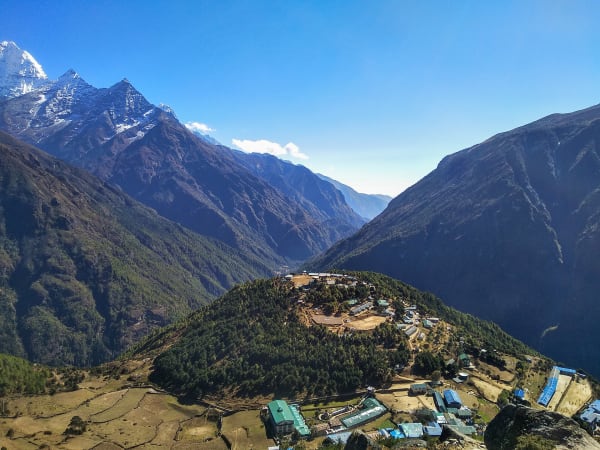
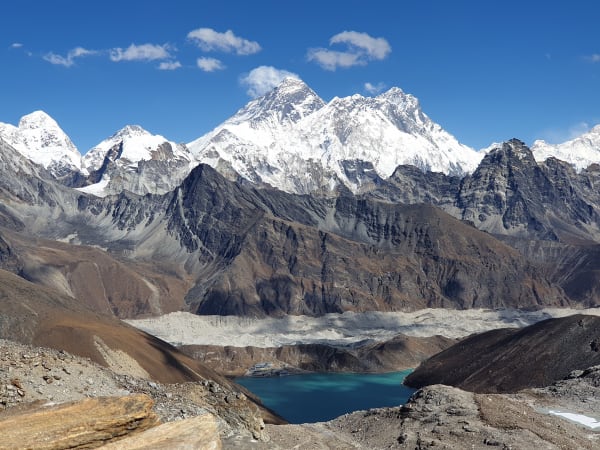
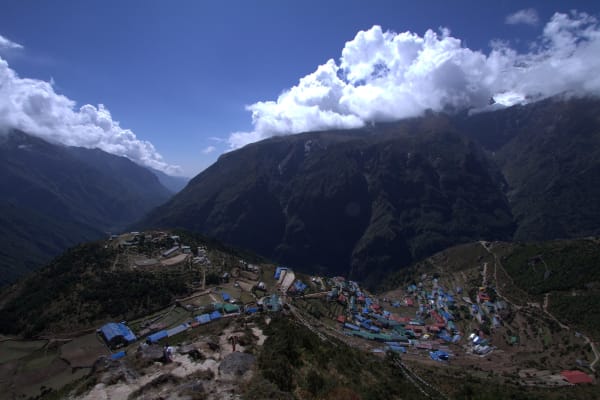
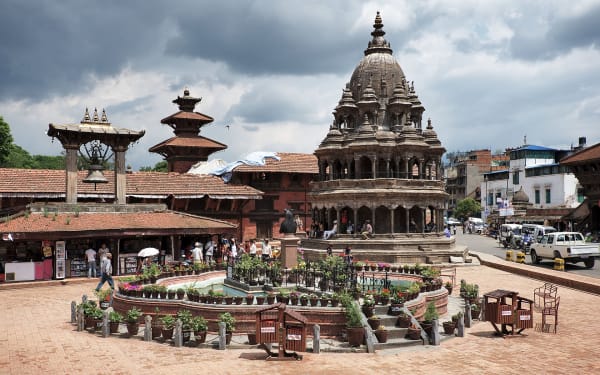
At 3,867 metres, on a ridge with Everest, Lhotse and Ama Dablam standing behind it, Tengboche is the best-known monastery in the Khumbu. For most of the year trekkers stop for an hour, sit in on the afternoon prayers and walk on. For three days each autumn the courtyard fills instead with Sherpa families from every village in the valley, and the monks dance.
Mani Rimdu is the most important festival of the Sherpa year, and in 2026 its public days fall on 26, 27 and 28 October — the heart of the trekking season, and the day after Dashain ends in the lowlands. If you are walking to Everest Base Camp around then, a day's adjustment to your schedule puts you in the courtyard.
What Mani Rimdu Is
The festival came to the Khumbu from Rongbuk monastery, on the Tibetan side of Everest, in the early twentieth century. Its name joins mani, the prayer of Chenrezig, the bodhisattva of compassion, with rilbu, the small red pills the monks bless over the course of the ritual and hand out at the end.
The whole observance lasts about nineteen days, and most of it is closed. The monks build a mandala from coloured sand, grain by grain, and recite the mantra over it and over the pills for more than two weeks. Only the last three days are public. They are a celebration, a blessing, and a retelling in dance of how Buddhism overcame the older gods of Tibet.
For background on the monastery itself and the culture around it, see Tengboche monastery and Sherpa culture.
The Three Public Days in 2026
| Date | Day | What happens |
|---|---|---|
| Monday 26 October | Wong — the empowerment | The abbot gives a public blessing. Everyone present files past to receive the blessed pills and a long-life thread. Held on the full moon. |
| Tuesday 27 October | Chham — the masked dances | The main day. Monks in brocade robes and painted masks perform a sequence of sixteen dances in the courtyard, from mid-morning to late afternoon. |
| Wednesday 28 October | Jinsak — the fire ceremony | Offerings are burned to dispel harm, and the sand mandala is swept away and given to the river. |
If you can be there for only one day, make it the 27th. The dances are slow, deliberate and long — this is ritual, not theatre — but two of them break the solemnity on purpose. Mi Tshering, the old man, and the comic yogi who follows him clown through the crowd and are the part every child in the valley has come for.

When to Leave Lukla
Tengboche is four trekking days from Lukla on a proper acclimatisation schedule: Phakding, Namche Bazaar, a rest day in Namche, then Tengboche. The rest day is not optional — Namche is at 3,440 metres and the climb to it is where altitude problems usually begin. Our Namche acclimatisation guide explains why.
| Fly to Lukla on | Reach Tengboche on | You see |
|---|---|---|
| Thursday 22 October | Sunday 25 October | All three days, with a spare |
| Friday 23 October | Monday 26 October | The blessing, the dances and the fire ceremony |
| Saturday 24 October | Tuesday 27 October | The dances, if you leave Namche at first light |
Build in a buffer. Lukla flights are the least reliable part of any Everest trek and late October is their busiest week; a single day's delay turns the third row of that table into a miss. Flying on the 22nd is the safe choice. The mechanics are in our Lukla flight guide.
Note the overlap with Dashain. The tika is on 21 October, so flying on the 22nd means arranging permits, cash and your guide before the holiday closes offices. See Everest Base Camp during Dashain.
Where to Sleep
Tengboche itself has only a handful of lodges, and during the festival they are booked weeks ahead by groups. There are three ways round that.
- Deboche, twenty minutes down through the rhododendron forest on the far side of the ridge, has several lodges and is where most independent trekkers end up. Walk up in the morning.
- Pangboche, about ninety minutes further on, works if you watch the dances and continue the same afternoon.
- Phortse or Kyangjuma, on the Namche side, for an early start and a long day.
Whichever you choose, have the room reserved before you leave Namche. A guide with a phone and a relationship with the lodge owners is worth a great deal this week. It is one of the practical reasons to walk the Everest Base Camp trek with an agency during the festival rather than alone.
Watching the Dances
- Arrive early. The courtyard is small. Local families have precedence on the ground floor; visitors are usually directed to the upper gallery. Be seated by nine.
- Dress for sitting still. The courtyard is in shade for much of the day and the wind comes straight off the glaciers. A down jacket, hat and something to sit on.
- Photography is normally allowed in the courtyard, sometimes for a small fee, and never with flash. Inside the prayer hall, ask first and expect to be told no.
- Stay off the dance floor and out of the monks' way; the space that looks empty is in use.
- Give something. The festival is paid for by the community. A donation in the box at the door is expected and appreciated.
- Join the queue for the blessing on the first day if you wish. Visitors are welcome; bow your head, take what is handed to you with both hands.
After dark on the first two evenings the villagers hold their own party, with Sherpa line dancing and chhang in the lodges. You will be pulled in.
Fitting It Into a Trek
A festival day at Tengboche costs a standard itinerary nothing if you plan it, because most schedules already include a second acclimatisation day at Dingboche, and a day spent at 3,867 metres does some of the same work.
- On the Everest Base Camp trek, spend two nights at Tengboche or Deboche instead of one, then continue to Dingboche as normal.
- On the Everest View trek, Tengboche is the turning point, so the festival becomes the destination — a week in total, and no altitude above 3,900 metres.
- On the Gokyo Lakes trek, make the detour to Tengboche from Namche first, then cross to the Gokyo valley by Phortse.
If the autumn dates do not suit you, the same festival is held at Thame monastery in May and at Chiwong, in the lower Solu region, usually a few weeks after Tengboche. Both are smaller and far less visited. Chiwong combines well with the Pikey Peak trek.