

ABC Trek Nepal
The ABC Trek Nepal, also known as the Annapurna Base Camp Trek, is a spectacular Himalayan adventure through lush forest
Porter
$193 $175/porter
No payment required yet
Trip Overview
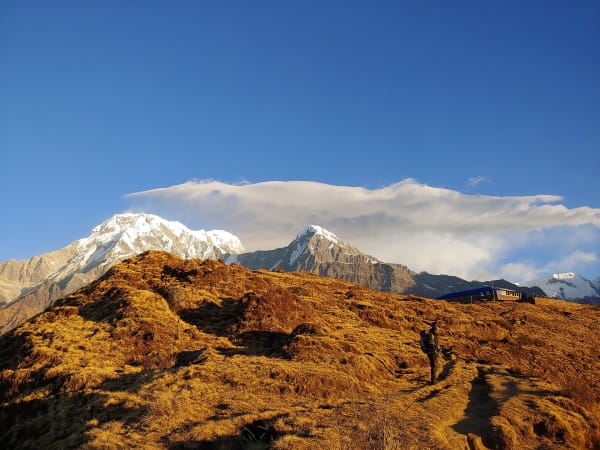
The ABC Trek Nepal, also known as the Annapurna Base Camp Trek, is a spectacular Himalayan adventure through lush forests, terraced hillsides, traditional mountain villages, and dramatic alpine landscapes. Starting from the Pokhara region, the trail passes through beautiful settlements and rhododendron forests before entering the Annapurna Sanctuary and reaching Annapurna Base Camp at 4,130 m. Along the journey, trekkers enjoy breathtaking views of Annapurna South, Annapurna I, Machhapuchhre (Fishtail), Hiunchuli, and other Himalayan peaks.
The trek offers a perfect combination of natural beauty, Himalayan culture, and adventure. Trekkers can experience traditional teahouse hospitality, local Gurung and Magar communities, waterfalls, forests, and changing mountain landscapes. With its rewarding trails and spectacular scenery, the ABC Trek Nepal is an ideal choice for travelers seeking an unforgettable Himalayan trekking experience in a relatively short timeframe.
Trip Higlights
Iconic Annapurna Base Camp Trek: Reach the spectacular Annapurna Base Camp at 4,130 m, surrounded by some of Nepal’s most impressive Himalayan peaks.
Explore the Annapurna Sanctuary: Trek deep into the natural amphitheater of the Annapurna Sanctuary, enclosed by towering snow-capped mountains.
Diverse Himalayan Landscapes: Experience changing scenery from lush forests and terraced hillsides to alpine meadows, rugged terrain, and dramatic mountain landscapes.
Breathtaking Mountain Views: Enjoy close-up views of Annapurna I, Annapurna South, Machhapuchhre (Fishtail), Hiunchuli, and Gangapurna throughout the journey.
Authentic Mountain Culture: Pass through traditional villages, stay in local teahouses, and experience the warm hospitality and culture of the Himalayan communities.
Itinerary
A scenic 5-day Annapurna Base Camp Trek through lush forests, mountain villages, and spectacular Himalayan landscapes, reaching Annapurna Base Camp at 4,130 m before returning to Pokhara.
1Day 1Day 1: Drive from Pokhara (822 m) to Jhinu Danda (1,780 m) and Trek to Lower Sinuwa (2,340 m)
Day 1: Drive from Pokhara (822 m) to Jhinu Danda (1,780 m) and Trek to Lower Sinuwa (2,340 m)
The ABC trek starts with a jeep transfer out of Pokhara (822 m) in the early morning. The road runs north-west through Hemja and Nayapul before turning up the Modi Khola valley, deteriorating into rough track as it climbs. Allow around three hours to Jhinu Danda (1,780 m).
Boots on, the trail immediately drops to a suspension bridge over the Modi Khola and then climbs — hard — up the stone staircase to Chhomrong (2,170 m). This Gurung village is the gateway to the Annapurna Sanctuary and the last place with proper shops. Take the chance to look up the valley: the wall of Annapurna South fills the head of it.
From Chhomrong the route drops sharply to the Chhomrong Khola, crosses on a steel bridge, and climbs back through terraced fields and bamboo stands to Lower Sinuwa (2,340 m). It is a demanding first day with a lot of vertical in both directions, and the teahouse at Sinuwa is a welcome sight. Overnight at Lower Sinuwa.
2Day 2Trek from Lower Sinuwa (2,340 m) to Deurali (3,230 m)
Trek from Lower Sinuwa (2,340 m) to Deurali (3,230 m)
Breakfast at Sinuwa, then into the forest. The path traverses at a fairly even grade at first, passing through Bamboo (2,310 m) where the valley closes in and the vegetation becomes genuinely jungly — thickets of bamboo, dripping moss, and the constant noise of the river below.
After Bamboo the trail turns upward and stays that way. You climb through Dovan (2,600 m) and past the shrine at Himalaya, gaining height steadily along the west bank of the Modi Khola. The gorge tightens, the trees thin, and waterfalls spill across the trail. This stretch is often damp, so watch your footing on the wet stone.
The final push climbs out of the treeline into a rocky defile and reaches Deurali (3,230 m), a small group of lodges wedged into the narrowest part of the valley. You have gained nearly 900 m today and are now high enough that altitude matters — hydrate well and take it easy this evening. Overnight at Deurali.
3Day 3Trek from Deurali (3,230 m) to Annapurna Base Camp (4,130 m)
Trek from Deurali (3,230 m) to Annapurna Base Camp (4,130 m)
The big day. From Deurali the trail continues up the gorge, crossing slopes that carry avalanche risk in late winter and spring — your guide will check conditions and set the pace accordingly. The vegetation gives out entirely and the walking becomes rock, scree and snowmelt.
The valley suddenly widens at Machhapuchhre Base Camp (3,700 m), where a few lodges sit on grass directly under the fluted ice of Machhapuchhre — the sacred fishtail peak that has never been officially summited. We stop for tea and to let everyone acclimatise before the last stretch.
The final two hours climb gently across moraine and meadow into the Annapurna Sanctuary itself, arriving at Annapurna Base Camp (4,130 m). You finish standing in a glacial bowl enclosed by Annapurna I (8,091 m), Annapurna South (7,219 m), Hiunchuli, Gangapurna, Tent Peak and Machhapuchhre. There is nowhere else in Nepal where so many big peaks stand so close on every side. Overnight at base camp.
4Day 4Trek from Annapurna Base Camp (4,130 m) to Bamboo (2,310 m)
Trek from Annapurna Base Camp (4,130 m) to Bamboo (2,310 m)
Set an alarm for dawn. The sunrise from base camp lights Annapurna I first, then works its way around the rim of the Sanctuary peak by peak. It is bitterly cold for the twenty minutes it takes, and completely worth it. Photograph it, then go back in for a hot breakfast.
The descent begins after eating. You retrace the route across the meadow to Machhapuchhre Base Camp and then drop back into the gorge toward Deurali, losing height fast. The change is physical and immediate — breathing gets easier by the hour, and by Himalaya you are back among trees.
The trail continues down through Dovan and into the humid green of the lower valley, finishing at Bamboo (2,310 m). Today covers more than 1,800 m of descent on uneven stone steps, which is tough on knees and quads; poles help enormously. Overnight at Bamboo.
5Day 5Trek from Bamboo (2,310 m) to Jhinu Danda (1,780 m) and Drive to Pokhara (822 m)
Trek from Bamboo (2,310 m) to Jhinu Danda (1,780 m) and Drive to Pokhara (822 m)
The last walking day retraces the forest trail through Upper and Lower Sinuwa, then drops to the Chhomrong Khola and climbs the stone steps back up to Chhomrong (2,170 m) — a sting in the tail after four hard days, but a short one.
From Chhomrong it is a steady descent to Jhinu Danda (1,780 m). Twenty minutes further down, on the bank of the Modi Khola, are the Jhinu hot springs: stone-walled pools fed by natural thermal water, with the river running cold and loud beside them. If the schedule allows, this is the perfect way to finish the trek.
A jeep collects us at Jhinu Danda for the drive back down the valley to Pokhara (822 m), arriving late afternoon. Your ABC trek ends here, with the Annapurna range visible above the lake as a reminder of where you have just been. Overnight in Pokhara.
Inclusions & Exclusions
Everything you need for a comfortable 5-day Annapurna Base Camp Trek is included, while personal expenses, international travel, insurance, and optional services are excluded.
What's Included
Private transportation from Pokhara to Jhinu Danda and Jhinu Danda to Pokhara as per the itinerary.
Accommodation in local teahouses during the trek.
Annapurna Conservation Area Permit (ACAP) and required trekking permits.
Professional English-speaking licensed trekking guide.
Three meals a day (breakfast, lunch, and dinner) during the trek.
Group trekking map for route guidance.
First aid kit carried by the guide.
All government taxes, permit fees, and service charges.
What's Excluded
Travel insurance, including emergency helicopter evacuation coverage.
Personal trekking equipment and clothing.
Porter services (available at an additional cost).
Accommodation and meals in Pokhara unless mentioned in the itinerary.
Snacks, bottled water, hot showers, Wi-Fi, charging fees, and alcoholic or soft drinks.
Personal expenses such as laundry, phone calls, and souvenirs.
Tips for guides, drivers, and support staff.
Any additional accommodation, transportation, or expenses caused by unforeseen circumstances beyond the itinerary.
Route Map
The route map shows the complete 5-day Annapurna Base Camp Trek, from Pokhara through Jhinu Danda and Annapurna Base Camp, before descending back to Pokhar
Loading map...
Altitude Profile
Pricing
Our ABC Trek Nepal package includes essential trekking services such as permits, accommodation, meals, transportation, and an experienced guide for a safe and enjoyable Himalayan adventure.
Add-ons
Customize your ABC Trek Nepal experience with optional services and added comforts to match your preferences.
Trekking Permits
The Annapurna Base Camp Trek requires the necessary permits to enter and trek through the Annapurna Conservation Area. The main permit is the Annapurna Conservation Area Permit (ACAP), which helps regulate trekking activities and supports conservation efforts in the region.
Our team arranges the required permits before the trek, so you can focus on enjoying the journey without worrying about the paperwork. Trekkers should carry their passport and permit documents throughout the trek, as they may be checked at designated checkpoints.
Our guide to Annapurna region permits explains the ACAP permit and the checkpoints where it is inspected.
Travel Insurance
Travel insurance is strongly recommended for the Annapurna Base Camp Trek, as the route reaches an altitude of 4,130 m and involves several days of mountain trekking. Your insurance should specifically cover trekking at the maximum altitude of the itinerary.
Make sure your policy includes emergency medical treatment and helicopter evacuation, if required. Insurance also provides protection against unexpected situations such as trip cancellation, lost baggage, illness, or accidents during your journey.
Our guide to travel insurance for trekking in Nepal explains the altitude limits, evacuation terms and common exclusions to check before you buy.
Altitude & Acclimatization
The trek gradually climbs from the lower hills to Annapurna Base Camp at 4,130 m, making altitude awareness an important part of the journey. Trek at a comfortable pace, stay well hydrated, eat regularly, and allow your body time to adjust as you gain elevation.
Symptoms such as headache, dizziness, nausea, unusual tiredness, or shortness of breath should not be ignored. If symptoms become serious or worsen, inform your guide immediately and descend to a lower altitude when necessary.
Prevention, symptoms and treatment are covered in depth in our guide to altitude sickness in Nepal.
Best Time to Trek
The best seasons for the Annapurna Base Camp Trek are spring (March–May) and autumn (September–November). These months generally offer stable weather, clear mountain views, comfortable trekking conditions, and colorful landscapes.
Winter (December–February) can bring cold temperatures and snow at higher elevations, while the monsoon season (June–August) brings rain, cloudy skies, and potentially muddy or slippery trails. Trekking is still possible outside the peak seasons, but conditions can be more challenging.
For a month-by-month look at weather and trail conditions, see our guide to the best time to trek in Nepal.
Trekking Gear & Packing
Proper equipment helps make the Annapurna Base Camp Trek safer and more comfortable. Essential items include sturdy trekking shoes, warm layers, a waterproof jacket, trekking trousers, gloves, a warm hat, sunglasses, sunscreen, a water bottle, and a good-quality sleeping bag.
Because temperatures can change significantly between lower villages and Annapurna Base Camp, packing layers is especially useful. Keep your backpack light and carry only the equipment you genuinely need for the trek.
For the complete kit list, organised by the altitude you will reach, see our Nepal trekking packing list.
Frequently Asked Questions
Find answers to common questions about the Annapurna Base Camp Trek, including difficulty, accommodation, permits, preparation, and trekking conditions.
1How difficult is the Annapurna Base Camp Trek?
The trek is considered moderate to challenging, with several hours of walking each day, steep sections, and a maximum altitude of 4,130 m.
2How many hours do we trek each day?
Most trekking days involve approximately 5–7 hours of walking, depending on the route, trail conditions, and walking pace.
3Is the Annapurna Base Camp Trek suitable for beginners?
Yes, reasonably fit beginners can complete the trek with proper preparation, a steady pace, and guidance from an experienced trekking team.
4How far in advance should I book the trek?
It is recommended to book a few weeks in advance, especially during the busy spring and autumn seasons, to secure transportation, accommodation, permits, and guide arrangements.
5What type of accommodation is available during the trek?
Accommodation is provided in local mountain teahouses, offering basic rooms and shared facilities along the trekking route.
6Can I charge my phone and other electronic devices during the trek?
Charging facilities are available at many teahouses, usually for an additional fee. Carrying a power bank is recommended for convenience.
7Is Wi-Fi available during the Annapurna Base Camp Trek?
Wi-Fi may be available at some teahouses, but the connection can be slow or unreliable, particularly at higher elevations.
8Is drinking water available along the trekking route?
Yes, drinking water can be purchased or refilled at villages and teahouses along the route. Trekkers should use water purification tablets, a filter, or another suitable purification method.
9Can I customize the Annapurna Base Camp Trek itinerary?
Yes, the itinerary can often be adjusted according to your available time, fitness level, preferred walking hours, and transportation requirements.
10What happens if the weather affects the trekking route?
If weather or trail conditions make a section unsafe, the trekking team may adjust the itinerary or arrange an alternative plan based on the situation and local conditions.
Gallery
Explore the Annapurna Base Camp Trek through authentic trekking trails, mountain landscapes, local villages, and memorable moments from the journey to 4,130 m.
Trekking Guides & Articles
Pre-Trek Medical Check-Up: What to Ask Your Doctor Before Nepal — Most doctors have never been above 3,000 m.
Post-Trek Meditation: Recovery, Integration and the Post-Trek Blues — Nobody warns you that finishing a trek can feel flat.
Stomach Illness on a Nepal Trek: Prevention, Medication and Recovery — Stomach trouble is the commonest illness on a Nepal trek — more common than altitude sickness.
Annapurna Base Camp Trek Itinerary: Day by Day — The full Annapurna Base Camp itinerary day by day, with altitudes, walking hours and what each stage is actually like.
Annapurna Base Camp Trek: The Complete Guide — A walk from rice terraces into a glacial amphitheatre ringed by 7,000 and 8,000 m peaks, in nine days from Kathmandu or five from Pokhara.
Fix Departure
This trek runs every week on the selected day(s). Choose custom dates for one-off departures.
Showing fixed departures in Oct 2026
Guest Reviews
Big views, little time
“This was the perfect short trek — rewarding views without needing two weeks off work. The trails were beautiful and not crowded at all when we went. A brilliant taster of the Himalaya — highly recomme...
Sophia Parsons
Get in Touch
Tell us the dates you have in mind and roughly what you want out of the trek — one of our guides will reply, usually within 24 hours.
Email Us
info@greencompasstreks.com
Call Us
+977 9864379436
Office
Lakeside, Pokhara, Nepal
Office Hours
Sunday – Friday, 9:00 AM – 9:00 PM
Similar Treks
You might also like these treks



Porter
$193 $175/porter
No payment required yet