

Tsum Valley Trek
The Tsun Valley Trek is a remarkable Nepal trekking adventure into the remote and culturally rich Manaslu region. Surrou
Porter
$424 $385/porter
Private Jeep form Kathmandu to Machha Khola
$275 $250/jeep
Private Jeep form Machha Khola to Kathmandu
$275 $250/jeep
No payment required yet
Trip Overview
The Tsun Valley Trek is a remarkable Nepal trekking adventure into the remote and culturally rich Manaslu region. Surrounded by spectacular Himalayan landscapes, the trek takes you through traditional mountain villages, lush forests, roaring rivers, ancient monasteries, prayer wheels, and stone-built settlements influenced by Tibetan Buddhist culture. With breathtaking views of the Himalayan peaks and peaceful trails far from the busy tourist routes, Tsun Valley is an excellent choice for trekkers seeking an authentic and less-crowded Himalayan trek in Nepal.
Rated as a moderate trek, the Tsun Valley Trek offers a rewarding combination of natural beauty, cultural discovery, and mountain adventure. Along the trail, trekkers can experience the traditional lifestyle of remote Himalayan communities while exploring dramatic valleys and high-altitude landscapes. The journey is particularly appealing to travelers looking for remote trekking in Nepal, immersive Buddhist culture, and stunning mountain scenery, making the Tsun Valley Trek a memorable adventure in the heart of the Himalayas.
Trip Highlights
Explore the Sacred Tsum Valley: Trek through the remote and culturally rich Tsum Valley, known for its ancient Buddhist traditions, peaceful villages, and untouched Himalayan landscapes.
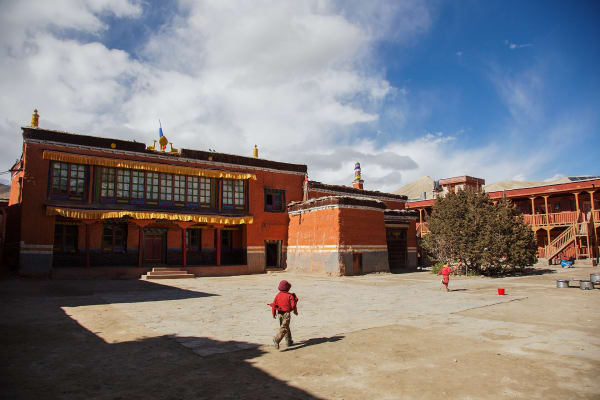
Visit Mu Gompa (3,700 m): Hike to Mu Gompa, the highest and one of the most important monasteries in the Tsum Valley, surrounded by dramatic mountain scenery.
Experience Authentic Himalayan Villages: Pass through traditional villages including Lokpa, Chumling, Chekampar, Nile, and Philim while experiencing local culture and warm Himalayan hospitality.
Discover Tibetan Buddhist Culture: Explore ancient monasteries, chortens, prayer flags, mani walls, and Tibetan-influenced traditions that make the Tsum Valley culturally unique.
Trek Through Diverse Himalayan Landscapes: Walk through lush forests, steep river valleys, suspension bridges, alpine terrain, and spectacular mountain scenery throughout the Tsum Valley.
Itinerary
A detailed 13-day Tsum Valley Trek itinerary featuring Kathmandu, Maccha Khola, Lokpa, Chumling, Chekampar, Nile, Mu Gompa, Philim, and the return to Kathmandu.
1Day 1Day 1: Arrival in Kathmandu (1,400 m)
Day 1: Arrival in Kathmandu (1,400 m)
You arrive at Tribhuvan International Airport in Kathmandu (1,400 m), where our representative meets you and drives you to your hotel in Thamel.
Your guide runs the pre-trek briefing. The Tsum Valley trek enters a restricted area and requires a special permit, a licensed guide and a minimum group size. Tsum — from the Tibetan tsombo, meaning vivid — was closed to outsiders entirely until 2008, and it remains one of the least-visited inhabited valleys in Nepal.
It is worth understanding what makes it unusual before you walk in. Tsum is a beyul, a sacred hidden valley in Tibetan Buddhist tradition, and the community holds a long-standing vow against killing animals — there is no hunting and no butchery in the valley, and the wildlife is noticeably unafraid as a result. Your guide will explain the local etiquette. Overnight in Kathmandu.
2Day 2Drive from Kathmandu (1,400 m) to Maccha Khola (930 m)
Drive from Kathmandu (1,400 m) to Maccha Khola (930 m)
A long day on the road, heading west on the Prithvi Highway before turning north at Dhading Bensi onto progressively rougher tracks up the Budhi Gandaki valley.
The first half is ordinary highway through terraced middle-hill farmland. The second half is a different proposition: a single-lane road cut into steep hillsides high above the river, crossing side streams on rough bridges, with the surface deteriorating steadily. It is slow going and frequently spectacular, and the full journey takes eight to nine hours.
Maccha Khola (930 m) is a small strip of lodges beside the Budhi Gandaki where the road ends and the walking begins. It is low, warm and humid here — subtropical rather than Himalayan — which makes the transformation over the coming week all the more marked. Overnight in a teahouse.
3Day 3Trek from Maccha Khola (930 m) to Jagat (1,340 m)
Trek from Maccha Khola (930 m) to Jagat (1,340 m)
The first walking day, following the Budhi Gandaki upstream through a hot, narrow gorge. The trail is cut into the valley wall in places and crosses the river repeatedly on suspension bridges.
The route passes Khorlabesi and reaches Tatopani, where natural hot springs emerge right beside the path. Beyond it the trail climbs a staircase cut into the rock over a ridge and drops to Dobhan, then continues through Yaru Khola.
This lower valley is genuinely subtropical — banana, bamboo and dense scrub, with waterfalls dropping directly across the trail and langur monkeys in the trees. The day ends at Jagat (1,340 m), a tidy village of stone houses on paved lanes, which serves as the official entry point to the Manaslu Conservation Area. Your restricted-area permits are checked here. Overnight in Jagat.
4Day 4Trek from Jagat (1,340 m) to Lokpa (2,240 m)
Trek from Jagat (1,340 m) to Lokpa (2,240 m)
The day you leave the main valley and turn into Tsum. The gorge section on the way is among the most dramatic on any trek in Nepal.
From Jagat the trail climbs to Salleri and contours to Sirdibas, then crosses a long suspension bridge to Philim (1,570 m), a substantial Gurung village spread across terraced fields. Above Philim the Budhi Gandaki narrows into a sheer-sided defile where the trail is pinned to the cliff, running along galleries and across bridges with the river a long way below.
At Lokpa (2,240 m) the route splits: the Manaslu Circuit continues west, and the Tsum Valley trail climbs north-east. Lokpa is the first village of Tsum proper, a small settlement on a shelf with a view back down the gorge. The character has already changed — chortens at the village entrance, prayer flags, and Tibetan rather than Nepali faces. Overnight in Lokpa.
5Day 5Trek from Lokpa (2,240 m) to Chumling (2,386 m)
Trek from Lokpa (2,240 m) to Chumling (2,386 m)
A short day by distance but a demanding one, with a steep drop and an equally steep climb — the net gain of 150 m badly understates the effort.
The trail descends sharply from Lokpa to the Syar Khola, the river that drains the Tsum valley, crosses it, and then climbs steeply through pine and rhododendron forest on the far side. There are good views back down into the gorge, and ahead the valley begins to open out.
Chumling (2,386 m) is the first substantial village of Lower Tsum, a compact settlement of stone houses with a small gompa and long mani walls. From the fields above it there is a clear view of Ganesh Himal (7,422 m), which dominates the southern skyline for much of the valley. Life here runs on barley, potatoes and yaks, much as it has for centuries. Overnight in Chumling.
6Day 6Trek from Chumling (2,386 m) to Chekampar (3,031 m)
Trek from Chumling (2,386 m) to Chekampar (3,031 m)
Today the valley opens properly and you enter Upper Tsum, where the landscape and the culture are at their most distinctly Tibetan.
The trail crosses the Syar Khola and climbs through Gho, then continues up a widening valley of barley terraces, stone-walled fields and juniper. Mani walls become longer and more frequent — some stretch for a hundred metres or more, stacked with carved stone tablets — and every rise seems to carry a chorten. Walk to the left of them, as local practice requires.
Chekampar (3,031 m), also known as Chokhangparo, is a twin settlement on a broad shelf with an exceptional panorama: Ganesh Himal and Baudha Himal fill the southern horizon, and the valley runs away north toward Tibet. Because of the valley's vow against killing, blue sheep and Himalayan tahr graze close to the villages here without much concern. Overnight in Chekampar.
7Day 7Trek from Chekampar (3,031 m) to Nile (3,361 m)
Trek from Chekampar (3,031 m) to Nile (3,361 m)
A steady climb deeper into Upper Tsum, through the historic and religious heart of the valley.
The trail passes Milarepa's Cave (Piren Phu), one of the most significant sites in Tsum. Two small gompas are built against a rock face where the 11th-century Tibetan yogi Milarepa is said to have meditated; inside are old frescoes, carved stone tablets and long prayer texts, and the caretaker will usually open them for visitors. It is worth the detour.
Continuing north, the trail passes Rachen Gompa (3,240 m), a large nunnery housing dozens of Buddhist nuns, set on the flat valley floor and notable for its extensive wall paintings. The valley here is wide, dry and treeless, hemmed by brown hills, with the Tibetan border ridge ahead. Nile (3,361 m) is the last village on the western bank and the highest permanent settlement in Tsum. Overnight in Nile.
8Day 8Day Trip from Nile (3,361 m) to Mu Gompa (3,700 m) and Return to Nile (3,361 m)
Day Trip from Nile (3,361 m) to Mu Gompa (3,700 m) and Return to Nile (3,361 m)
The northernmost point of the trek, and a straightforward day walk that doubles as useful acclimatisation.
The trail climbs gently north up the valley for around two hours to Mu Gompa (3,700 m), the largest and highest monastery in Tsum, founded in 1895. It sits alone on a bare hillside close to the Tibetan border, with no village around it — a walled complex of monks' quarters and an assembly hall holding old religious texts, statues and thangkas. The setting is austere and genuinely remote, and the view north into Tibet is unobstructed.
Nearby, Dhephyudonma Gompa is one of the oldest monasteries in the region, perched on a ridge and reachable as an extension if you have the energy.
We return to Nile (3,361 m) in the afternoon by the same route, having gained and lost around 350 m — good preparation for anyone continuing on to the Manaslu Circuit. Overnight in Nile.
9Day 9Trek from Nile (3,361 m) to Chumling (2,386 m)
Trek from Nile (3,361 m) to Chumling (2,386 m)
A long descending day back through Upper Tsum, retracing the route but seeing it from the opposite direction — which in this valley genuinely changes the view, since Ganesh Himal is now ahead of you rather than behind.
The trail drops from Nile past Rachen Gompa and the turning for Milarepa's Cave, then descends through Chekampar and the barley terraces of Upper Tsum. If you missed anything on the way up — a gompa, a mani wall, a village — this is the day to catch it, and there is usually more time because the walking is downhill.
The path continues down through Gho and crosses the Syar Khola to Chumling (2,386 m). Nearly 1,000 m of descent, and the return of trees and thicker air is immediately noticeable after several days on the dry upper valley floor. Overnight in Chumling.
10Day 10Trek from Chumling (2,386 m) to Philim (1,570 m)
Trek from Chumling (2,386 m) to Philim (1,570 m)
The day you leave Tsum and rejoin the main Budhi Gandaki valley.
From Chumling the trail descends steeply through forest to the Syar Khola, crosses it, and climbs the short sharp pull back to Lokpa (2,240 m) — the junction where the Tsum trail meets the Manaslu Circuit. Looking back up the side valley from here is the last view of Tsum you will get.
The route then drops into the great gorge below Lokpa, following the trail pinned to the cliff face with the Budhi Gandaki roaring below. It is as impressive going down as it was coming up, and the descent is quick.
Philim (1,570 m) is a large Gurung village on open terraces, with a school and a distinctly different feel from the Tibetan settlements you have spent the week in. The vegetation is green and temperate again. Overnight in Philim.
11Day 11Trek from Philim (1,570 m) to Maccha Khola (930 m)
Trek from Philim (1,570 m) to Maccha Khola (930 m)
The final walking day, descending back into the subtropical lower gorge.
The trail drops from Philim through Sirdibas and Salleri to Jagat (1,340 m), where you check out of the Manaslu Conservation Area. From there it continues down the Budhi Gandaki through Yaru Khola and Dobhan, crossing and recrossing the river on suspension bridges.
The heat and humidity build noticeably as you lose height, and the vegetation thickens back into banana, bamboo and dense green scrub. There is a last chance to stop at the Tatopani hot springs beside the trail, which after ten days of walking is hard to argue with.
The day ends at Maccha Khola (930 m), where the road begins. Tonight is the celebration dinner with your guide and porters. Overnight in a teahouse.
12Day 12Drive from Maccha Khola (930 m) to Kathmandu (1,400 m)
Drive from Maccha Khola (930 m) to Kathmandu (1,400 m)
The long drive back to the capital, retracing the rough road down the Budhi Gandaki. The first few hours are slow — single-lane track cut into the hillside, with river crossings and rough surfaces — before the road improves near Arughat and Dhading Bensi.
From there we join the Prithvi Highway and follow the Trishuli river east toward the Kathmandu Valley. The whole journey takes eight to nine hours with a lunch stop en route.
Arriving in Kathmandu (1,400 m) in the evening, you transfer to your hotel. After twelve days in a valley with no roads, no vehicles and very few outsiders, the noise and traffic of the city take some adjusting to. A hot shower and a proper meal help. Overnight in Kathmandu.
13Day 13Departure from Nepal
Departure from Nepal
Your last day in Nepal. If your flight leaves later in the day there is time for one more part of the Kathmandu Valley. Boudhanath Stupa is the natural choice after Tsum — it is the centre of Kathmandu's Tibetan Buddhist community, and the monasteries around it belong to the same tradition as Mu Gompa and Rachen Gompa.
Our representative will collect you from your hotel and transfer you to Tribhuvan International Airport around three hours before your scheduled departure.
The Tsum Valley trek is one of the few places left in Nepal where a trekking route enters a living culture that has barely been reshaped by tourism — a sacred hidden valley with its own dialect, a centuries-old vow against killing, Milarepa's meditation cave, and monasteries within sight of the Tibetan border. If you would like to combine it with the full circuit around Manaslu, the two routes join at Lokpa. Safe travels.
Inclusions & Exclusions
Covers accommodation, meals, transportation, permits, guide, and essential trekking services; excludes international flights, visa, insurance, porter service, personal expenses, drinks, tips, and unforeseen costs.
What's Included
Airport pickup and drop-off services in Kathmandu.
Transportation from Kathmandu to Maccha Khola and Maccha Khola to Kathmandu as per the itinerary.
Accommodation in Kathmandu with breakfast.
Accommodation in local teahouses during the trek.
Three meals a day (breakfast, lunch, and dinner) during the trek.
All required trekking permits and official fees, including the Tsum Valley Restricted Area Permit and Manaslu Conservation Area Permit.
Professional English-speaking, licensed trekking guide.
Group trekking map for route guidance.
First aid kit carried by the guide.
All government taxes, permit fees, and service charges.
What's Excluded
International flight tickets to and from Nepal.
Nepal entry visa fees.
Travel insurance, including emergency helicopter evacuation coverage.
Personal trekking equipment and clothing.
Porter services (available at an additional cost).
Lunch and dinner in Kathmandu.
Snacks, bottled water, hot showers, Wi-Fi, charging fees, and alcoholic or soft drinks.
Personal expenses such as laundry, phone calls, and souvenirs.
Tips for guides, drivers, and support staff.
Any additional accommodation, transportation, meals, or expenses caused by bad weather, landslides, road conditions, illness, natural disasters, or other unforeseen circumstances beyond the itinerary.
Route Map
A route map showing the complete Tsum Valley Trek from Kathmandu through the Tsum Valley and Mu Gompa, returning via Chumling and Maccha Khola.
Loading map...
Altitude Profile
Pricing
Clear and transparent pricing for your Tsum Valley Trek, covering the essential services included in the package.
Add-ons
Optional services and upgrades are available to make your trek more comfortable and flexible.
Permits & Regulations
The Tsum Valley is a restricted trekking area, so trekkers must obtain the necessary permits before entering the valley. The main permits required include the Tsum Valley Restricted Area Permit and the Manaslu Conservation Area Permit (MCAP).
Trekkers must follow the regulations established for the restricted region, and the trek requires an authorized trekking agency and licensed guide. Permits are checked at designated checkpoints along the route.
Our trekking team arranges the required permits and official documentation before the trek, allowing you to focus on enjoying the journey. Trekkers shoul
The fees and conditions for every restricted area are set out in our guide to restricted area permits in Nepal.
Food and Accommodation
Food and accommodation are important parts of the 13-day Tsum Valley Trek. During the trek, you will stay mainly in local teahouses and mountain lodges in villages such as Chumling, Chekampar, Nile, and Chumling on the return journey. Facilities are simple but provide a comfortable place to rest after a long day of trekking.
Meals generally include Dal Bhat (rice, lentils, and vegetables), noodles, pasta, soups, fried rice, potatoes, Tibetan bread, momos, eggs, and other simple local and continental dishes. Breakfast and dinner are usually served at the teahouse where you stay, while lunch is taken at a teahouse or restaurant along the trail.
As you travel deeper into the Tsum Valley, food choices and facilities become more limited. We recommend carrying some personal snacks such as energy bars, chocolate, dried fruits, or nuts. Hot showers, Wi-Fi, charging facilities, and bottled drinks may be available in some villages for an additional cost, but facilities become more basic at higher elevations.
What the lodges are really like, from rooms and meals to showers and charging, is covered in our guide to teahouse trekking in Nepal.
Best Time to Trek
The Tsum Valley Trek is possible throughout much of the year, but each season offers a different experience. Choosing the right time can make a significant difference in trail conditions, mountain views, weather, and overall trekking comfort.
1. Autumn (September to November)
Autumn is one of the best seasons for the Tsum Valley Trek, offering stable weather, dry trails, comfortable daytime temperatures, and excellent mountain visibility. The clear post-monsoon atmosphere provides beautiful views of the surrounding Himalayan peaks and makes the remote Tsum Valley particularly enjoyable to explore.
2. Spring (March to May)
Spring brings pleasant temperatures, clear mornings, and colorful rhododendron blooms along the lower sections of the trail. The landscapes become vibrant and fresh, while the longer daylight hours provide comfortable conditions for exploring villages, monasteries, and Mu Gompa.
3. Winter (December to February)
Winter offers a quiet and peaceful trekking experience with fewer visitors on the trail. Temperatures can become very cold, especially in the mornings and at higher elevations, and snowfall may affect some sections. However, clear winter days can provide spectacular mountain views and a more secluded experience.
4. Summer/Monsoon (June to August)
The monsoon season brings frequent rainfall, muddy trails, and possible landslides along lower sections of the route. Mountain views may be limited by clouds, but the valley becomes exceptionally green and lush. Trekkers choosing this season should be prepared for wet conditions and possible changes to the itinerary due to weather.
For a month-by-month look at weather and trail conditions, see our guide to the best time to trek in Nepal.
Difficulty & Fitness Level
The 13-day Tsum Valley Trek is considered a moderate trek suitable for trekkers with a reasonable level of fitness and previous hiking experience. The itinerary includes several consecutive days of walking through remote mountain terrain, with ascents and descents on uneven trails.
The highest point of the itinerary is Mu Gompa at 3,700 m (12,139 ft). Although the maximum altitude is lower than many high-altitude Himalayan treks, proper acclimatization and a gradual walking pace are still important.
You should be comfortable walking for approximately 5–7 hours per day, depending on the route and trail conditions. Regular walking, hiking, stair climbing, and cardiovascular exercise before the trek can help prepare your body.
The trek does not require technical climbing skills, but good physical preparation, suitable footwear, and the ability to walk on rocky and sometimes steep trails are recommended.
To build that fitness step by step, follow our 12-week training plan for a Nepal trek.
Packing List
Packing efficiently is important for the Tsum Valley Trek, as the trail passes through remote mountain villages and reaches an altitude of 3,700 m at Mu Gompa. Bring the essentials to stay comfortable, warm, and prepared without carrying unnecessary weight.
Head: Sun hat or cap, warm beanie, sunglasses, headlamp.
Upper Body: Quick-dry T-shirts, thermal layers, fleece jacket, down jacket, waterproof/windproof jacket.
Hands: Lightweight gloves, warm insulated gloves for colder months.
Lower Body: Comfortable trekking pants, thermal leggings, waterproof/rain pants.
Feet: Sturdy trekking boots, trekking socks, warm wool socks, comfortable sandals.
Backpack: 30–40L daypack, rain cover, dry bags or packing cubes.
Personal Items: Sunscreen, lip balm, toiletries, hand sanitizer, quick-dry towel.
Trekking Essentials: Trekking poles, reusable water bottles, water purification tablets, power bank, snacks, camera.
Documents: Passport and copies, trekking permits, travel insurance documents, passport photos, emergency contacts, and cash.
Health & Safety: Personal medicines, basic first-aid kit, blister treatment, pain relievers, and altitude-related essentials.
Optional: Gaiters, binoculars, earplugs, small book, portable charger, and extra snacks.
For the complete kit list, organised by the altitude you will reach, see our Nepal trekking packing list.
Frequently Asked Questions
Find quick answers to common questions about the Tsum Valley Trek, including difficulty, walking hours, connectivity, water, cash, porter services, safety, and itinerary changes.
1Is drinking water available along the Tsum Valley route?
Yes, water can be obtained from teahouses, local sources, and shops in villages. Trekkers should use water purification tablets, a filter, or another suitable purification method before drinking untreated water.
2Can I use an ATM during the Tsum Valley Trek?
No, reliable ATM facilities are not available throughout the remote Tsum Valley. It is recommended to carry enough Nepali cash from Kathmandu or before entering the more remote sections of the trek.
3Can I hire a porter for the Tsum Valley Trek?
Yes. Porter service can be arranged at an additional cost. Hiring a porter allows you to carry only a small daypack while the porter carries your main luggage.
4What happens if I become sick or cannot continue the trek?
Your guide will assist you and assess the situation. Depending on the severity of the problem, the trekking team can arrange appropriate assistance, evacuation, or a return to a lower elevation. Travel insurance with emergency evacuation coverage is strongly recommended.
5Do I need previous trekking experience for the Tsum Valley Trek?
No, previous high-altitude trekking experience is not mandatory. However, you should have a reasonable level of fitness and be comfortable walking for several hours a day on uneven and sometimes steep mountain trails.
6How many hours do we walk each day?
Most trekking days involve approximately 5–7 hours of walking, depending on the destination, trail conditions, pace, and rest stops. The itinerary also includes a day trip to Mu Gompa.
7Is the Tsum Valley Trek suitable for beginners?
Yes. The trek is suitable for beginners with good physical fitness who are prepared for consecutive days of hiking. The route does not involve technical climbing or mountaineering skills.
8Is there internet and mobile network coverage during the trek?
Mobile network and internet availability are limited and can vary between villages. Some teahouses may offer Wi-Fi for an additional charge, but reliable connectivity should not be expected throughout the trek.
9Can I charge my phone and camera during the trek?
Charging facilities may be available at some teahouses for an additional fee. Because electricity can be limited in remote villages, carrying a power bank is strongly recommended.
10Can the itinerary change during the trek?
Yes. Although the itinerary is carefully planned, it may need to be adjusted because of weather, trail conditions, landslides, health issues, local conditions, or other unforeseen circumstances. Your guide will make necessary changes with your safety as the priority.
Gallery
Explore authentic views of the Tsum Valley, from traditional villages and Buddhist monasteries to rugged trails, suspension bridges, and spectacular Himalayan landscapes.
Trekking Guides & Articles
Tsum Valley Trek: The Hidden Valley Where Hunting Is Forbidden — A restricted valley running toward Tibet off the Manaslu Circuit, where killing animals has been prohibited by Buddhist vow for generations.
Monasteries Where You Can Meditate on a Nepal Trek — Nepal's trekking routes pass working monasteries where visitors can sit in on prayers — Tengboche, Kyanjin, Braga, the gompas of Tsum and Mustang.
Budhi Gandaki Flood, 11 October 2026: What Happened and What It Means for Manaslu Treks — A flash flood came down the Budhi Gandaki in northern Gorkha before dawn on Sunday 11 October 2026.
Serang Gompa Trek: The Complete Guide — A twelve-day trek up the Budhi Gandaki and off it — a steep climb into a hanging valley above Bihi to a Nyingma retreat monastery with meditation caves in the cliffs.
Manaslu Circuit Trek: The Complete Guide — A full Himalayan circuit around the world's eighth-highest mountain, over the 5,106 m Larke La.
Lower Manaslu Trek: The Complete Guide — Ten days through the Gorkha foothills on a homestay route — Barpak, Laprak and Gumda, the villages at the epicentre of the 2015 earthquake and rebuilt by their own communities.
Fix Departure
This trek runs every week on the selected day(s). Choose custom dates for one-off departures.
Showing fixed departures in Oct 2026
Guest Reviews
Incredible trek, incredible team
“Tsum Valley Trek was everything we hoped for and so much more. Every sunset and mountain view along the way felt like a reward for the day's walking. The whole team looked after us brilliantly — nothi...
Connor Thompson
Get in Touch
Tell us the dates you have in mind and roughly what you want out of the trek — one of our guides will reply, usually within 24 hours.
Email Us
info@greencompasstreks.com
Call Us
+977 9864379436
Office
Lakeside, Pokhara, Nepal
Office Hours
Sunday – Friday, 9:00 AM – 9:00 PM
Similar Treks
You might also like these treks


Porter
$424 $385/porter
Private Jeep form Kathmandu to Machha Khola
$275 $250/jeep
Private Jeep form Machha Khola to Kathmandu
$275 $250/jeep
No payment required yet