

Helambu Trek
The Helambu Trek begins where the Kathmandu valley ends, walking straight out of Sundarijal and into the hills without a
Porter
$193 $175/porter
No payment required yet
Trip Overview
The Helambu Trek begins where the Kathmandu valley ends, walking straight out of Sundarijal and into the hills without a single long road journey. The trail climbs through Shivapuri Nagarjun National Park to the ridge at Chisapani, then follows a high forested spine north through Khutumsang to Tharepati (3,650 m), with views across to the Langtang, Ganesh, and Jugal Himal ranges.
The descent enters the heart of Helambu, home of the Hyolmo people, whose Buddhist villages of Tarke Ghyang and Sermathang are built of whitewashed stone with carved windows, prayer wheels, and old monasteries. It is one of the very few Nepali treks that starts and finishes within reach of the capital, needs no domestic flight, stays below 3,700 m, and still delivers proper Himalayan scenery and a genuinely distinct mountain culture.
Trip Highlights
Walk Out of the Kathmandu Valley: Start on foot from Sundarijal with no long road transfer to reach the trailhead.
The Ridge at Tharepati (3,650 m): Reach the trek's high point for views across the Langtang, Ganesh, and Jugal Himal ranges.
Hyolmo Villages of Helambu: Stay in Tarke Ghyang and Sermathang, traditional Buddhist settlements with monasteries and carved wooden houses.
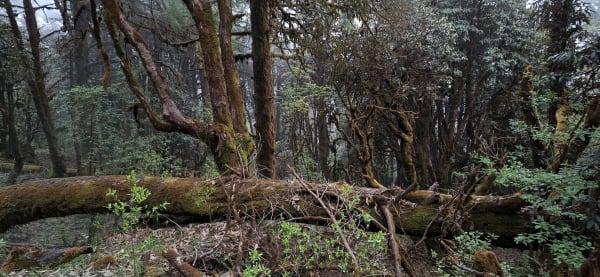
Shivapuri Nagarjun National Park: Climb through protected forest on the valley rim, rich in birdlife and rhododendron.
No Flights, No Long Drives: One of the few Himalayan treks in Nepal that needs neither a domestic flight nor a day-long bus journey.
Itinerary
A 7-day trek from Sundarijal on the Kathmandu valley rim over the Tharepati ridge (3,650 m) into the Hyolmo villages of Helambu.
1Day 1Arrival in Kathmandu (1,400 m)
Arrival in Kathmandu (1,400 m)
You arrive at Tribhuvan International Airport in Kathmandu (1,400 m), where our representative meets you and drives you to your hotel in Thamel.
Your guide runs the pre-trek briefing. The Helambu trek is the most accessible multi-day walk in Nepal — the trailhead at Sundarijal is barely an hour from the city, with no domestic flight and no long jeep transfer. It stays comfortably below 4,000 m and follows ridgelines through Sherpa and Tamang villages on the southern edge of Langtang National Park.
Because the trek starts so close to the capital, this is a good option if your time is short or if you are acclimatising before something bigger. Your guide checks your kit — nights at Tharepati are cold even though the altitude is modest. The rest of the day is free to rest or explore Thamel. Overnight in Kathmandu.
2Day 2Drive from Kathmandu (1,400 m) to Sundarijal (1,460 m) and Trek to Chisapani (2,165 m)
Drive from Kathmandu (1,400 m) to Sundarijal (1,460 m) and Trek to Chisapani (2,165 m)
A short drive of about an hour takes you to the north-eastern edge of the Kathmandu Valley at Sundarijal (1,460 m), where the road ends beside the reservoir and water pipeline that supplies much of the city.
The trek starts immediately with a long climb up concrete steps beside the pipeline, then enters the forest of Shivapuri Nagarjun National Park. It is a steady ascent through oak, rhododendron and pine, passing the village of Mulkharka with its Tamang farmhouses and terraced fields, and there are increasingly wide views back over the Kathmandu Valley behind you.
The trail crosses a ridge at Borlang Bhanjyang and descends slightly to Chisapani (2,165 m), a small settlement straddling the ridge on the park boundary. The name means 'cold water'. It is worth being up at dawn here: the sunrise view takes in Langtang Lirung, Dorje Lakpa, the Ganesh Himal and, on a clear morning, Everest far to the east. Overnight in Chisapani.
3Day 3Trek from Chisapani (2,165 m) to Khutumsang (2,470 m)
Trek from Chisapani (2,165 m) to Khutumsang (2,470 m)
A long, undulating ridge day — the distance is substantial but the net height gain is small, with a lot of up and down along the way.
The trail leaves Chisapani and descends through farmland to Pati Bhanjyang, a village in a saddle where several trails meet, then climbs again to Chipling and over a ridge to Thodang Betini. This is a working landscape rather than a wilderness: terraced fields of millet and potato, water buffalo, and villages of Tamang and Brahmin households where the trail runs straight through the middle of daily life.
The final section climbs through rhododendron forest to Khutumsang (2,470 m), set in a saddle on the ridge at the entrance to Langtang National Park, where permits are checked. On a clear afternoon the view north from the village runs up to the snow peaks you will see more of tomorrow. Overnight in Khutumsang.
4Day 4Trek from Khutumsang (2,470 m) to Tharepati (3,650 m)
Trek from Khutumsang (2,470 m) to Tharepati (3,650 m)
The big climbing day, gaining nearly 1,200 m and taking you to the highest point of the trek.
The trail follows the ridge north out of Khutumsang and climbs steadily through dense forest — oak and rhododendron at first, then hemlock and fir as the altitude increases. There are no villages on this section and few teahouses, so it is a quiet, enclosed walk with the occasional clearing offering a view east and west down into the valleys on either side.
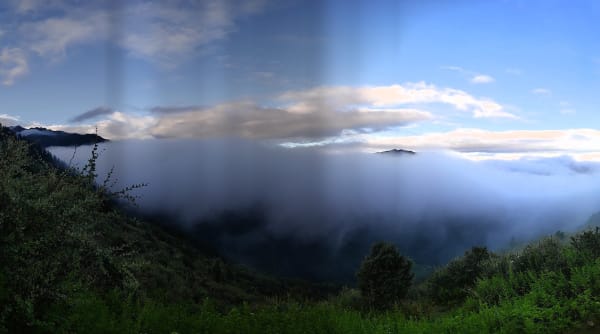
As the forest thins near the top, the landscape opens into alpine scrub and the panorama arrives all at once. Tharepati (3,650 m) sits on an exposed ridge with a handful of lodges, looking north across a deep valley to Langtang Lirung (7,227 m), Dorje Lakpa (6,966 m) and the peaks along the Tibetan border. This is also the junction where the trail to Gosaikunda branches west over the Laurebina pass. It is cold and windy here after dark. Overnight in Tharepati.
5Day 5Trek from Tharepati (3,650 m) to Tarke Ghyang (2,590 m)
Trek from Tharepati (3,650 m) to Tarke Ghyang (2,590 m)
Sunrise from the ridge at Tharepati is the best of the trek — the whole northern skyline lights up before the sun reaches the lodges. Worth the cold.
The day is then a long descent of around 1,000 m into the Helambu valley proper. The trail drops steeply off the ridge through rhododendron and bamboo forest to Melamchi Gaun, a Sherpa village with a gompa and a very different feel from the Tamang settlements of the first two days. From there the path descends to the Melamchi Khola, crosses it, and climbs the far side.
Tarke Ghyang (2,590 m) is the largest and most attractive Sherpa village in Helambu — stone houses along paved lanes, apple orchards, and a monastery said to date from the 18th century. The Sherpas here migrated from Tibet centuries ago and their dialect and customs differ noticeably from those of the Khumbu. Overnight in Tarke Ghyang.
6Day 6Trek from Tarke Ghyang (2,590 m) to Sermathang (2,610 m) and Drive to Kathmandu (1,400 m)
Trek from Tarke Ghyang (2,590 m) to Sermathang (2,610 m) and Drive to Kathmandu (1,400 m)
A gentle final walk of three to four hours, mostly level along a wooded ridge — a pleasant contrast to yesterday's descent.
The trail contours south from Tarke Ghyang through pine and rhododendron forest, passing small Sherpa settlements, chortens and mani walls, with views down into the Melamchi valley. It is an easy, unhurried morning.
Sermathang (2,610 m) is a spread-out Sherpa village known for its apple and cardamom orchards and its old monastery, with a broad view south over the middle hills and north to the Himalaya. From here a jeep takes us down to Melamchi Pul Bazaar and then along the road back to Kathmandu (1,400 m), roughly four to five hours. Overnight in Kathmandu.
7Day 7Departure from Kathmandu (1,400 m)
Departure from Kathmandu (1,400 m)
Your last day in Nepal. If your flight leaves later there is time for one more part of the valley — Boudhanath Stupa pairs well with a trek through Sherpa villages, since the monasteries around it belong to the same Tibetan Buddhist tradition as the gompas at Tarke Ghyang and Sermathang. Pashupatinath and Swayambhunath are both close by.
Our representative will collect you from your hotel and transfer you to Tribhuvan International Airport about three hours before your scheduled departure.
The Helambu trek is the easiest way to get a genuine multi-day Himalayan walk out of a short trip — no flights, no long drives, ridge-top sunrises over Langtang Lirung and Dorje Lakpa, and Tamang and Sherpa villages that see relatively few trekkers. If you would like to go higher next time, Gosaikunda branches directly off this route at Tharepati. Safe travels.
Inclusions & Exclusions
Private transport to Sundarijal and back from Sermathang, Kathmandu accommodation, teahouse lodging, all trekking meals, national park permits, a licensed guide, trekking map, first aid, and government taxes are included, while international flights, visa, insurance, personal gear, porter service, city meals, personal expenses, and tips are excluded.
What's Included
Airport pickup and drop-off services in Kathmandu.
Private transportation from Kathmandu to Sundarijal and from Sermathang back to Kathmandu as per the itinerary.
Accommodation in Kathmandu with breakfast.
Accommodation in local teahouses during the trek.
Shivapuri Nagarjun National Park and Langtang National Park entry permits and required trekking permits.
Professional English-speaking licensed trekking guide.
Three meals a day (breakfast, lunch, and dinner) during the trek.
Group trekking map for route guidance.
First aid kit carried by the guide.
All government taxes, permit fees, and service charges.
What's Excluded
International flight tickets to and from Nepal.
Nepal entry visa fees.
Travel insurance, including emergency helicopter evacuation coverage.
Personal trekking equipment and clothing.
Porter services (available at an additional cost).
Lunch and dinner in Kathmandu.
Snacks, bottled water, hot showers, Wi-Fi, charging fees, and alcoholic or soft drinks.
Personal expenses such as laundry, phone calls, and souvenirs.
Tips for guides, drivers, and support staff.
Any additional accommodation, transportation, or expenses caused by unforeseen circumstances beyond the itinerary.
Route Map
Explore the terrain map showing the trek route.
Loading map...
Altitude Profile
Pricing
Transparent per-person pricing based on group size, covering the services listed in the itinerary with no hidden charges.
Add-ons
Customize your trek with optional services such as porter support and other personalized arrangements at an additional cost.
Best Time to Trek
October to December and March to May are the best seasons. Autumn and early winter give the clearest mountain views from the Tharepati ridge, with cold nights but comfortable walking. Spring brings rhododendron in flower through the forest between Chisapani and Khutumsang, which is one of the finest displays close to Kathmandu.
Because the trek stays below 3,700 m, January and February remain feasible with warm clothing, though the ridge can hold snow and the nights at Tharepati are genuinely cold. The monsoon between June and August is not recommended — the forest sections are leech-heavy, the ridge sits in cloud, and the stone trails become slippery.
For a month-by-month look at weather and trail conditions, see our guide to the best time to trek in Nepal.
Trek Difficulty & Fitness
This is a moderate trek. There is no pass, no glacier, and no night above 3,650 m, but it involves five consecutive walking days with a great deal of cumulative ascent and descent as the trail rides up and over successive ridges rather than following a valley.
The hardest sections are the initial climb from Sundarijal to Chisapani and the long ascent from Khutumsang to Tharepati, each gaining around 1,200 m. Descents are equally long, particularly the drop from Tharepati into Tarke Ghyang. Four to six weeks of hill walking with a loaded daypack is good preparation, and trekking poles reduce the strain on knees considerably.
To build that fitness step by step, follow our 12-week training plan for a Nepal trek.
Travel Insurance
Travel insurance is required and your policy should cover trekking to at least 4,000 m, comfortably bracketing the Tharepati ridge at 3,650 m. Most standard travel policies extend this far, but check the altitude clause explicitly rather than assuming, as some cap at 2,500 m or 3,000 m.
Confirm that emergency helicopter evacuation and medical treatment are included. Altitude illness is uncommon on this route, but the ridge between Chisapani and Tharepati is remote from any road, and slips and ankle injuries on the steep forest trails are the usual reason trekkers need help. Please send us your policy number and the insurer's emergency contact before departure.
Our guide to travel insurance for trekking in Nepal explains the altitude limits, evacuation terms and common exclusions to check before you buy.
Packing List
The trek spans warm forest and a cold, exposed ridge. Bring waterproof trekking boots, two or three base layers, a fleece, a light down jacket for Tharepati, a waterproof and windproof shell, trekking trousers, a warm hat, sun hat, gloves, and wool socks. A sleeping bag rated to -5°C covers the coldest night on the ridge, and lodges also provide blankets.
Also pack a 25-30 litre daypack, trekking poles for the long descents, a headlamp with spare batteries, high-SPF sunscreen and lip balm, sunglasses, a reusable bottle with purification tablets or a filter, a small first aid kit with blister care, insect repellent and leech socks if trekking near the monsoon shoulders, a quick-dry towel, toiletries, and a power bank.
For the complete kit list, organised by the altitude you will reach, see our Nepal trekking packing list.
Accommodation, Food & Drinking Water
You stay in a tourist-standard hotel in Kathmandu at either end and in teahouses along the trail at Chisapani, Khutumsang, Tharepati, and Tarke Ghyang. Lodges in Helambu are simple family-run places — twin rooms with foam mattresses and blankets, shared bathrooms, and dining rooms heated in the evening. Tarke Ghyang and Sermathang have the most characterful accommodation, often in traditional Hyolmo houses.
Three meals a day are included on the trek. Menus are short and home-cooked: dal bhat with free refills, noodle soup, fried rice, eggs, chapati, potatoes, and porridge, using vegetables grown in the villages. Helambu is known for its apples and, in autumn, for locally pressed apple products. Water comes from spring-fed taps and must be treated with tablets, a filter, or a UV pen; bottled water is inconsistently available on the ridge sections.
What the lodges are really like, from rooms and meals to showers and charging, is covered in our guide to teahouse trekking in Nepal.
Frequently Asked Questions
Find quick answers to common questions about the Helambu Trek.
1How many hours do we walk each day?
Five to seven hours on most days. The Sundarijal to Chisapani climb takes around five hours, Khutumsang to Tharepati is six to seven, and the descent from Tharepati to Tarke Ghyang is a long six to seven hours with over 1,000 m of drop.
2Which permits are required and do you arrange them?
You need the Shivapuri Nagarjun National Park entry permit, the Langtang National Park Entry Permit, and trekking registration. All are included in your package and arranged by our team from passport copies and photographs sent before departure.
3Is this trek suitable for beginners?
Yes. The low maximum altitude, absence of any pass, frequent lodges, and short transfers make it one of the better first Himalayan treks. The main demand is the repeated ridge climbing, so a reasonable level of hill fitness helps.
4How close is the trailhead to Kathmandu?
Sundarijal is about an hour's drive from central Kathmandu, on the northern rim of the valley. This is the single biggest practical advantage of the Helambu trek — you can be walking within ninety minutes of leaving your hotel.
5Who are the Hyolmo people?
The Hyolmo are a community of Tibetan origin who settled Helambu centuries ago and maintain their own language, dress, and Nyingma Buddhist traditions. Tarke Ghyang and Sermathang are their principal villages, both built around old monasteries in a distinctive whitewashed stone architecture.
6Is mobile network and Wi-Fi available?
Coverage is surprisingly good on this trek because of its proximity to Kathmandu, with signal at most villages. Some lodges sell Wi-Fi. The ridge between Khutumsang and Tharepati is the main dead zone.
7Can I charge my devices on the trail?
Yes, at most lodges, usually from mains or micro-hydro power for a small fee. Supply is more reliable here than on remote treks, though Tharepati runs on solar and can be limited after cloudy days.
8Where can I withdraw cash?
Kathmandu has ATMs everywhere and there are none on the trail. Carry all your Nepalese rupees from the city for meals, snacks, charging, hot showers, and tips.
9Can the trek be extended toward Gosaikunda?
Yes. From Tharepati the trail continues north over Laurebina Pass to the Gosaikunda lakes, adding four to five days and taking the route above 4,600 m. Tell us before booking and we will arrange the longer itinerary and permits.
10Can I leave extra luggage in Kathmandu?
Yes. Your Kathmandu hotel stores anything you do not need on the trail free of charge until you return.
Gallery
Explore authentic moments, landscapes, and mountain views from the Helambu Trek.
Trekking Guides & Articles
Helambu Trek: The Complete Guide — The trek that starts where the Kathmandu valley ends — out of Sundarijal on foot, no domestic flight, nothing above 3,700 m.
Trekking First Aid Kit for Nepal: Every Medicine Worth Carrying — A personal medical kit for a Nepal trek should weigh under 400 g and cover the things that actually happen: headaches, stomach trouble, blisters, coughs and sunburn.
Dhulikhel to Namobuddha Hike: The Complete Guide — The best day walk within reach of Kathmandu — four hours on old village trails from a Newar hill town to one of the three holiest Buddhist sites in Nepal.
Langtang Ganja La Pass Trek: The Complete Guide — The Langtang valley followed by a genuinely committing crossing: the Ganja La at 5,130 m, often snow-covered.
Gyalzen Peak & the Jugal Himal: The Complete Guide — The range you can see from the rim of the Kathmandu valley on a clear winter morning, and almost nobody goes there.
Fix Departure
This trek runs every week on the selected day. Choose custom dates for one-off departures.
Showing fixed departures in Oct 2026
Guest Reviews
Trip of a lifetime
“We picked Helambu Trek after a lot of research and it did not disappoint. The whole team looked after us brilliantly — nothing was ever too much trouble. Thank you to the whole team for the trip of a ...
Giulia Buchanan
Get in Touch
Tell us the dates you have in mind and roughly what you want out of the trek — one of our guides will reply, usually within 24 hours.
Email Us
info@greencompasstreks.com
Call Us
+977 9864379436
Office
Lakeside, Pokhara, Nepal
Office Hours
Sunday – Friday, 9:00 AM – 9:00 PM
Similar Treks
You might also like these treks


Porter
$193 $175/porter
No payment required yet