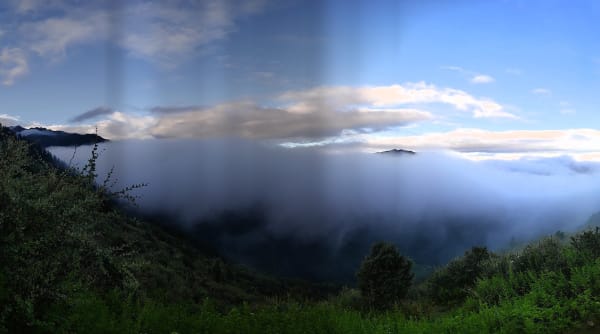
The Helambu trek begins where the Kathmandu valley ends. You drive forty minutes to Sundarijal, walk up through Shivapuri Nagarjun National Park, and by the afternoon you are on a ridge at 2,165 m looking at the Himalaya. There is no domestic flight, no long bus day, and no night above 3,700 m.
From Chisapani the trail follows a high forested spine north through Khutumsang to Tharepati (3,650 m), with views across to the Langtang, Ganesh and Jugal Himal ranges, then drops into the heart of Helambu — home of the Hyolmo people, whose villages of Tarke Ghyang and Sermathang are built of whitewashed stone with carved windows, prayer wheels and old monasteries.
Very few Nepali treks start and finish within reach of the capital, need no flight, stay under 3,700 m, and still deliver proper Himalayan scenery and a genuinely distinct mountain culture. This is the best of them.

The Trek at a Glance
| Duration | 7 days Kathmandu to Kathmandu, 5 of them walking |
| Highest point | Tharepati, 3,650 m |
| Difficulty | Moderate — steady ridge walking, no pass |
| Best seasons | March to May, October to December |
| Accommodation | Teahouses throughout |
| Access | 40 minutes by road to Sundarijal — no flight, no long drive |
| Permits | Shivapuri Nagarjun and Langtang National Park permits, plus registration |
| Price | From USD 400 per person |
We run it as a 7-day trek. For a shorter taste of the same country, the Ama Yangri trek climbs the ridge above Tarke Ghyang in a long weekend.
The Route
Sundarijal to Chisapani (1,460 m to 2,165 m)
A short drive to the edge of the valley, then straight onto the trail: a stone staircase beside the Kathmandu water pipeline, through Shivapuri Nagarjun National Park — good forest, good birds, occasional langur — and over the rim to Chisapani on the far side. The first evening already has a Himalayan skyline in front of it, which for a trek that started in the city that morning is a remarkable return.
Chisapani to Tharepati (2,165 m to 3,650 m)
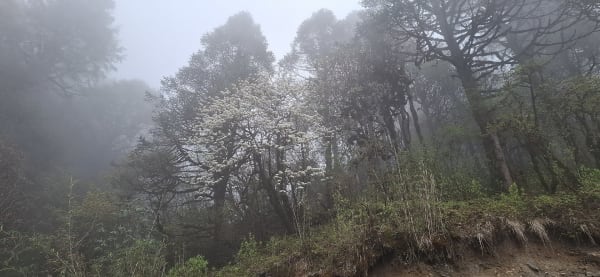
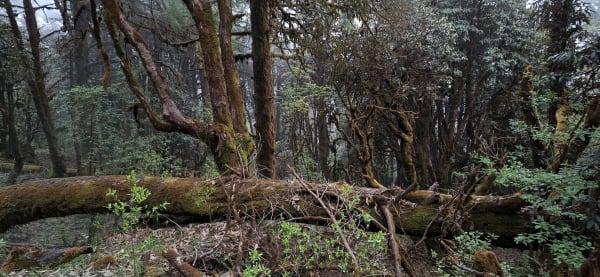
Two days north along a forested spine through Khutumsang (2,470 m). The ridge climbs steadily through oak, rhododendron and fir, with the country emptying out as you go. Tharepati at 3,650 m is the high point and the best viewpoint on the trek: Langtang, Ganesh and the Jugal Himal laid out to the north, and Dorje Lakpa prominent among them.
Tharepati to Tarke Ghyang (3,650 m to 2,590 m)
A long descent off the ridge into Helambu proper. The change is abrupt — from high, empty fir forest to a settled Buddhist valley of whitewashed stone houses, mani walls and monasteries. Tarke Ghyang is the principal Hyolmo village and its gompa is worth the time.

Tarke Ghyang to Sermathang and out (2,590 m to 2,610 m)
An easy final morning traversing between villages to Sermathang, through apple orchards and past small monasteries, with the Himalaya on one side and the Indrawati valley dropping away on the other. A jeep from Sermathang has you back in Kathmandu the same afternoon.
Difficulty and Who It Suits
This is the trek we recommend most often to people who have a week, no interest in a domestic flight, and no wish to go above 4,000 m. It is graded moderate — the days are real walking days, not strolls — but there is no pass, no glacier and no altitude problem.
- Five to seven hours a day on five walking days.
- Maximum 3,650 m, and only one night near that height, so altitude sickness is very unlikely.
- Steady ridge walking with repeated ascent and descent rather than one big climb.
- Teahouses throughout — no camping, no crew, no carrying food.
- No flight and no long drive, which removes the single biggest source of delay on most Nepal treks.
If it is your first time in Nepal, read what to know before your first trek alongside this. For other options close to the capital, see our short treks near Kathmandu.
The Hyolmo People
Helambu is the home of the Hyolmo (sometimes Yolmo), a Tibetan Buddhist people whose ancestors came south from Kyirong several centuries ago. They are culturally closer to the Sherpa and to Tibet than to the Hindu hill communities a day's walk south, and the difference is visible the moment you drop off the ridge.
- Whitewashed stone houses with carved and painted window frames.
- Gompas at Tarke Ghyang and Sermathang, both old and both still in use.
- Mani walls and prayer wheels on the paths between villages — keep them on your right.
- Apple orchards and cardamom, which are the cash crops of the valley.
Helambu was badly hit by the 2015 earthquake and much of what you see has been rebuilt since. Our responsible trekking guide covers how to make your spending count in villages like these.
What It Costs
At USD 400 the Helambu trek is the cheapest guided multi-day trek we run, for a simple reason: no domestic flight, no long road transfer, teahouses throughout, and no camping crew.
| Group size | Price per person |
|---|---|
| 1 trekker | USD 525 |
| 2 to 4 | USD 500 |
| 5 to 7 | USD 475 |
| 8 to 10 | USD 450 |
| 11 to 14 | USD 425 |
| 15 and over | USD 400 |
Trail extras — charging, hot showers, Wi-Fi, drinks — run around USD 8 to 12 a day. Carry rupees from Kathmandu; there are no ATMs on the route. Our cost guide has the full breakdown.
What Is Included
- Airport pickup and drop-off in Kathmandu.
- Private transport Kathmandu to Sundarijal and Sermathang back to Kathmandu.
- Hotel accommodation in Kathmandu with breakfast.
- Teahouse accommodation throughout the trek.
- Three meals a day during the trek.
- Shivapuri Nagarjun National Park and Langtang National Park entry permits and trekking registration.
- A licensed English-speaking trekking guide.
- Group trekking map, first aid kit carried by the guide, and all government taxes, permit fees and service charges.
What Is Not Included
- International flights and the Nepal entry visa fee.
- Travel insurance including emergency helicopter evacuation.
- Personal trekking equipment and clothing.
- Porter services, available at additional cost.
- Lunch and dinner in Kathmandu.
- Snacks, bottled water, hot showers, Wi-Fi, charging and drinks.
- Laundry, phone calls, souvenirs and personal expenses.
- Tips for guides, drivers and support staff.
- Extra costs caused by weather or anything else outside the itinerary.
Note the two separate park permits — Helambu is one of the few routes that crosses from Shivapuri Nagarjun into Langtang National Park, and both are needed. Both are included and arranged by us.