Nepal remains one of the best-value mountain destinations in the world, but quoted prices vary by a factor of four for what looks like the same trek. The difference is almost never the mountain — it is what is included, how many staff are paid properly, how fast the itinerary is, and whether the operator is absorbing risk or passing it to you.
This breakdown shows where the money actually goes, so you can compare two quotes line by line instead of by headline figure.
The Cost Lines on Every Trek
| Line | Typical cost | Notes |
|---|---|---|
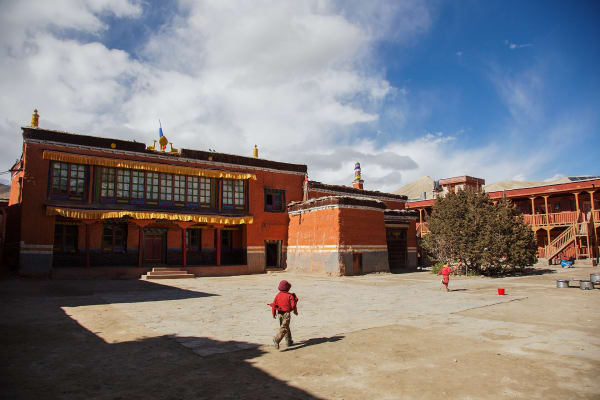
| Permits and park fees | NPR 5,000–6,500 per person | Annapurna, Everest, Langtang. Restricted areas are far higher — Upper Mustang is USD 500 for 10 days |
| Licensed guide | USD 30–40 per day | Covers the guide's wage, insurance, food, and lodging |
| Porter | USD 25–35 per day | One porter generally shared between two trekkers, carrying up to 20 kg |
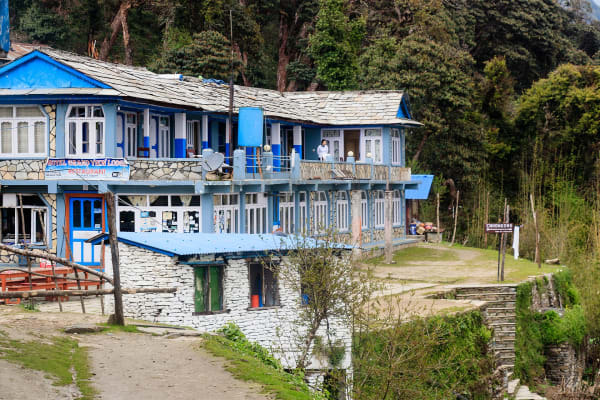
| Teahouse room | NPR 500–1,500 per night | Cheap by design — lodges make their margin on food |
| Food on the trail | NPR 2,500–4,500 per day | Rises sharply with altitude; everything above the road is carried in |
| Kathmandu or Pokhara hotel | USD 30–90 per night | Three-star standard, with breakfast |
| Road transfers | USD 15–150 per leg | Kathmandu to Besisahar, Pokhara to Kande, Kathmandu to Syabrubesi |
| Internal flights | USD 115–230 each way | Kathmandu–Pokhara, Lukla, Jomsom, Juphal, Taplejung |
| Tips | USD 10–15 per day for the team | Customary rather than obligatory, and genuinely expected |
| Trail extras | USD 10–15 per day | Hot showers, charging, Wi-Fi, snacks, soft drinks |
Note which lines are fixed and which scale with days. Permits and flights are fixed per trip; guide, porter, food, and lodging are per day — which is why a 14-day trek does not cost twice a 7-day one.
Three Worked Budgets
These are all-in per-person estimates for a booked trip on a twin-share basis, excluding international flights, visa, and insurance.
| Trip | Days | Package | Plus personal spending |
|---|---|---|---|
| Short Pokhara-start trek — Mardi Himal from Pokhara | 5 | From around USD 375 | USD 60–100 in extras and tips |
| Classic teahouse trek — Annapurna Base Camp | 9 | From around USD 525 | USD 120–200 |
| Flight-dependent trek — Everest Base Camp | 14 | Package plus Lukla flights | USD 200–300 |
| Restricted area — Upper Mustang | 16 | From around USD 1,400, including the USD 500 permit | USD 250–350 |
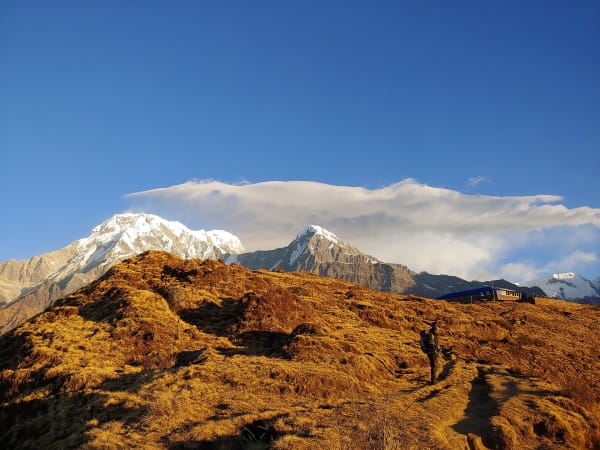
The pattern worth noticing: Pokhara-start treks are the cheapest way into the Himalaya, because they cut the Kathmandu transfer days and the domestic flight. A five-day walk from Pokhara to a 3,580 m ridge under Machhapuchhre costs less than a week in most European cities.
What Makes One Quote Cheaper Than Another
When you see a large gap between two prices for the same route, it is almost always one of these:
- Fewer days. A 12-day Everest Base Camp itinerary is cheaper than a 14-day one because it has dropped an acclimatisation day. That is a safety decision being sold as a discount.
- Flights excluded. Lukla return adds roughly USD 400 per person; check whether it is in the headline price.
- No porter. Fine if you want to carry your own kit, but make sure the comparison is like for like.
- Staff pay and insurance. The cheapest operators cut guide wages, porter loads, and staff insurance. This is the part of a cheap trek that someone else pays for.
- Meals on the trail excluded. Adds roughly USD 25–35 per day once you are above the road head.
- Group size. Per-person costs fall as the group grows, which is why our pricing is tiered by group size rather than fixed.
Costs People Forget
- Nepal visa — USD 30 for 15 days, USD 50 for 30 days, USD 125 for 90 days, payable on arrival.
- Insurance with altitude and helicopter cover — USD 120–350 for a two to three week trip.
- Gear — a down jacket and sleeping bag can be hired in Kathmandu for a few dollars a day instead of bought.
- Extra nights in Kathmandu — build in at least one spare day if your trek depends on a Lukla or Jomsom flight.
- Tips — customary, and the amount is usually settled as a group on the last trail day.
- Cash on the trail — there are no ATMs above the road head. Withdraw Nepali rupees in Kathmandu or Pokhara for the whole trek.
On tipping, the convention that avoids awkwardness: pool roughly USD 10 to 15 per trekker per day for the whole team, hand it over on the final trail evening, and let the guide divide it between guide, assistant, and porters.
Where It Is Worth Spending More
Having seen what goes wrong, these are the places where extra money buys something real:
- Extra days in the itinerary. An extra acclimatisation day costs around USD 60 and is the cheapest insurance against turning back.
- A porter. Carrying 15 kg instead of 6 kg changes how the second week feels, and it employs someone locally.
- A spare day before a Lukla or Jomsom flight. Weather delays are routine, and a missed connection home is expensive.
- Proper insurance. One evacuation costs more than every trek in this catalogue.
- Boots and a shell jacket. The two items where buying cheap genuinely costs you comfort every day.