Permits are the part of planning a Nepal trek that generates the most confusion and the least useful information online, partly because the rules genuinely change and partly because they differ from one valley to the next. There is no single national trekking permit. What you need depends on which protected area you enter, which municipality you pass through, and whether the region is classified as restricted.
This guide sets out the whole system — what each document is, roughly what it costs, where it is issued, and which parts we handle for you. Fees are revised by the Nepal Tourism Board, the Department of Immigration, and individual municipalities from time to time, so treat the figures here as a planning guide and confirm the current amount with us before you pay anything.
The Three Layers of Nepali Trekking Paperwork
Almost every trek needs documents from one or more of three layers:
- A trekker registration card (TIMS) — the Trekkers' Information Management System card, issued jointly by the Nepal Tourism Board and the Trekking Agencies' Association of Nepal. It exists so that rescuers know who is on which trail.
- A protected-area entry fee — a national park, conservation area, or wildlife reserve ticket for the area your route crosses.
- A local or restricted-area permit — either a rural municipality charge collected at the trailhead, or, in sensitive border regions, a restricted-area permit issued only to organised groups through a registered agency.
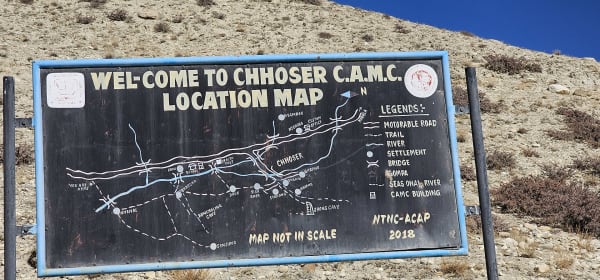
A teahouse trek in Annapurna needs layers one and two. A trek into Upper Mustang needs all three, and the third costs more than the rest of the trek's paperwork combined.
Protected-Area Entry Fees by Region
These are the park and conservation area fees that cover the great majority of Nepal's trekking routes. All are per person, single entry, and payable in Nepali rupees.
| Area | Covers | Typical fee for foreign nationals |
|---|---|---|
| Annapurna Conservation Area (ACAP) | Annapurna Base Camp, Annapurna Circuit, Mardi Himal, Poon Hill, Tilicho, Khopra, Nar Phu, Mustang | NPR 3,000 |
| Sagarmatha National Park | Everest Base Camp, Gokyo, Three Passes, Everest trekking peaks | NPR 3,000 plus 13% VAT |
| Khumbu Pasang Lhamu Rural Municipality | The Khumbu, collected at Lukla or Monjo instead of TIMS | NPR 2,000 |
| Langtang National Park | Langtang Valley, Gosaikunda, Tamang Heritage Trail | NPR 3,000 |
| Manaslu Conservation Area (MCAP) | Manaslu Circuit, Tsum Valley | NPR 3,000 |
| Makalu Barun National Park | Makalu Base Camp, Sherpani Col | NPR 3,000 |
| Kanchenjunga Conservation Area | Kanchenjunga Circuit and base camps | NPR 2,000 |
| Shey Phoksundo National Park | Lower and Upper Dolpo, Phoksundo Lake | NPR 3,000 |
| Rara National Park | Rara Lake | NPR 3,000 |
| Chitwan / Bardia National Park | Jungle safari and wildlife tours | NPR 2,000 per entry day |
Note the Khumbu line. Since 2018, trekkers entering the Everest region pay a rural municipality fee collected locally rather than a TIMS card, which is why advice about Everest permits written before that date is misleading.
Restricted-Area Permits
Several border regions are classified as restricted. Entry requires a special permit that is issued only to a group of two or more trekkers travelling with a registered Nepali agency and a licensed guide. You cannot buy one as an individual, and the fee is charged per person per day or per week.
| Restricted region | Permit cost (indicative, USD) | Also requires |
|---|---|---|
| Upper Mustang (Lo Manthang) | 500 for 10 days, then 50 per extra day | ACAP |
| Upper Dolpo | 500 for 10 days, then 50 per extra day | Shey Phoksundo National Park fee |
| Lower Dolpo | 20 per week | Shey Phoksundo National Park fee |
| Manaslu (Jagat to Dharapani) | 100 per week Sep–Nov, 75 per week Dec–Aug | MCAP and ACAP |
| Tsum Valley | 40 per week Sep–Nov, 30 per week Dec–Aug | MCAP |
| Nar Phu | 100 per week Sep–Nov, 75 per week Dec–Aug | ACAP |
| Kanchenjunga | 20 per week | Kanchenjunga Conservation Area fee |
| Humla / Limi Valley | 50 for 7 days, then 10 per extra day | Regional conservation fee |
The group-of-two rule is the one that catches solo travellers. In practice, agencies can sometimes pair a lone trekker with another booking, or issue paperwork against a second name; ask us early rather than assuming it is impossible, because the options depend on the region and the season.
Do You Need a Guide?
Since 1 April 2023, the Nepal Tourism Board has required trekkers in national parks and protected areas to be accompanied by a licensed guide, ending the era of fully independent teahouse trekking. Enforcement varies by region and checkpoint — the Khumbu has applied it more loosely than Annapurna or Langtang — but the rule is on the books and checkpoints can and do turn people back.
In restricted areas the requirement has never been optional: a licensed guide and a registered agency are conditions of the permit itself. Our guide and porter guide covers what a guide actually does for you, what the going rates are, and how the porter arrangement works.
What You Need to Provide, and What We Handle
For a booked trip, we arrange every permit in the list above before you start walking. What we need from you is short:
- A clear colour scan of your passport photo page, valid at least six months beyond your return date.
- Two to four passport-sized photographs — bring spares; they get used for permits, park tickets, and climbing paperwork.
- Your Nepal visa details once you have arrived, or your visa-on-arrival receipt.
- Travel insurance details, including the policy number, altitude cover, and the insurer's 24-hour emergency number.
- For restricted areas, your original passport for a day while the permit is issued in Kathmandu.
Permits for restricted regions are processed through the Department of Immigration in Kathmandu and cannot be issued on the trail or at a weekend, so they set the earliest possible start date for those treks. For Upper Mustang, Dolpo, Manaslu, or Nar Phu, plan to be in Kathmandu at least one full working day before departure.
Carry your permits with you at all times, in a waterproof sleeve. Checkpoints record every trekker passing through, and that register is what a rescue team works from if a group is overdue.
Common Permit Mistakes
- Assuming one permit covers a combined route. A trek linking Manaslu to Annapurna crosses three fee areas and needs paperwork for each.
- Buying a TIMS card for the Khumbu. The Everest region uses a local municipality fee instead — pay it at Lukla or Monjo.
- Turning up for a restricted area as a solo trekker. The permit legally requires a group of two or more with a registered agency.
- Underestimating extra days. Restricted-area permits are priced per day or per week; adding a rest day in Lo Manthang costs USD 50.
- Letting a permit expire mid-trek. The clock starts on the date you declare, not the date you walk in, so an itinerary that slips can leave you unpermitted at the last checkpoint.