

Tamang Heritage Trek
The Tamang Heritage Trek is the most culturally rich route in the Langtang region, following a network of traditional Ta
Porter
$424 $385/porter
No payment required yet
Trip Overview
The Tamang Heritage Trek is the most culturally rich route in the Langtang region, following a network of traditional Tamang villages along the Nepal-Tibet borderlands before joining the Langtang valley for its final days. Opened to trekkers only in 2005, the trail passes through Gatlang, Tatopani, Thuman, and Briddim — settlements of stone houses, ornate carved windows, water-driven mills, and Buddhist gompas where Tibetan influence is unmistakable.
The route's cultural highlights are matched by the walking: the ridge at Nagthali (3,165 m) gives a fine panorama toward Langtang Lirung and the Ganesh Himal, and the natural hot springs at Tatopani are a genuine luxury after a day on the trail. From Briddim the trek joins the main Langtang valley and climbs to Kyanjin Gompa (3,870 m) beneath the glaciers, combining village homestays with high mountain scenery in a single 13-day itinerary.
Trip Highlights
Traditional Tamang Villages: Walk through Gatlang, Thuman, and Briddim, stone-built settlements with carved windows, water mills, and old gompas.
Hot Springs at Tatopani: Soak in natural hot springs on the trail, a rare and welcome comfort in the middle of a trek.
The Nagthali Ridge (3,165 m): Take in Langtang Lirung, Ganesh Himal, and the Tibetan border ranges from a quiet ridge viewpoint.
Homestays with Tamang Families: Stay in village homes rather than commercial lodges, with income going directly to households.
Finish at Kyanjin Gompa (3,870 m): Join the Langtang valley for its glacier scenery and the monastery settlement at the valley head.
Itinerary
A 13-day trek through the traditional Tamang villages of the Nepal-Tibet borderlands, with hot springs at Tatopani, and a finish at Kyanjin Gompa in the Langtang valley.
1Day 1Arrival in Kathmandu (1,400 m)
Arrival in Kathmandu (1,400 m)
You arrive at Tribhuvan International Airport in Kathmandu (1,400 m), where our representative meets you and transfers you to your hotel.
Your guide runs the pre-trek briefing. This route combines two quite different experiences: the Tamang Heritage Trail, a cultural circuit through Tibetan-influenced villages in the hills of Rasuwa, and the Langtang valley, a high glaciated valley beneath Langtang Lirung.
The Tamang Heritage section was developed specifically to bring trekking income into villages that the main trails bypassed, and much of the accommodation is in homestays. The Langtang half is a conventional teahouse trek to Kyanjin Gompa (3,870 m).
No domestic flights are needed — everything is reached by road from Kathmandu — and the maximum altitude is moderate, though warm layers are still essential at Kyanjin.
Your guide checks your kit and confirms your Langtang National Park permit and TIMS card. The rest of the day is free. Overnight in Kathmandu.
2Day 2Drive from Kathmandu (1,400 m) to Syabrubesi (1,467 m)
Drive from Kathmandu (1,400 m) to Syabrubesi (1,467 m)
A long drive north, around 120 km taking seven to eight hours on mountain roads.
The route climbs out of the Kathmandu valley over the Kakani ridge — worth a stop on a clear morning for the panorama of Ganesh Himal, Langtang and Manaslu along the horizon — before descending in long switchbacks toward the Trishuli river.
From Trishuli Bazar the road turns north and climbs steadily to Dhunche, the district headquarters of Rasuwa, where you register at the Langtang National Park checkpoint. This upper section is dramatic and rough — a narrow road cut into steep hillsides with long drops and a deteriorating surface.
Beyond Dhunche the road descends to Syabrubesi (1,467 m), a small town at the confluence of the Bhote Koshi and Langtang Khola, and the trailhead for the whole region.
Overnight in Syabrubesi.
3Day 3Trek from Syabrubesi (1,467 m) to Gatlang (2,238 m)
Trek from Syabrubesi (1,467 m) to Gatlang (2,238 m)
The first walking day, a climb of around 770 m to the finest village on the Heritage Trail.
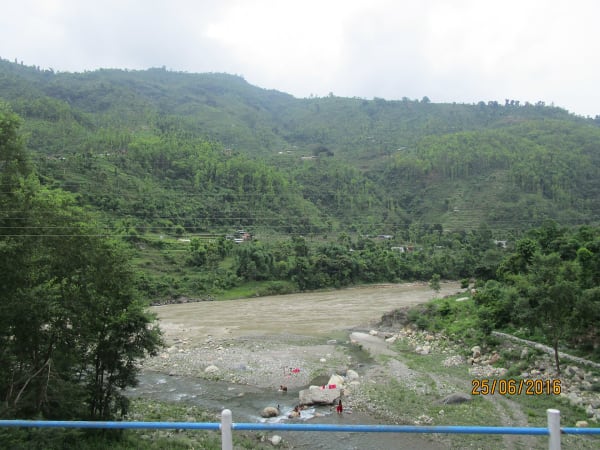
The trail leaves Syabrubesi and climbs steadily out of the valley through terraced fields and forest. It is a sustained ascent, and a fair introduction to the walking, with views opening back over the Bhote Koshi as you gain height.
Gatlang (2,238 m) is the highlight of the Tamang Heritage section and one of the best-preserved traditional villages in Nepal. It is a large Tamang settlement of stone houses with intricately carved wooden windows, set in tiers on a terraced hillside, with water mills still in use and a gompa above the village.
The Tamang are of Tibetan origin and the culture here is strongly Buddhist — chortens, mani walls and prayer flags throughout. Above the village is Parvati Kunda, a sacred lake and pilgrimage site.
Evenings often include traditional Tamang music and dance. Around 5–6 hours. Overnight in Gatlang.
4Day 4Trek from Gatlang (2,238 m) to Tatopani (2,607 m)
Trek from Gatlang (2,238 m) to Tatopani (2,607 m)
A moderate day gaining around 370 m, ending at the hot springs.
The trail leaves Gatlang and descends initially to the Chilime river before climbing again on the far side. There is more up and down than the net figure suggests, and the day passes through forest, terraced fields and a string of small Tamang settlements.
The route crosses the Chilime hydropower area, one of the few pieces of industrial infrastructure in these hills, before continuing up toward the springs.
Tatopani (2,607 m) means simply "hot water", and the village is built around its natural hot springs. The water emerges warm and mineral-rich from the hillside and has been channelled into bathing pools.
After two days of climbing, an hour in the springs is a genuine restorative, and it is a sociable place — villagers use them as much as trekkers do, and the springs are believed locally to have healing properties.
Around 5 hours. Overnight in Tatopani.
5Day 5Trek from Tatopani (2,607 m) to Thuman (2,338 m) via Nagthali (3,165 m)
Trek from Tatopani (2,607 m) to Thuman (2,338 m) via Nagthali (3,165 m)
The most scenic day of the Heritage section, climbing to the Nagthali viewpoint before descending to Thuman.
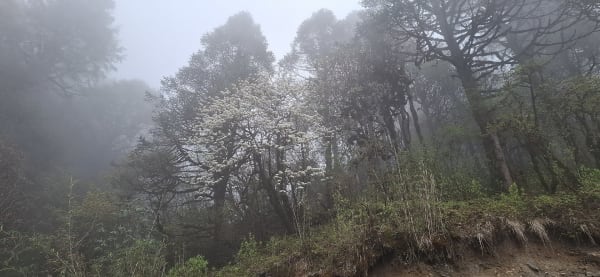
The morning climbs steadily from Tatopani through dense rhododendron and pine forest, gaining around 560 m. In spring this section is spectacular, with the rhododendrons in flower across the whole hillside.
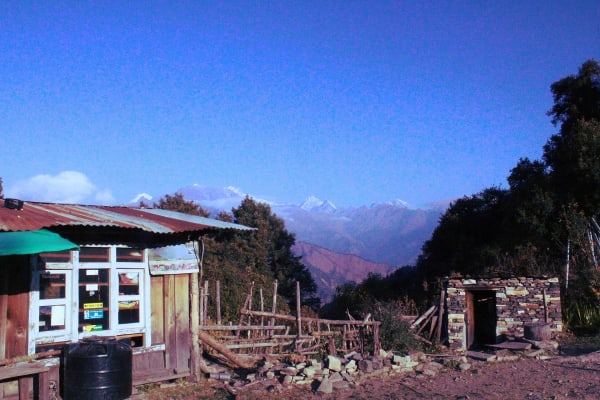
Nagthali (3,165 m) is a high grassland clearing and the best viewpoint on the trail. The panorama takes in the Langtang range, Ganesh Himal, Kerung and the peaks along the Tibetan border. There is an old gompa here, and the meadow was historically used as a meditation retreat.
The descent to Thuman drops around 830 m through forest.
Thuman (2,338 m) is a traditional Tamang village with strong Tibetan Buddhist character — a gompa, mani walls and prayer flags — and it is known for its music and its hospitality. It sits close enough to the border that Tibetan trading links were historically significant.
Around 6 hours. Overnight in Thuman.
6Day 6Trek from Thuman (2,338 m) to Briddim (2,229 m)
Trek from Thuman (2,338 m) to Briddim (2,229 m)
An easy day with almost no net height change, following the hillsides south.
The trail descends from Thuman toward the Bhote Koshi before contouring and climbing gently to Briddim. The walking is straightforward and passes through forest, terraced fields and small settlements, with views down the valley toward Syabrubesi.
This is the last day of the Tamang Heritage section, and a good one for taking in the ordinary rhythm of these villages — grain drying on rooftops, animals moved between fields, and paths busy with local traffic rather than trekkers.
Briddim (2,229 m) is a compact Tamang village of around forty stone houses arranged in the shape of a bull, set beneath Langtang Lirung. It is strongly Tibetan Buddhist, with a gompa and mani walls, and it is particularly well organised for homestays — the village runs a rotation so income is shared between households.
Around 4–5 hours. Overnight in a Briddim homestay.
7Day 7Trek from Briddim (2,229 m) to Lama Hotel (2,470 m)
Trek from Briddim (2,229 m) to Lama Hotel (2,470 m)
The transition day, leaving the Heritage Trail and joining the Langtang valley route.
The trail descends from Briddim to the Langtang Khola and joins the main valley trail, then turns east and follows the river upstream. The net gain is small but the day involves a substantial descent followed by a sustained climb.
The change in character is immediate. The Heritage Trail was about villages and homestays; from here the route is a forested river gorge with lodges rather than settlements, and you will meet many more trekkers.
The forest through this section is excellent — oak, bamboo, pine and rhododendron, thick with moss and ferns, with the river loud below. Langur monkeys are common in the canopy and the birdlife is varied. Red pandas live in this valley, though sightings are rare.
Lama Hotel (2,470 m) is a cluster of lodges in a forest clearing. Around 5–6 hours. Overnight at Lama Hotel.
8Day 8Trek from Lama Hotel (2,470 m) to Langtang Village (3,450 m)
Trek from Lama Hotel (2,470 m) to Langtang Village (3,450 m)
A climb of around 980 m out of the forest and into the open upper valley.
The trail continues east beside the Langtang Khola, climbing steadily. The forest thins through the morning and at around 3,000 m the valley opens out — Langtang Lirung (7,227 m) appears above and glaciers become visible at the head of the valley.
You pass the army checkpoint at Ghoda Tabela, and beyond it the country is open pasture and scrub, with yaks grazing and mani walls, chortens and prayer flags marking the Tibetan Buddhist character of the upper valley.
Langtang Village (3,450 m) has a difficult recent history that is worth knowing: the original settlement was completely destroyed by a landslide during the 2015 earthquake, with heavy loss of life. The village standing today was rebuilt by the survivors, and a memorial marks the site.
The rebuilt lodges are well run and the welcome is warm. Around 5–6 hours. Overnight in Langtang Village.
9Day 9Trek from Langtang Village (3,450 m) to Kyanjin Gompa (3,870 m)
Trek from Langtang Village (3,450 m) to Kyanjin Gompa (3,870 m)
A short, gentle day of around 420 m to the highest settlement in the valley.
The day is deliberately easy, putting you at 3,870 m with a full afternoon free to rest, acclimatise and explore.
The trail climbs gradually through open alpine country, past yak pastures and some of the longest mani walls in Nepal — stone walls faced with carved prayer stones, traditionally passed on the left. Chortens and prayer flags line the route, and the valley walls rise steeply on both sides.
Kyanjin Gompa (3,870 m) sits in a superb position directly beneath Langtang Lirung (7,227 m), with the Lirung glacier tumbling off the mountain above. There is an old Buddhist monastery and a small cheese factory, founded with Swiss assistance in the 1950s and still producing yak cheese.
The afternoon can be spent on the short walk to the glacier viewpoint, or a gentle climb toward Kyanjin Ri. Around 3 hours. Overnight at Kyanjin Gompa.
10Day 10Trek from Kyanjin Gompa (3,870 m) to Lama Hotel (2,470 m)
Trek from Kyanjin Gompa (3,870 m) to Lama Hotel (2,470 m)
A long descent of 1,400 m, retracing the valley in a single day.
The route reverses the walk in — down through Langtang Village and Ghoda Tabela, and back below the treeline into forest. Descending covers ground far faster than climbing did, and what took two days upward takes one on the way down.
Walking the valley in the opposite direction gives a genuinely different view. On the way up the eye is on the peaks ahead; going down, the outlook is over the valley and its forested walls, usually in better afternoon light.
The physiological effect is welcome too — after nights at 3,450 m and 3,870 m, the thicker air lower down means better sleep and a sharper appetite.
The descent is sustained and hard on the knees, and the trail is rocky in places, so poles are worth using.
Lama Hotel (2,470 m) is the same forest clearing as on the way up. Around 5–6 hours. Overnight at Lama Hotel.
11Day 11Trek from Lama Hotel (2,470 m) to Syabrubesi (1,467 m)
Trek from Lama Hotel (2,470 m) to Syabrubesi (1,467 m)
The final walking day, descending around 1,000 m down the Langtang gorge to the roadhead.
The trail follows the Langtang Khola downstream, dropping steadily through the forested gorge and crossing the river several times on suspension bridges. The walking is pleasant and shaded, through the same oak, bamboo and rhododendron woodland you climbed through on the way in.
As you lose height the air warms and thickens noticeably, and the vegetation becomes more subtropical near the valley floor.
This is a good last stage — no significant climbing, plenty to look at, and a real sense of the trip closing as the valley opens out toward Syabrubesi.
Syabrubesi (1,467 m) has lodges, shops and hot showers, and arriving back where the walking began, having gone up the Heritage Trail and down the Langtang valley, closes the loop.
The evening is the natural time to celebrate with your guide and porters. Around 5–6 hours. Overnight in Syabrubesi.
12Day 12Drive from Syabrubesi (1,467 m) to Kathmandu (1,400 m)
Drive from Syabrubesi (1,467 m) to Kathmandu (1,400 m)
The drive back to the capital, around seven to eight hours on mountain roads.
The road climbs steeply out of the Bhote Koshi valley to Dhunche, where you check out of the national park, then crosses the ridge system before the long descent toward the Trishuli valley.
This is a spectacular but slow road, cut into steep hillsides with long drops below and a rough surface in sections. On a clear morning there are last views back toward Langtang and Ganesh Himal from the high points.
Lower down the road passes through Trishuli Bazar and follows the river before joining the highway and climbing over the Kathmandu valley rim.
You arrive in the late afternoon and transfer to your hotel. The evening is free — a hot shower, souvenir shopping in Thamel, or a farewell dinner with the guide and crew after nearly two weeks on the trail. Overnight in Kathmandu.
13Day 13Departure from Kathmandu (1,400 m)
Departure from Kathmandu (1,400 m)
The last day of the Tamang Heritage and Langtang Valley Trek.
Depending on your flight time there may be free hours in the morning. Thamel is the obvious place for last-minute shopping, and Boudhanath — the great stupa at the centre of Kathmandu's Tibetan Buddhist community — connects directly to the gompas, mani walls and prayer flags of the Tamang villages and the Langtang valley.
Our representative collects you from your hotel and transfers you to Tribhuvan International Airport approximately three hours before departure.
You leave having walked two quite different routes in one trip: the Tamang Heritage Trail through Gatlang, Tatopani, Thuman and Briddim, staying in village homestays and crossing the Nagthali viewpoint; and the Langtang valley to Kyanjin Gompa (3,870 m) beneath Langtang Lirung — all reached by road, with no domestic flights involved.
Inclusions & Exclusions
Private transport to and from Syabrubesi, Kathmandu accommodation, homestay and teahouse lodging, all trekking meals, national park permits, a licensed guide, trekking map, first aid, and government taxes are included, while international flights, visa, insurance, personal gear, porter service, city meals, personal expenses, and tips are excluded.
What's Included
Airport pickup and drop-off services in Kathmandu.
Private transportation from Kathmandu to Syabrubesi and back to Kathmandu as per the itinerary.
Accommodation in Kathmandu with breakfast.
Accommodation in local teahouses during the trek.
Langtang National Park Entry Permit and required trekking permits.
Professional English-speaking licensed trekking guide.
Three meals a day (breakfast, lunch, and dinner) during the trek.
Group trekking map for route guidance.
First aid kit carried by the guide.
Homestay accommodation in the Tamang Heritage villages as per the itinerary.
All government taxes, permit fees, and service charges.
What's Excluded
International flight tickets to and from Nepal.
Nepal entry visa fees.
Travel insurance, including emergency helicopter evacuation coverage.
Personal trekking equipment and clothing.
Porter services (available at an additional cost).
Lunch and dinner in Kathmandu.
Snacks, bottled water, hot showers, Wi-Fi, charging fees, and alcoholic or soft drinks.
Personal expenses such as laundry, phone calls, and souvenirs.
Tips for guides, drivers, and support staff.
Any additional accommodation, transportation, or expenses caused by unforeseen circumstances beyond the itinerary.
Route Map
Explore the terrain map showing the trek route.
Loading map...
Altitude Profile
Pricing
Transparent per-person pricing based on group size, covering the services listed in the itinerary with no hidden charges.
Add-ons
Customize your trek with optional services such as porter support and other personalized arrangements at an additional cost.
Best Time to Trek
March to May and October to November are the two main seasons. Spring brings rhododendron through the forests around Gatlang and Nagthali and comfortable village temperatures. Autumn gives the clearest views of Langtang Lirung and Ganesh Himal from the ridge and is also festival season in many Tamang villages, which can make for memorable timing.
Because most of the route sits between 1,500 m and 2,600 m, the Tamang Heritage section stays walkable through December and January, though the Langtang valley portion becomes cold and the upper lodges thin out. The monsoon brings landslide risk on the road to Syabrubesi, leeches on the forest trails, and cloud that removes the mountain views.
For a month-by-month look at weather and trail conditions, see our guide to the best time to trek in Nepal.
Tamang Culture and Homestays
The Tamang are one of Nepal's largest ethnic groups, with a language, Buddhist practice, and building style closely related to Tibet's — unsurprising given that these villages sit within a day's walk of the border. Gatlang, Thuman, and Briddim are among the best-preserved Tamang settlements in the country, with houses of dry-laid stone, elaborately carved wooden windows, communal water mills, and gompas that remain in active use.
Accommodation on this section is largely in homestays rather than commercial lodges, which means sleeping in a family home, eating what the household eats, and paying money that goes directly to that family. It is a considerably more personal experience than a teahouse trek. Your guide will explain the customs: remove shoes indoors, walk clockwise around chortens and mani walls, accept tea when offered, and ask before photographing people or gompa interiors.
Travel Insurance
Travel insurance covering trekking to at least 4,500 m is required, giving a safe margin over the highest point of this itinerary at Kyanjin Gompa, 3,870 m. If you add the optional Kyanjin Ri or Tsergo Ri climbs, you will need cover to 5,500 m instead, so it is worth taking the higher limit to keep the option open.
Confirm the policy includes emergency helicopter evacuation and medical treatment. The Tamang villages are remote from any road beyond Syabrubesi, and the upper Langtang valley has no vehicle access at all, so evacuation means a helicopter, which operators dispatch only against a guarantee of payment. Send us your policy number and the insurer's emergency contact before departure.
Our guide to travel insurance for trekking in Nepal explains the altitude limits, evacuation terms and common exclusions to check before you buy.
Packing List
Most of this trek is at moderate elevation, but the Langtang valley section gets genuinely cold. Bring waterproof trekking boots, three base layers, a fleece, an insulated down jacket, a waterproof and windproof shell, trekking trousers, a warm hat, sun hat, gloves, and wool socks. A sleeping bag rated to -10°C covers Kyanjin Gompa, and a liner is worth having for the homestays.
Also pack a 30-litre daypack, trekking poles, a headlamp with spare batteries, high-SPF sunscreen and lip balm, sunglasses, a reusable bottle with purification tablets or a filter, a small first aid kit with blister care, insect repellent for the forest sections, a quick-dry towel, toiletries, a power bank, and a swimsuit or quick-dry shorts for the Tatopani hot springs. A few small gifts such as pens or fruit are appreciated in homestays but are not expected.
For the complete kit list, organised by the altitude you will reach, see our Nepal trekking packing list.
Food & Drinking Water
Three meals a day are included on the trek. In the homestay villages you eat what the family cooks, which usually means dal bhat with locally grown vegetables, dhido made from millet or buckwheat, potatoes, eggs, chapati, and butter tea. Portions are generous and the food is simple, fresh, and often better than standard teahouse fare. In the Langtang valley the menus broaden to include noodles, fried rice, momos, pasta, and the well-known Kyanjin yak cheese.
Tell us in advance about vegetarian, vegan, or allergy requirements so that homestay families can plan — village shops are limited and substitutions cannot be made at short notice. Water comes from spring-fed taps and village supplies and must be treated with tablets, a filter, or a UV pen; bottled water is inconsistently available in the Tamang villages, and treating your own is both cheaper and better for a region with no waste collection.
What the lodges are really like, from rooms and meals to showers and charging, is covered in our guide to teahouse trekking in Nepal.
Frequently Asked Questions
Find quick answers to common questions about the Tamang Heritage Trek.
1How many hours do we walk each day?
Four to six hours on the Tamang Heritage section and five to seven in the Langtang valley. The Lama Hotel to Langtang Village and Langtang to Kyanjin Gompa days are the longest and involve the most sustained climbing.
2Which permits are required and do you arrange them?
You need the Langtang National Park Entry Permit and trekking registration, both included in your package and arranged by our team from passport copies and passport-sized photographs sent in advance.
3What are the homestays actually like?
You sleep in a room in a family home, usually on a mattress with blankets provided, with a shared and often basic toilet. Facilities are simpler than a teahouse, but you eat with the family and get a much closer sense of village life. A sleeping bag liner is worth bringing.
4How difficult is this trek?
Moderate. There is no pass and the Tamang section stays at village elevations, but the days involve a lot of climbing and descending between ridges, and the Langtang valley portion goes to 3,870 m. Reasonable hill fitness is enough for most people.
5Is this trek suitable for families?
Yes, particularly the Tamang Heritage section, which is low, culturally rich, and has short days. Active children from around ten manage it well. The Langtang valley portion is more demanding and can be shortened if needed.
6Is mobile network and Wi-Fi available?
Coverage reaches most Tamang villages and the main Langtang settlements, with dead zones in the forest and on the ridges. Wi-Fi is rare in the homestays and available at some Langtang lodges at slow speeds.
7Can I charge my devices on the trail?
Charging is available in most villages from micro-hydro or solar power, usually for a small fee, though supply in the homestays can be limited. Bring a power bank, particularly for the higher Langtang valley nights where cold drains batteries.
8Where can I withdraw cash?
There is an unreliable ATM in Dhunche and none elsewhere on the route. Carry all your Nepalese rupees from Kathmandu — homestays and village shops are strictly cash-only.
9How close does the trail come to the Tibetan border?
Thuman and Timure sit within a few hours' walk of the border crossing at Rasuwagadhi, and the Tibetan influence on architecture, language, and religion is obvious throughout. The border itself cannot be crossed on this permit and is not part of the itinerary.
10Can I leave extra luggage in Kathmandu?
Yes. Your Kathmandu hotel stores anything you do not need on the trail free of charge until you return.
Gallery
Explore authentic moments, landscapes, and mountain views from the Tamang Heritage Trek.
Trekking Guides & Articles
Tamang Heritage Trail: Villages, Hot Springs, and a Tibet Border View — A cultural trek through Tamang villages west of Langtang, with homestays, natural hot springs at Tatopani, and a ridge view into Tibet from Nagthali.
Ruby Valley Trek: The Ganesh Himal Circuit Nobody Walks — A circuit through the Ganesh Himal foothills between Langtang and Manaslu, over the Pangsang pass.
Ganesh Himal Trek: The Complete Guide — A wilderness crossing between the Langtang and Manaslu ranges, over the Singla Pass at 4,600 m, within a day's drive of Kathmandu.
Langtang After the 2015 Earthquake: What Happened and Why Go Now — The 2015 earthquake destroyed Langtang village and much of the valley's trekking economy.
Langtang Valley Trek: The Complete Guide — The closest big Himalayan valley to Kathmandu — no flight, no restricted permit, and a glacier-head village at 3,870 m with a 4,773 m viewpoint above it.
Paldor Peak Climbing: The Complete Guide — One of the first peaks the NMA opened and still one of the least climbed — a classic PD+ snow and ice ridge in the Ganesh Himal.
Fix Departure
This trek runs every week on the selected day. Choose custom dates for one-off departures.
Showing fixed departures in Oct 2026
Guest Reviews
Absolutely brilliant
“We booked Tamang Heritage Trek on a friend's recommendation and it was the best advice we got all year. The teahouses and lodges were clean and welcoming, and the food was far better than I expected a...
Magdalena Ortiz
Get in Touch
Tell us the dates you have in mind and roughly what you want out of the trek — one of our guides will reply, usually within 24 hours.
Email Us
info@greencompasstreks.com
Call Us
+977 9864379436
Office
Lakeside, Pokhara, Nepal
Office Hours
Sunday – Friday, 9:00 AM – 9:00 PM
Similar Treks
You might also like these treks

Porter
$424 $385/porter
No payment required yet