The Ruby Valley sits in the Dhading and Rasuwa districts between the Langtang and Manaslu regions, beneath the Ganesh Himal — a massif of 7,000 m peaks that almost no trekkers visit despite being clearly visible from Kathmandu. The valley takes its name from the ruby and crystal deposits mined in the hills here.
The trek is a circuit over the Pangsang pass through Tamang and Gurung villages, and its distinguishing feature is simply how few people walk it: a few hundred a year, against tens of thousands in Annapurna. It is road-accessible, moderate, and as close to unvisited as a teahouse-feasible trek in Nepal gets.
The Trek at a Glance
| Duration | 11 days from Kathmandu |
| Highest point | Pangsang pass, about 3,320 m |
| Difficulty | Moderate — long hill days, basic lodges and homestays |
| Access | Road from Kathmandu to Syabrubesi or Dhading, 5–7 hours |
| Permits | Trekking registration; Langtang National Park entry on some variants |
| Best seasons | March to May, October to November |
| Accommodation | Homestays and basic lodges |
We run it as an 11-day Ruby Valley Circuit.
The Route
The circuit runs between the Trishuli and Budhi Gandaki drainages, crossing the ridge that separates the Langtang region from Manaslu.
- Syabrubesi or Dhading to Gatlang — the same Tamang village that anchors the Tamang Heritage Trail, with its monastery and the sacred Parvati Kunda lake.
- Over the Khurpu Bhanjyang and Somdang — through high pasture to the old mining settlement at Somdang, where the ruby and zinc workings were, beneath the Paldor peak.
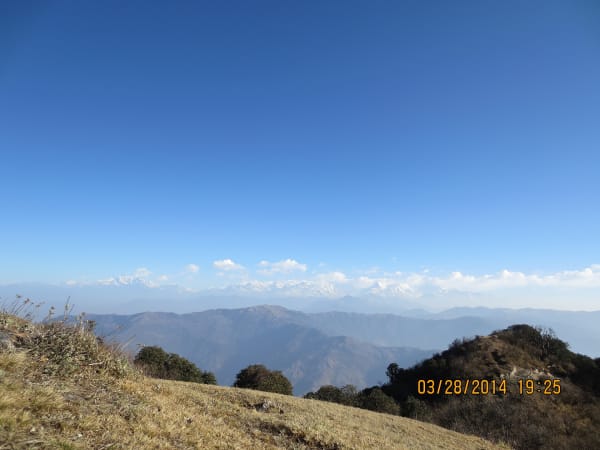
- Pangsang pass (about 3,320 m) — a broad grassy pass with the Ganesh Himal directly north, Langtang Lirung east, and Manaslu west. The view from here is the high point of the trek and one of the best panoramas in central Nepal.
- Tipling, Shertung and Borang — Tamang and Gurung villages on the southern side, with a mix of Buddhist and Hindu culture and homestay accommodation.
- Down to the Ankhu Khola and out — to a road in the Dhading district and back to Kathmandu.
Variants exist in both directions and with side trips toward the Ganesh Himal base camp. With extra days the circuit can also be extended west to link with the Manaslu Circuit approach, which is a genuinely remote fortnight.
What It Is Like
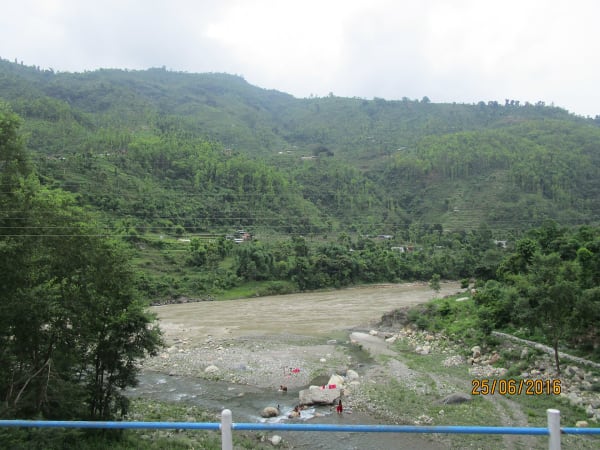
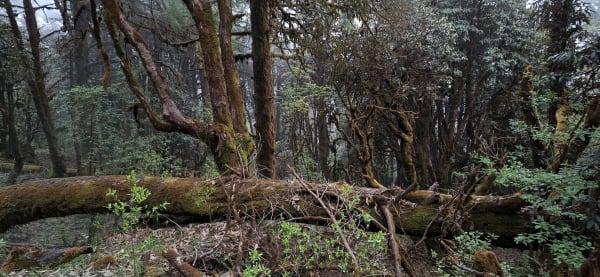
Expect hill country rather than high alpine: terraced farmland, oak and rhododendron forest, pasture, and villages where trekking is still unusual enough that you will be asked where you are from and then fed.
- Accommodation is homestays and basic lodges. Clean, simple, a bed in a family house, meals with the household. Bring a sleeping bag.
- Food is what the village eats — dal bhat, dhido, potato, seasonal vegetables, and local millet liquor if offered.
- The mountains are close but there is no base camp. Ganesh Himal, Manaslu and Langtang Lirung are all in view from the high ground, particularly at Pangsang.
- The trail is not always obvious. This is not a signposted corridor, and a guide who has walked it recently matters more here than on a main route.
- Culture is mixed. Tamang Buddhist villages on the northern side, Gurung and Hindu settlements to the south, with a visible transition.
Who Should Go
- Trekkers who have done the classics and want somewhere Nepali trekking has not reshaped.
- Anyone who prefers villages to base camps. The cultural content is the point here.
- Trekkers avoiding flights. Entirely road-accessible from Kathmandu.
- People comfortable with basic accommodation. Homestays, outside toilets, no showers at altitude.
- Trekkers wanting moderate altitude. Nothing above 3,320 m, so no altitude risk worth the name.
Practical notes
Three things worth planning around. First, the transfer days are long — five to seven hours each way on mountain roads that slide in the monsoon, so allow a full day at each end and do not book an international flight for the evening you drive back. Second, carry cash in small notes; there is nothing resembling an ATM once you leave the highway, and homestay payments are settled locally. Third, bring a sleeping bag rated to -10 °C — bedding in homestays is provided but thin, and the night at Somdang is cold.
On season: March to May gives rhododendron through the forest sections and the clearest Ganesh Himal views of spring, while October and November give the sharpest air and the driest trails. We would avoid the monsoon here entirely — the trail is not engineered for it, leeches are a genuine nuisance in the forest, and the road can close.
Who should not: first-time trekkers in Nepal, anyone who wants a glacier or a high pass, and anyone who needs reliable lodge comfort. For a first trip, Langtang Valley is the better introduction to the same region, and our off-the-beaten-path guide compares the other quiet options across the country.