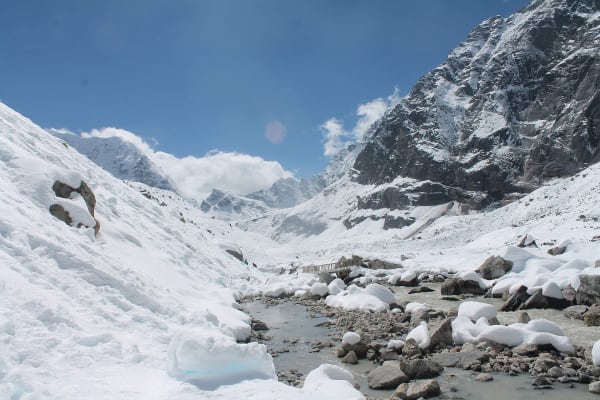
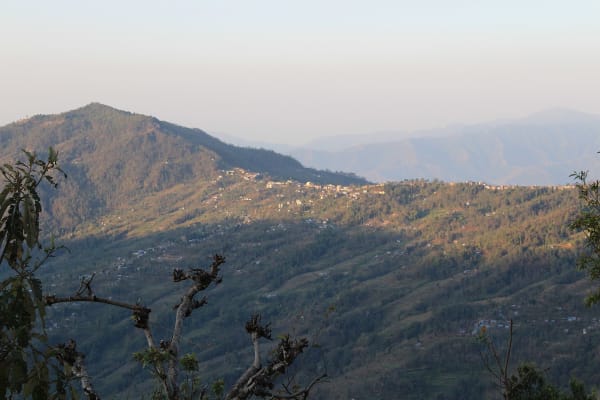
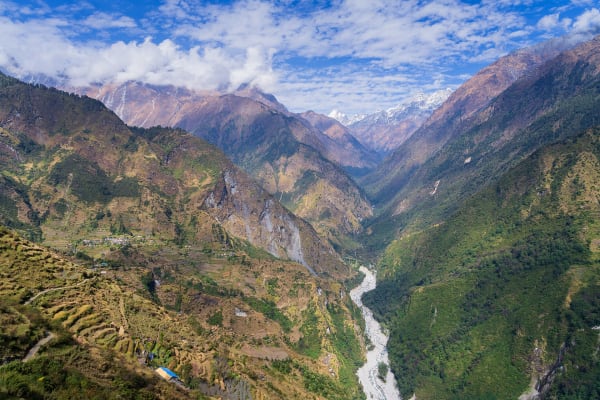
Around two thirds of Nepal's trekkers walk in the Annapurna and Everest regions. The rest of the country — a Himalayan chain 800 km long with dozens of inhabited valleys — takes the remainder, and in many of those valleys a foreign trekker is still an event.
These are the routes worth knowing about, with a clear picture of what you give up: lodge comfort, easy access, reliable rescue, and in several cases any infrastructure at all.
Quiet, Accessible, and Easy — Start Here
Routes with genuine solitude that do not require camping, a restricted permit, or a difficult flight.
- Khopra Danda, 13 days — a community lodge at 3,660 m facing Dhaulagiri across the Kali Gandaki, two valleys from Poon Hill and a world away in traffic. The best single recommendation on this page.
- Mohare Danda, 10 days — village-owned lodges on a quiet Annapurna ridge, gentle stages, and income that funds local schools.
- Pikey Peak, 8 days — Everest, Makalu and Kanchenjunga from 4,065 m, by road from Kathmandu with no flight.
- Ama Yangri, 5 days — a sacred Helambu ridge four hours from Kathmandu that almost no foreign trekker visits.
- Khori Himal, 10 days — a newly opened Annapurna-region trail with very few lodges and even fewer walkers.
- Tamang Heritage Trail, 13 days — homestays, hot springs and a Tibet border view, combined with the Langtang valley.
Remote but Manageable
More committing — longer approaches, basic lodges, sometimes a restricted permit or some camping — but within reach of a reasonably experienced trekker.
- Manaslu Circuit, 15 days — the best long teahouse trek in Nepal, with no roads on the route and a 5,106 m pass.
- Tsum Valley, 13 days — a restricted valley where killing animals is forbidden by vow, with monasteries at Mu and Rachen.
- Nar Phu Valley, 14 days — two medieval villages behind the Annapurnas and the 5,320 m Kang La.
- Ruby Valley Circuit, 11 days — the Ganesh Himal foothills between Langtang and Manaslu, with homestays and the Pangsang pass.
- Rara Lake, 11 days — Nepal's largest lake in the far west, and one of the best monsoon options in the country.
- Mundum Trail, 13 days — Kirat Rai homestay country in the eastern hills, with an Everest-to-Kanchenjunga ridge view.
- Red Panda Trail, 12 days — tea gardens and cloud forest in Ilam, built around red panda conservation.
- Panch Pokhari, 11 days — five sacred lakes at 4,620 m in the Jugal Himal, road-accessible and nearly unvisited.
Genuinely Remote
Expeditions rather than treks — days from a road, camping, and a real need for experience.
- Kanchenjunga Circuit, 21 days — both base camps of the world's third-highest mountain in far-eastern Nepal.
- Makalu Base Camp, 17 days — the Barun valley, one of the most beautiful and least visited in the Himalaya.
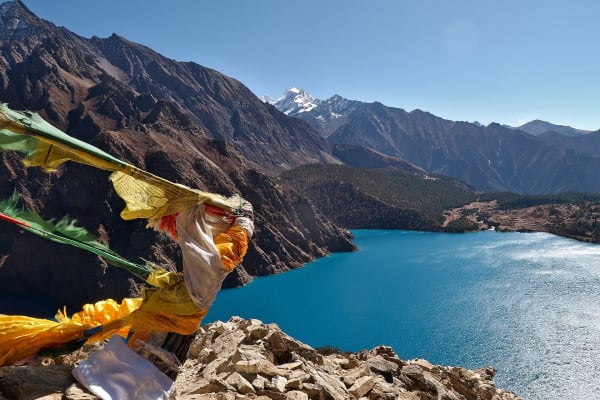
- Lower Dolpo, 17 days — Phoksundo Lake and Dho Tarap at a permit cost of USD 20 a week.
- Upper Dolpo, 26 days — Shey Gompa and the Crystal Mountain, the remotest inhabited region in Nepal.
- Api Himal Base Camp, 15 days — a 7,132 m peak in Darchula, with no trekking infrastructure at all.
- Rolwaling Valley, 17 days — a sacred hidden valley with Gaurishankar above and Tsho Rolpa at its head.
- Tilman Pass, 15 days — a committed Langtang crossing for experienced parties.
What You Trade for Solitude
| What you give up | Which routes | How it feels in practice |
|---|---|---|
| Lodge comfort | Dolpo, Makalu, Api, Rolwaling upper valley | Homestays, huts, and tents. No showers for days. |
| Easy access | Kanchenjunga, Dolpo, Api, Rara | Two flights and a long drive, with real delay risk |
| Reliable rescue | Everything in the remote tier | Helicopter only, weather-dependent, hours or a day away |
| Food variety | All remote routes | Dal bhat, potato, buckwheat. Our crew carries the rest. |
| Trail certainty | Ruby Valley, Mundum, Api | Unsignposted village networks; a guide who knows them matters |
| Low permit cost | Upper Mustang, Upper Dolpo | USD 500 for ten days in those two regions |
| Connectivity | Everything beyond the main corridors | Days without signal. Tell people at home. |
What you gain is harder to put in a table. On the Manaslu gorge stages, in the Barun valley, or walking into Nar or Phu, you get the experience that Nepali trekking was built on — a valley with its own life, where you are a visitor rather than part of a stream. That is worth a cold night and a basic room.
How to Choose
- First time in Nepal, want quiet: Khopra Danda or Mohare Danda.
- One week, no flight: Pikey Peak or Ama Yangri.
- A long teahouse circuit: Manaslu, with the Tsum Valley if you have three weeks.
- Culture above all: Tsum Valley, Mundum trail, or Upper Mustang.
- A monsoon trek: Upper Mustang, Lower Dolpo, Nar Phu, or Rara.
- The remotest thing available: Upper Dolpo, or Api Himal in the far west.
- Big mountains, no crowds: Kanchenjunga north base camp or Makalu.
- A technical traverse: the Tashi Lapcha from Rolwaling into the Khumbu.
One practical point that applies to all of them: these routes depend far more on the guide than the classics do. On the Everest trail a weak guide is an inconvenience; in the Ruby Valley or the upper Barun it is a problem. We staff remote treks with guides from or experienced in the specific region, and that is where a meaningful part of the cost difference goes.