On 25 April 2015, a magnitude 7.8 earthquake struck central Nepal. In the Langtang valley it triggered a catastrophic ice and rock avalanche off the flank of Langtang Lirung that buried Langtang village almost completely. More than 300 people died there — villagers, lodge families, trekkers, and guides — in what was one of the single deadliest events of the disaster.
A decade later the valley has been rebuilt, largely by the families who survived. The lodges are open, the trail is realigned, and trekker numbers have never fully recovered. That last fact is the reason this article exists.
What Happened in 2015
The earthquake itself shook the valley hard, but the destruction of Langtang village came from what followed: a hanging glacier and a large volume of snow and rock released from high on Langtang Lirung, which fell several thousand metres and generated an air blast and debris flow powerful enough to flatten the village and strip the hillside opposite.
- Langtang village, a settlement of around 55 houses and many lodges, was almost entirely destroyed.
- More than 300 people died in the valley, including residents, Nepali staff, and foreign trekkers.
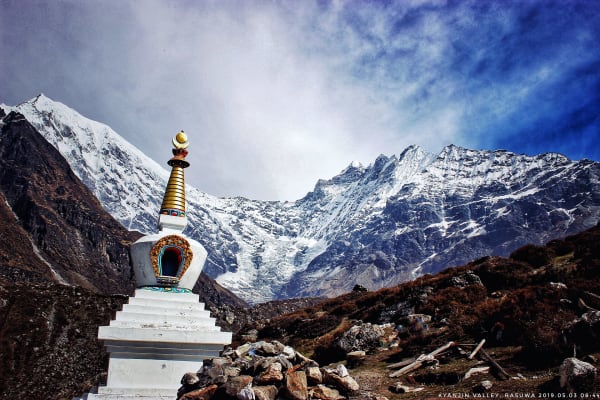
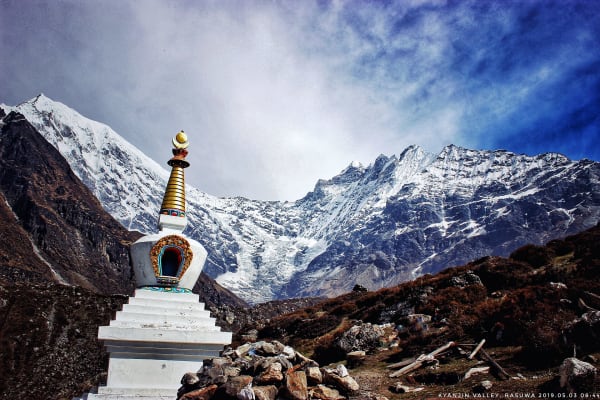
- Kyanjin Gompa above was damaged but survived; villages lower down, including Ghoda Tabela and the gorge lodges, lost buildings.
- The trail was blocked by landslides in multiple places, and the valley was closed to trekking for the rest of 2015.
- In the Rasuwa district more widely, including the Tamang Heritage villages of Gatlang, Thuman and Briddim, thousands of houses were lost.
Survivors from Langtang village spent the following winter in Kathmandu, in a community that organised itself to campaign for the right and the resources to return. Most did return.
What the Valley Is Like Now
The trek is fully operational and has been for years. Practically, here is what has changed:
- New Langtang village stands beside the old site, with rebuilt lodges. The debris field where the old village stood is left as it is, with a memorial wall listing the names of the dead. The trail passes directly through it.
- Lodges throughout the valley are new. Many are better built than what they replaced — stronger construction, better insulation, solar hot water.
- The trail has been realigned around the worst landslide scars, and some sections take a different line from the pre-2015 route.
- Kyanjin Gompa is rebuilt and has a good range of lodges again, plus the reopened cheese factory.
- Tamang Heritage villages have rebuilt their homestays, and the community scheme at Briddim is running.
- Visitor numbers remain below pre-2015 levels, which is the valley's main remaining problem.
Geologically, the valley is as safe as any high Himalayan valley — which is to say that earthquakes and avalanches are part of the landscape, here as in Khumbu and Annapurna. Nothing about the 2015 event makes Langtang more hazardous now than its neighbours.
Walking Through the Memorial
The trail between Ghoda Tabela and new Langtang village crosses the debris field, and there is a memorial wall with the names of those who died. It is an ordinary part of the walking day and it deserves some thought beforehand.
- Walk through quietly. Many of the lodge families you will meet that evening lost relatives here.
- Photograph the memorial if you wish, but not people visiting it.
- Your guide will usually say something about what happened. Listen rather than asking for detail from lodge owners unless they raise it.
- Several lodges display photographs of the old village. If a family wants to talk about it, they will.
- Leaving a donation at the memorial or the rebuilt gompa is appropriate and quietly appreciated.
What visitors consistently report is how little the valley trades on it. There is no exhibit and no appeal; there is a wall with names on it, and a village that got on with rebuilding.
Why Going Is the Support
Langtang's economy before 2015 was overwhelmingly trekking. The rebuilding was funded by aid, remittances, loans, and the families' own savings — and the loans are repaid out of lodge income.
- A week in the valley puts money directly into rebuilt family businesses. Lodge fees, meals, showers, and the cheese factory at Kyanjin all go to households that borrowed to rebuild.
- The Tamang Heritage homestays distribute income across whole villages rather than individual lodges.
- It is the cheapest major Himalayan trek we run — no flight, no restricted permit — so the support costs you less than an equivalent trek elsewhere.
- Quiet trails are a benefit to you and a problem for them. Going resolves both.
If you want the practical route detail, our Langtang Valley guide covers the trek itself, the Tamang Heritage guide covers the village week, and the Gosaikunda guide covers the lakes and the pass to Helambu.