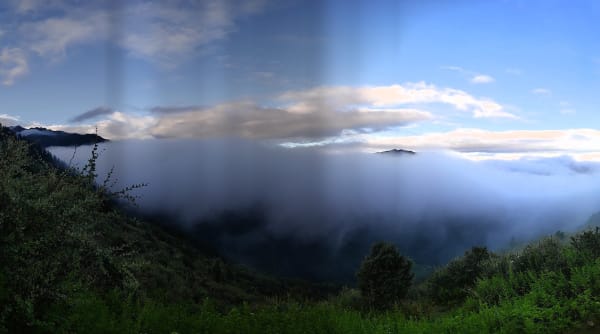
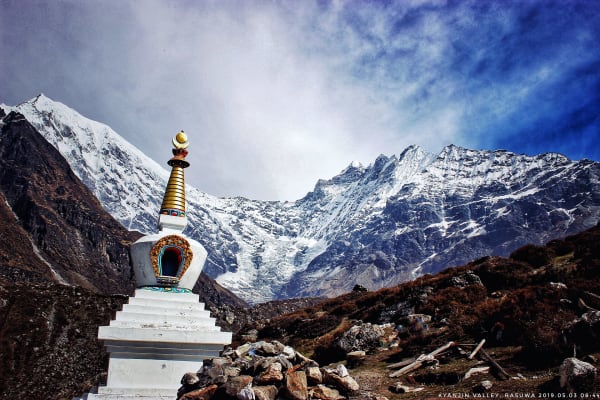
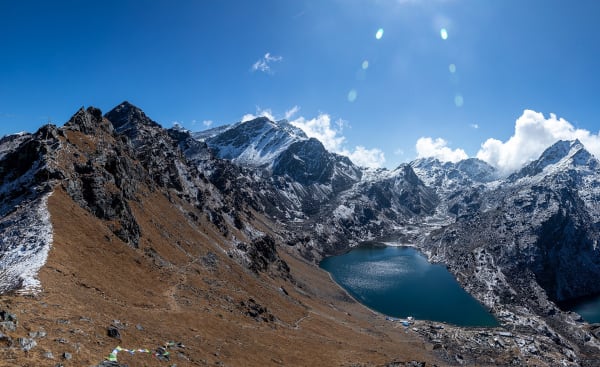
Gosaikunda is a chain of glacial lakes on a bare ridge at around 4,380 m in Langtang National Park, a two-day climb above Dhunche. In Hindu tradition the main lake was created by Shiva striking the mountain with his trident to quench his thirst after swallowing poison, and each August tens of thousands of pilgrims walk up to bathe in it at Janai Purnima.
The rest of the year it is a quiet, stark, high place — nine or more lakes scattered across a rock basin, frozen in winter, with Langtang Lirung and the Ganesh Himal on the horizon. It can be trekked on its own or linked to the Langtang valley over a 4,610 m pass.
The Trek at a Glance
| Duration | 12 days as a standalone trek from Kathmandu |
| Highest point | Laurebina La, about 4,610 m |
| Main lake | Gosaikunda, about 4,380 m |
| Difficulty | Moderate — a steep sustained climb and a high pass |
| Access | Road to Dhunche or Syabrubesi, 6–8 hours from Kathmandu |
| Permits | Langtang National Park entry and trekking registration |
| Best seasons | March to May, October to November; August for the pilgrimage |
We run it as a 12-day Gosaikunda Lake Trek, as part of a 15-day combination with the Langtang valley, and as a shorter pilgrimage-focused tour.
The Route
Dhunche to Sing Gompa (1,960 m to 3,250 m)
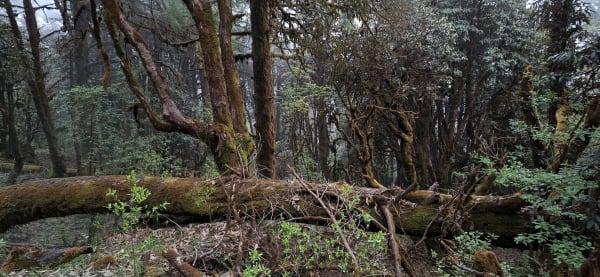
From the road at Dhunche or Syabrubesi, a steep climb through oak, fir and rhododendron forest to Sing Gompa — also called Chandanbari — with an old monastery and a cheese factory. The forest here holds red panda and Himalayan black bear, though seeing either is unlikely.
Sing Gompa to Gosaikunda (3,250 m to 4,380 m)
Out of the trees onto an open ridge at Lauribina, with a long traverse and a panorama back over the Trishuli valley to the Ganesh Himal, Manaslu, and on clear days the Annapurnas. The trail passes the smaller lakes — Saraswati Kunda and Bhairav Kunda — before reaching Gosaikunda itself, with a handful of basic lodges and a small shrine on the shore.
Over the Laurebina La (4,610 m)
If you are continuing rather than returning, the trail climbs past more lakes to the Laurebina La at around 4,610 m, then drops steeply east into the Helambu region — Phedi, Ghopte, and Tharepati — through a long, rough, often snowy descent. This is the crux of the combination route, and it needs settled weather.
Helambu and out
Down through the Sherpa and Tamang villages of Helambu — Tarkeghyang, Sermathang — to the road at Melamchi Pul, about four hours from Kathmandu. Helambu is warm, green, and culturally distinct from the high valley, and a good decompression after the pass.
Janai Purnima: The August Pilgrimage
On the full moon of the Nepali month of Shrawan — usually August — Gosaikunda becomes one of the largest high-altitude pilgrimages in the Himalaya. Tens of thousands of Hindu pilgrims, many barefoot, walk up from Dhunche in a day or two to bathe in the lake and have their sacred thread, the janai, renewed by priests on the shore.
- What it is like: extraordinary and chaotic. The trail becomes a continuous stream of people, shrines appear along it, and the lake shore is covered with pilgrims and tents.
- Weather: it falls in the monsoon, so expect rain, cloud, and mud. The mountain views are largely absent.
- Lodges: full beyond capacity. Pilgrims sleep in the open or in temporary shelters, and trekking lodges are booked out.
- If you want to see it: tell us months ahead, expect basic conditions, and treat it as a cultural experience rather than a mountain trek.
- If you do not: avoid the fortnight around the full moon in August entirely.
Shamans and jhankri from the surrounding hills also come to the lake at Janai Purnima, drumming and dancing, which is a quite different tradition layered onto the same site. It is one of the more remarkable things to witness in Nepal.
Difficulty and Altitude
Moderate, with two specific demands that make it harder than the Langtang valley trek alone.
- A steep, sustained climb. Dhunche to Sing Gompa to Gosaikunda is around 2,400 m of ascent over two days, which is a lot.
- Fast altitude gain. From 1,960 m to 4,380 m in two days is on the edge of sensible. Our itinerary breaks it with a night at Sing Gompa and, where possible, Lauribina, and we watch the group carefully.
- The Laurebina La at 4,610 m, with a long rough descent on the eastern side that holds snow into spring.
- Basic lodges at Gosaikunda. Cold, simple, and often full. A -20 °C bag is the right choice here.
Doing Gosaikunda after the Langtang valley, as the combined itinerary does, is substantially safer and more comfortable, because you arrive at the lakes already acclimatised from Kyanjin Gompa. If you have the fifteen days, that is the version to book.
Which Itinerary to Choose
| Option | Days | Best for |
|---|---|---|
| Gosaikunda Lake Trek | 12 | The lakes and the pass as the main objective |
| Langtang with Gosaikunda | 15 | The best two-week trek in the region — valley, lakes, pass and Helambu |
| Gosainkunda holy tour | Short | Pilgrims and travellers focused on the site rather than the walking |
| Langtang Valley only | 10 | Higher sleeping altitude, gentler profile, no pass |
| Ama Yangri | 5 | The Helambu side on its own, in five days from Kathmandu |
Our recommendation for most trekkers: the fifteen-day combination. You acclimatise in the Langtang valley, cross to the lakes properly adjusted, and walk out through Helambu instead of retracing your steps.