Nepal runs on a lunar calendar and a remarkable number of festivals. Most follow the Bikram Sambat calendar or the Tibetan one, which means their Gregorian dates move each year — a fact that catches out anyone planning around them, and the reason this guide gives months rather than dates.
Some festivals are worth building a trip around. Others are worth knowing about because government offices close for a week and permits cannot be issued. Both matter.
The Major Festivals, Month by Month
| Festival | Usual month | What it is | Effect on travel |
|---|---|---|---|
| Losar | February | Tibetan New Year, marked in Buddhist regions — Khumbu, Mustang, Dolpo, Tsum | Quiet trails, monastery ceremonies, family gatherings |
| Shivaratri | February / March | Shiva's night. Pashupatinath fills with sadhus and hundreds of thousands of pilgrims | Pashupatinath extremely crowded for one day |
| Holi | March | The colour festival. Kathmandu and Pokhara become a water and powder fight | Fun, chaotic, and worth avoiding if you dislike being soaked |
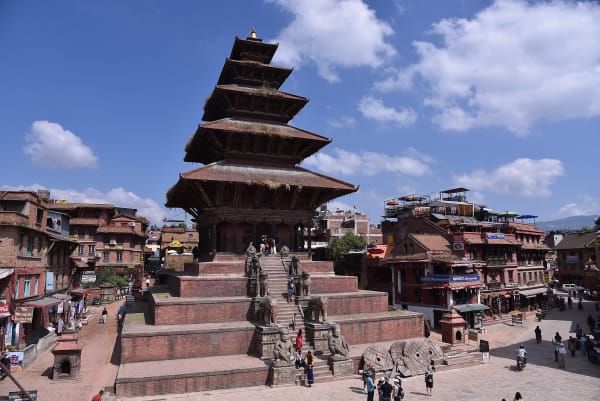
| Bisket Jatra | Mid April | Bhaktapur's New Year festival — chariots, a tug of war, a great pole raised | The best single festival to time a Bhaktapur visit for |
| Nepali New Year | Mid April | Bikram Sambat new year | A public holiday; offices closed |
| Rato Machhindranath Jatra | April / May | Patan's chariot festival, pulled over several weeks — the longest in Nepal | Patan streets disrupted and fascinating |
| Buddha Jayanti | May | The Buddha's birth, enlightenment and death. Lumbini, Boudhanath, Swayambhunath | Major day at Lumbini; worth planning for |
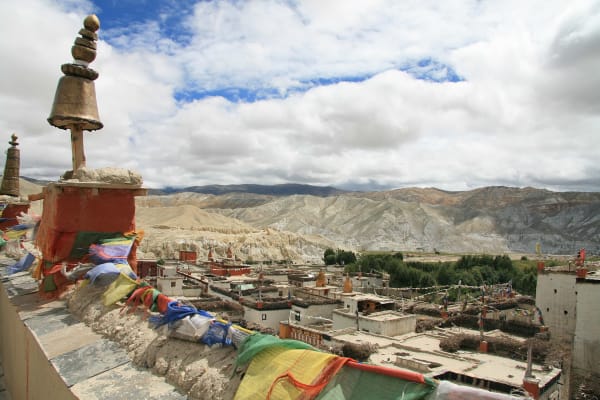
| Tiji | May | Upper Mustang's three-day masked dance festival at Lo Manthang | Lodges in Lo Manthang book out months ahead |
| Janai Purnima | August | Sacred thread renewal. Tens of thousands walk to Gosaikunda at 4,380 m | Gosaikunda trail and lodges overwhelmed |
| Gai Jatra | August | Newar festival for the recently deceased, with processions and satire | Kathmandu Valley, colourful and local |
| Indra Jatra | September | Kathmandu's great festival — masked dances, chariots, the Kumari in procession | Kathmandu Durbar Square at its best |
| Dashain | Late Sep / Oct | The biggest Hindu festival, fifteen days. Families travel home | Offices closed a week or more; transport packed; cities quiet |
| Tihar / Deepawali | Oct / Nov | Five days of lights, with days dedicated to crows, dogs, cows and brothers | Beautiful in the cities; some closures |
| Mani Rimdu | Late Oct / Nov | Tengboche monastery's masked dance festival in the Khumbu | Tengboche lodges book out; superb on an EBC trek |
| Chhath | November | Terai sun festival on the riverbanks, mainly Mithila communities | Spectacular in Janakpur and the eastern Terai |
Festivals You Can Witness on a Trek
Five are genuinely accessible from a trekking itinerary, and each changes the trek it sits in.
- Mani Rimdu at Tengboche, late October or November — three days of masked dance at the Khumbu's principal monastery, on the Everest Base Camp route. The best cultural addition to any Nepali trek. See our Tengboche guide.
- Tiji at Lo Manthang, usually May — the most important event in Upper Mustang, and the reason many people book that trek in spring. See our Tiji guide.
- Janai Purnima at Gosaikunda, August — tens of thousands of pilgrims walking to a sacred lake at 4,380 m in the monsoon. Extraordinary, uncomfortable, and unlike anything else. See the Gosaikunda trek.
- Yartung at Muktinath, August — horse racing and festivities in Lower Mustang, on the Jomsom Muktinath route.
- Losar in the Buddhist regions, February — quieter and more domestic than the others, marked in Khumbu, Mustang, Dolpo and Tsum Valley villages, and a good reason to trek in a month most people avoid.
All five move with lunar calendars. Tell us at the enquiry stage if one matters to you and we will build the itinerary around the published dates — and book the lodges, which for Tengboche and Lo Manthang is the binding constraint.
Dashain and Tihar: Plan Around These
Dashain is Nepal's equivalent of Christmas and New Year combined, and it runs for fifteen days in late September or October — directly in the best trekking season.
- Government offices close for roughly a week at the peak. Restricted-area permits cannot be issued during that period, which matters if your trek needs one.
- Long-distance transport is overwhelmed. Everyone in Nepal travels home. Buses are full and roads are busy.
- Kathmandu empties and becomes unusually quiet and pleasant.
- Some lodges on trails close briefly while families return to villages, though the main routes keep operating.
- Animal sacrifice is part of the festival at certain temples, which some visitors find difficult. It is easy to avoid if you prefer.
Tihar follows two or three weeks later — five days of oil lamps, marigold garlands, and days dedicated in turn to crows, dogs, cows and brothers. It is the most visually beautiful festival in Nepal and causes far less disruption than Dashain.
Practical advice: if your trek needs a restricted-area permit and your dates fall near Dashain, tell us early so the paperwork can be done before the offices close. Our permits guide covers the timeline.
Etiquette at a Festival
- Ask before photographing people, especially during rituals, and never during a cremation or funeral rite.
- Do not step into a procession or a dance space for a photograph. Find a position and stay in it.
- Dress modestly — shoulders and knees covered at temples and festivals.
- Accept tika and prasad if offered; it is a blessing, and refusing is awkward. Take it with your right hand.
- Remove shoes before entering temple buildings and courtyards where others have.
- Walk clockwise around stupas, chortens and shrines.
- Be careful at crowded events. Shivaratri at Pashupatinath and Indra Jatra in Kathmandu draw very large crowds with little crowd management.
- Do not bring drones. They are intrusive at religious events and in several places prohibited.
A guide matters enormously at a festival. Most of what is happening is not self-explanatory, and a local guide turns a colourful crowd into a sequence you can follow. All our cultural tours include one.