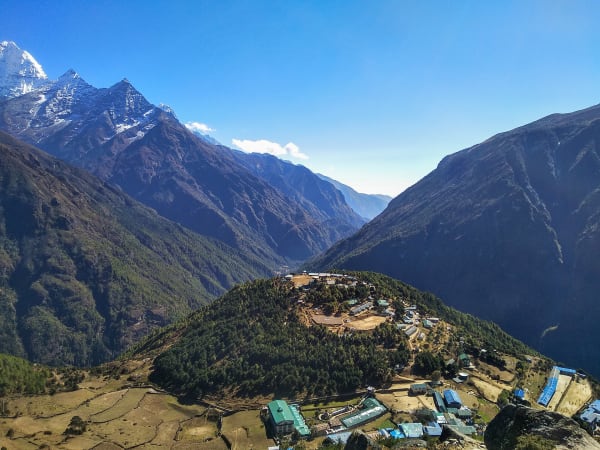
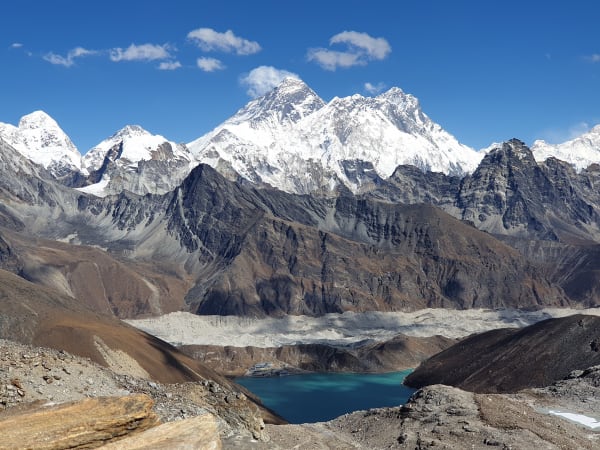
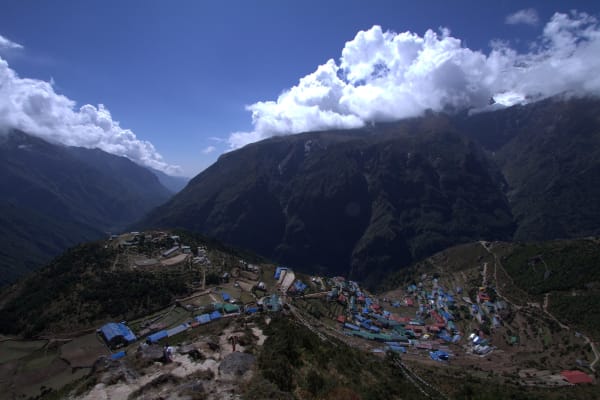
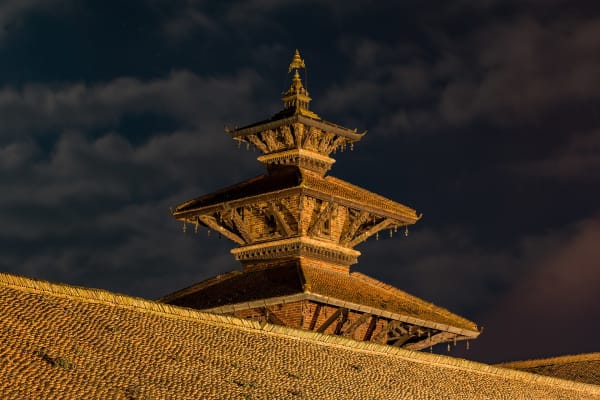
Most trekkers arrive at Tengboche in the early afternoon, tired from a 600 m climb out of Phunki Tenga, check into a lodge, and watch Everest and Ama Dablam catch the evening light above the monastery courtyard. Those who go into the monastery for the late-afternoon puja usually describe it as the thing they remember longest from the trek.
The Khumbu is not scenery with villages in it. It is a Sherpa Buddhist landscape, and understanding a little of that changes what you are looking at.
Tengboche Monastery
Tengboche Gompa is the largest and most important monastery in the Khumbu, founded in 1916 by Lama Gulu at a site identified by the head of Rongbuk monastery in Tibet. It has been rebuilt twice — after an earthquake destroyed it in 1934 and after a fire in 1989, which started from an electrical fault and destroyed the original scriptures, murals, and statues. International donations funded the reconstruction that stands today.
The setting is the point. The monastery sits on a spur at 3,956 m with Everest, Lhotse, Nuptse, Ama Dablam, and Thamserku around it, and it is the place where climbers historically came for blessing before going to the mountain — a tradition Everest expeditions still observe.
- The main hall holds a large Sakyamuni Buddha, wall murals, and butter lamps, with a rebuilt library of Tibetan texts.
- The monks number around thirty, with a school for young novices.
- Puja — prayers are held in the early morning and late afternoon, and visitors may usually attend the afternoon one.
- The museum beside the courtyard gives useful context on Sherpa Buddhism and the monastery's history.
Attending a Puja Respectfully
The afternoon prayer service is open to visitors at the monks' discretion, and behaving properly is not complicated.
- Ask at the entrance, and wait to be shown where to sit. Do not walk in during prayers.
- Remove your boots and hat. Keep your shoulders and knees covered.
- Sit at the back and at the side, never in front of the monks or on a cushion that belongs to one.
- Do not photograph inside without explicit permission, and never during the prayers themselves.
- Turn your phone off — not silent, off.
- Walk clockwise around the hall and around any shrine or chorten outside.
- Leave a donation in the box. The monastery runs on them.
- Leave quietly if you need to go before the end, moving behind the seated monks.
A puja lasts around an hour: chanting, horns, drums, cymbals, and long stretches of low recitation. It is not a performance and there is no narration. Sit with it.
Mani Rimdu
Once a year, over the full moon of the ninth Tibetan month — usually late October or November — Tengboche holds Mani Rimdu, a three-day festival of masked dances, empowerment rituals, and blessings that draws Sherpa families from across the Khumbu.
The sequence runs over nearly three weeks of preparation, with the public days at the end: the distribution of blessed rilbu pills, the Cham masked dances in the courtyard depicting the triumph of Buddhism over earlier traditions, and a final fire ceremony. It is the most important event in the Khumbu calendar and an extraordinary thing to witness.
If you want to be there, tell us when you enquire. The dates move with the lunar calendar each year, and Tengboche's handful of lodges are booked out months ahead. Our seasons guide covers how it fits into an autumn itinerary.
Sherpa Culture Along the Trail
The Sherpa people migrated from eastern Tibet to the Khumbu around 500 years ago — the name means people from the east — and their Nyingma Buddhism, language, and architecture are Tibetan in origin rather than Nepali. Almost everything you walk past has meaning.
- Mani walls — long stone walls carved with om mani padme hum. Pass them on your left, walking clockwise.
- Chortens and stupas — reliquary monuments at village entrances and passes. Walk clockwise around them.
- Prayer flags — five colours for the elements, printed with mantras meant to be carried by the wind. Never touch or remove them.
- Prayer wheels — turn them clockwise, with your right hand, as you pass.
- Kani gates — painted archways at village entrances, with murals of protective deities inside.
- Sacred mountains — Khumbila above Namche is the Khumbu's protector deity and has never been climbed. Ama Dablam means mother's necklace.
- Yaks and the high pastures — the traditional Sherpa economy was trade over the Nangpa La into Tibet and yak herding; trekking replaced trade after the border closed in the 1950s.
Other monasteries worth a look: Pangboche, the oldest in the Khumbu and on the route to Dingboche; Khumjung, visited on the Namche rest day; and Thame, in the Bhote Koshi valley, whose village has produced an extraordinary number of Everest summiters including Tenzing Norgay and Apa Sherpa.
Being a Good Visitor
- Ask before photographing people, monks included, and accept a refusal without negotiation.
- Do not give money or sweets to children — donate to the Khumjung school or a village health post instead.
- Eat vegetarian in Sagarmatha National Park where you can. Many Khumbu lodges do not serve meat on religious grounds.
- Do not remove stones, carvings, flags, or anything else from a shrine.
- Keep noise down around monasteries, particularly early morning and late afternoon when prayers are held.
- Greet people with namaste, or tashi delek in the Tibetan-speaking villages.
- Leave a donation at the monasteries you enter. They maintain themselves on visitor generosity and community support.
And one cultural note that colours the whole trek: the people running your lodge are, very often, from families who have climbed Everest. The casual competence of the Khumbu at high altitude is not a tourist performance — it is three generations of professional mountaineering in one valley.