Nepal's border regions along the Tibetan frontier are classified as restricted, and entering them requires a permit that cannot be bought over a counter. It is issued by the Department of Immigration in Kathmandu, only to a group of two or more trekkers, only through a registered agency, and only with a licensed guide.
These are the most culturally intact and least visited parts of Nepal, and the permit system is a large part of why. Here is the complete picture.
Every Restricted Region and Its Fee
| Region | Permit fee | Also requires | Trek |
|---|---|---|---|
| Upper Mustang | USD 500 for 10 days, then USD 50 per day | ACAP | Upper Mustang Trek |
| Upper Dolpo | USD 500 for 10 days, then USD 50 per day | Shey Phoksundo National Park | Upper Dolpo Trek |
| Lower Dolpo | USD 20 per week | Shey Phoksundo National Park | Lower Dolpo Trek |
| Manaslu (Jagat–Dharapani) | USD 100 per week Sep–Nov, USD 75 Dec–Aug | MCAP and ACAP | Manaslu Circuit |
| Tsum Valley | USD 40 per week Sep–Nov, USD 30 Dec–Aug | MCAP | Tsum Valley Trek |
| Nar Phu | USD 100 per week Sep–Nov, USD 75 Dec–Aug | ACAP | Nar Phu Valley Trek |
| Kanchenjunga | USD 20 per week | Kanchenjunga Conservation Area | Kanchenjunga Circuit |
| Humla / Limi Valley | USD 50 for 7 days, then USD 10 per day | Regional conservation fee | Far-west itineraries on request |
Note the scale of difference. A week in the Tsum Valley costs USD 40 in permits; ten days in Upper Mustang costs USD 500. That single line is often the deciding factor between two otherwise similar treks.
The Three Conditions
- A minimum of two trekkers. The permit is issued to a group, not an individual. A solo traveller cannot hold one.
- A registered trekking agency. The agency applies on your behalf and is recorded on the permit. You cannot apply yourself.
- A licensed guide. Named on the permit, and required to accompany the group throughout the restricted section.
The two-person rule is the one that causes the most difficulty. If you are travelling alone, the practical options are:
- Join a scheduled group departure, which solves it and is cheaper per person.
- Let us pair you with another solo booking on similar dates — this happens regularly, and the earlier you ask the more likely it is.
- Book a second name on the permit. Some agencies will do this; it is a grey practice and we would rather find you a genuine partner.
Ask early. In October and April we often have two or three solo enquiries for the same restricted route and can match them.
The Paperwork Timeline
- At booking: send us a passport scan, your arrival date, and your intended trek dates. The permit is dated, so those dates matter.
- Two weeks before: we confirm the itinerary and the exact permit period, and advise how many days it covers.
- On arrival in Kathmandu: we take your original passport for a day. This is normal and it cannot be avoided — Immigration requires the physical document.
- One full working day: the permit is processed. The office is closed at weekends and on Nepal's many public holidays, which is the real constraint.
- At the checkpoint: your guide presents the group permit. Individual trekkers are recorded by name.
The practical consequence: do not plan to land in Kathmandu and start a restricted trek the next morning. Allow at least one full working day, and check whether a festival falls in your window — Dashain and Tihar close government offices for days.
What the Permit Does Not Allow
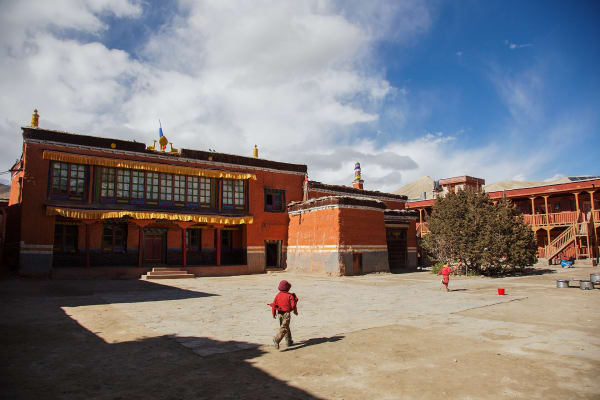
- Extending on the trail. The permit is dated. Adding days in Lo Manthang costs USD 50 each and needs a call to Kathmandu, which is possible but not instant.
- Changing route. The permit names the region and often the route. A detour into a different restricted area needs a different permit.
- Crossing into Tibet. Several of these regions run to the border. The permit does not authorise crossing it, and attempting to is a serious matter.
- Trekking without the named guide. If your guide has to leave, the group waits for a replacement.
- Refunds. Restricted permits are non-refundable once issued, including if weather, illness or a flight cancellation prevents the trek. This is a good reason to carry trip-cancellation insurance.
Which Restricted Trek to Choose
| Region | Days | Highest point | The draw | Permit cost |
|---|---|---|---|---|
| Tsum Valley | 13 | 3,700 m | Monasteries, the no-killing vow, moderate difficulty | Lowest |
| Manaslu Circuit | 15 | 5,106 m | A full circuit with no roads and a high pass | Moderate |
| Nar Phu | 14 | 5,320 m | Two medieval villages and the Kang La | Moderate |
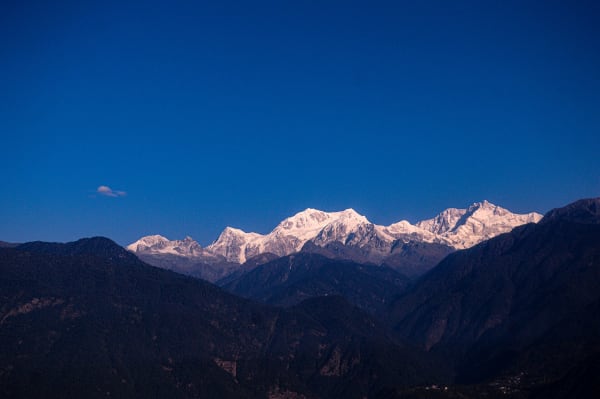
| Kanchenjunga | 21 | 4,792 m | The remotest major trek in Nepal, two base camps | Lowest |
| Upper Mustang | 16 | 3,860 m | Lo Manthang, cave complexes, monsoon-viable | Highest |
| Upper Dolpo | 26 | 5,360 m | The most remote inhabited region in Nepal | Highest |
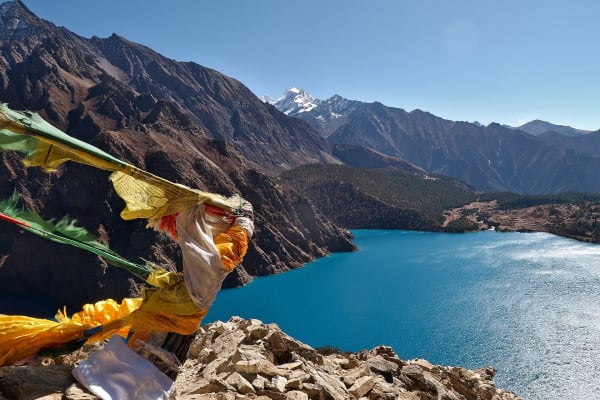
| Lower Dolpo | 17 | 4,465 m | Phoksundo Lake and Dho Tarap, far cheaper than Upper | Low |
Best value by permit cost: Kanchenjunga and Tsum Valley at USD 20 to 40 per week. Most expensive: Upper Mustang and Upper Dolpo at USD 500 for ten days. Lower Dolpo at USD 20 per week is the cheap way to see Dolpo country, which is worth knowing before committing USD 500.