Around a million visitors a year walk Nepal's trails, and in the mountain districts that traffic is most of the cash economy. Done well, trekking pays for school fees, lodge extensions, and a reason for young people to stay in the valley. Done badly, it leaves burnt plastic behind lodges, stripped forest above the treeline, and villages whose water supply serves showers rather than fields.
None of what follows requires sacrifice. Most of it is a different default choice made a dozen times over a fortnight.
The Five Decisions That Matter Most
- Do not buy bottled water. Carry a bottle and purification tablets or a filter. A two-week Everest trek on bottled water leaves around 40 plastic bottles on a mountain with no waste collection; the Khumbu banned their sale above Lukla in 2020 for that reason. Our water guide covers the options.
- Carry out everything you carry in. Wrappers, batteries, and used wet wipes in particular. Above the road head there is no collection, and what lodges cannot sort gets burned or buried.
- Skip the hot shower above 4,000 m. Water at altitude is heated with kerosene or firewood, and the firewood comes from slow-growing juniper and rhododendron scrub that takes decades to regrow.
- Eat local food. A plate of dal bhat uses ingredients grown in the district. A pizza at 4,400 m arrived on a porter's back from Kathmandu.
- Spend in the villages rather than only in the cities. Lodge meals, a local craft, a cup of tea at the pass — that money stays where you walked.
Waste, Toilets, and the Things Nobody Mentions
- Use lodge toilets where they exist. Where they do not, go at least 50 m from water and trails, dig a hole, and carry out your paper in a sealable bag.
- Tampons, pads, wet wipes, and condoms do not decompose at altitude and are not burnable. Carry them out in a dry bag — this is the single most-ignored piece of trail etiquette in Nepal.
- Use biodegradable soap, and wash away from streams. The stream below you is someone's drinking water.
- Do not bury rubbish. Frozen ground does not break anything down, and what you bury in October reappears in May.
- Take your used batteries home. They are the worst thing in any lodge bin.
The Sagarmatha Pollution Control Committee and the conservation area authorities do real work on this, funded partly by your park fee. Clean-up expeditions on the Khumbu glacier and the waste-sorting stations at Namche and Lukla exist because trekkers pay for them.
Staff Welfare Is Part of Sustainability
Environmental impact gets the attention, but the labour side matters as much. Porter welfare in Nepal has improved substantially and is still uneven, and the difference between operators is often invisible in a brochure.
- Loads capped at 20–25 kg per porter, with one porter generally shared between two trekkers.
- Insurance for every guide and porter, covering medical treatment and helicopter evacuation, not only for the guests.
- Food and lodging paid by the operator, never deducted from a porter's wage.
- Proper boots, a jacket, and sunglasses for snow and high passes.
- The same acclimatisation profile as the group, and the right to stop when unwell.
If you book with anyone, ask those five questions. Our guides and porters guide explains the rates and the arrangements in detail. A quote that undercuts everyone else by 40% is usually a quote where one of those lines has been removed.
Culture and Photography
Much of what reads as scenery in the Himalaya is in fact someone's religious landscape. A few habits go a long way:
- Walk clockwise around chortens, mani walls, and stupas, and never move prayer stones or take one as a souvenir.
- Ask before photographing people, and accept a refusal. In monasteries, ask the monk on duty before photographing shrines or murals.
- Do not photograph cremations at Pashupatinath or funerary sites on the trail.
- Dress modestly in villages and at religious sites — shoulders and knees covered.
- Do not give sweets, money, or pens to children. It encourages begging and pulls children out of school. Donate to a school, health post, or community fund instead; your guide will know which ones are real.
- Learn a few words of Nepali. Namaste, dhanyabad, and mitho chha — delicious — change a lot of interactions.
Choosing Where to Walk
Route choice is itself an ethical decision, because trekking income is concentrated on a handful of trails while whole districts see almost none.
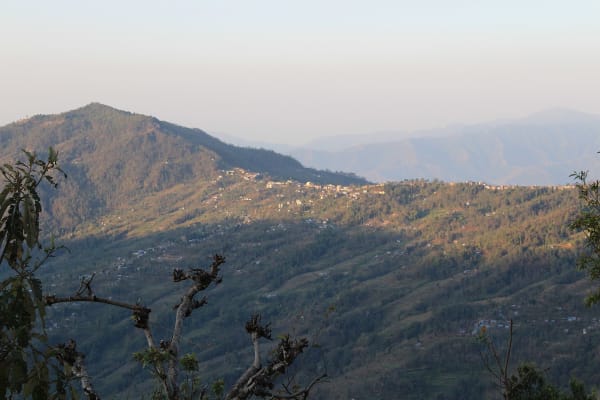
Community-owned lodges put profits directly into village funds — Mohare Danda and Khopra Danda in the Annapurna foothills are the best examples in Nepal, run by local committees with income going to schools and health posts. Newer trails in the eastern hills, like the Mundum trail and the Red Panda Trail, are deliberately built around homestays.
Spreading traffic also reduces crowding on the classics. If you want the Annapurna skyline without the October queue at Poon Hill, a community ridge two valleys west delivers the same mountains with your money doing more.
One more: if your trek is in a region recovering from disaster or depopulation, going there is the support. Langtang's lodges were rebuilt by families who came back after 2015, and the valley needs trekkers rather than sympathy — see our Langtang recovery guide.