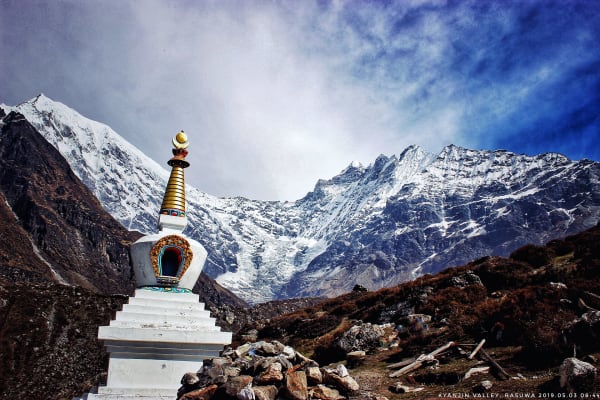
Helambu is the valley system immediately north-east of Kathmandu, four hours by road, and it holds some of the oldest Sherpa settlements in Nepal — Hyolmo Sherpa villages with substantial gompas, carved houses, and apple orchards. Above them rises Ama Yangri, a broad ridge with a prayer-flagged summit that is the local protector deity and a pilgrimage site.
The view from the top runs from Langtang Lirung west through Dorje Lakpa and the Jugal Himal to Gauri Shankar in the east, with the Kathmandu valley visible south through the haze. It is reachable in five days, it has no altitude risk worth mentioning, and it is almost completely unvisited by foreign trekkers.
The Trek at a Glance
| Duration | 5 days from Kathmandu |
| Highest night | About 2,590 m at Tarkeghyang |
| Summit | Ama Yangri, about 3,771 m |
| Difficulty | Moderate — one steep summit day, otherwise gentle |
| Access | Road from Kathmandu to Melamchi Pul and Timbu, about 4 hours |
| Permits | Trekking registration; Langtang National Park entry on northern variants |
| Best seasons | March to May, October to December; workable in winter |
| Accommodation | Village lodges and homestays |
We run it as a 5-day Ama Yangri trek, and it is also the final section of the 15-day Langtang and Gosaikunda route, which descends through this same country.
The Route
Kathmandu to Tarkeghyang (2,590 m)
A four-hour drive north-east through Melamchi to Timbu or Sermathang, then a walk up into the Helambu villages. Tarkeghyang is the main Hyolmo Sherpa settlement — a cluster of stone houses around a large gompa, with apple and walnut trees and a view south down the valley. The village was badly damaged in 2015 and has been rebuilt.
The summit day
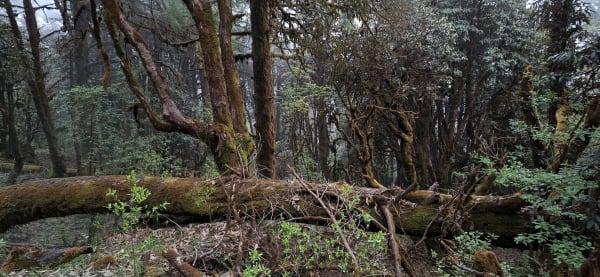
A pre-dawn start and a steep climb of around 1,200 m through rhododendron and juniper to the Ama Yangri summit at about 3,771 m, with prayer flags, a shrine, and a 360-degree view: Langtang Lirung, Dorje Lakpa, the Jugal Himal, Gauri Shankar, and the ridges dropping south toward Kathmandu. Four to five hours up, two to three down, and back to Tarkeghyang to sleep.
Sermathang and out
A gentler day traversing to Sermathang, another Hyolmo village with a monastery and orchards, then down to the road at Melamchi Pul and the drive back to Kathmandu. Several variants run the trek in the other direction or add a night at Nakote or Thimbu.
Hyolmo Culture
Helambu's Sherpa communities are Hyolmo — a distinct group with their own language, who migrated from Tibet several centuries ago and are considered among the oldest Sherpa settlements in Nepal. The religious tradition is Nyingma Buddhism, and the valley has historically produced a high number of lamas.
- The gompas at Tarkeghyang and Sermathang are substantial working monasteries, not trailside shrines.
- Ama Yangri itself is a protector deity, and the summit is a pilgrimage site — local people climb it at festival times with offerings.
- Apple and walnut orchards are a Helambu speciality, and the apple brandy is locally famous.
- Language — Hyolmo is spoken alongside Nepali, and is closer to Tibetan than to Nepali.
- Architecture — stone houses with carved wooden window frames and flat or shingled roofs, distinct from the houses in the middle hills below.
As with the Tamang Heritage Trail, the appeal here is cultural rather than alpine, and behaving as a guest rather than a customer goes a long way — remove your shoes, accept the second helping, and ask before photographing inside a house or gompa.
Why This Rather Than Langtang
| Ama Yangri | Langtang Valley | |
|---|---|---|
| Days | 5 | 10 |
| Drive from Kathmandu | 4 hours | 7–8 hours |
| Highest night | 2,590 m | 3,870 m |
| Highest point | 3,771 m | 4,984 m |
| Altitude risk | None | Low but real |
| Glacier and high alpine | No | Yes |
| Culture | Hyolmo Sherpa villages and gompas | Tamang villages and the earthquake memorial |
| Other trekkers | Almost none | Few |
Ama Yangri is the better choice if you have under a week, want no altitude risk, or are travelling in winter. Langtang is the better choice if you want a high valley, a glacier, and a 4,984 m viewpoint. If you have a fortnight, the Langtang and Gosaikunda route gives you both plus the sacred lakes.
Our short treks near Kathmandu guide sets out the full range of options within a day's drive of the city.
Practical notes
The summit day is the only demanding part, and it rewards an early start — the ridge clouds over by mid-morning in most seasons, and the Himalayan skyline is reliably clear only at dawn. Take a headlamp, two litres of water and a warm layer for the top, where it is windy even on a hot day.
Accommodation in Tarkeghyang and Sermathang is village lodges and homestays rather than trekking teahouses: comfortable, simple, with shared bathrooms and bedding provided. Bring a sleeping bag for warmth rather than necessity. Meals are whatever the household is cooking, and the local apples and walnuts in autumn are worth asking for.