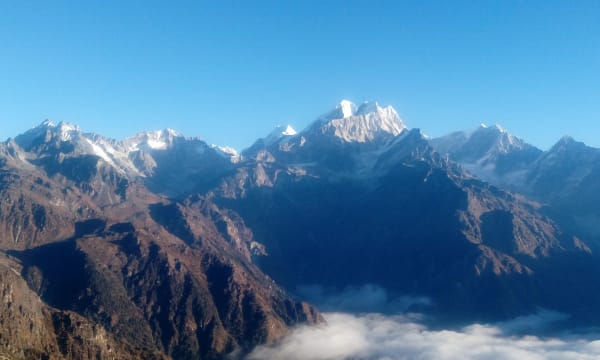
The Jugal Himal is the range you can see from the northern rim of the Kathmandu valley on a clear winter morning, and almost nobody goes there. Gyalzen Peak (6,151 m) stands at its western end above the sacred lakes of Panch Pokhari, and it is climbed so rarely that the route has to be found again each time rather than followed.
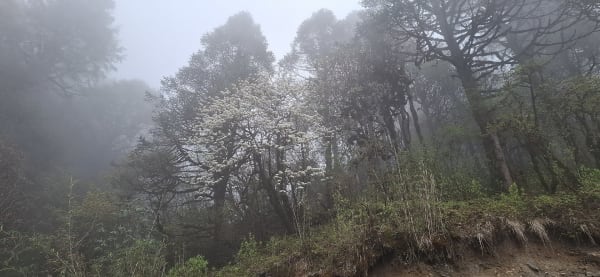
The approach is what makes this trip unusual. There is no airstrip, no jeep road beyond Chautara and no trekking infrastructure at all — five days of walking up ridges through Tamang villages and rhododendron forest, on trails used by herders rather than by trekkers, to a chain of five glacial lakes at 4,100 m that Hindu pilgrims walk to once a year in August.
The climb itself is a clean AD- snow and ice route, and the whole thing happens within eighty kilometres of the capital.

The Climb at a Glance
| Summit | 6,151 m |
| Grade | AD- — a clean snow and ice route |
| Duration | 19 days Kathmandu to Kathmandu — no flight |
| Base camp / high camp | 4,700 m / 5,400 m |
| Approach | Five days on foot from Bhotang, via Panch Pokhari |
| Summit success rate | Around 55 to 65 percent |
| Distance from Kathmandu | About 80 km in a straight line |
| Price | From USD 4,950 per person |
We run it as a 19-day expedition. The approach is the Panch Pokhari trek, and Dorje Lakpa is the big objective at the other end of the same range.
The Approach: A Trek in Its Own Right
Five days up ridges through Tamang villages, rhododendron forest and high pasture, on trails used by herders and pilgrims rather than trekkers. There are no lodges of any kind, so the trip camps from the roadhead onward.
| Day | Stage |
|---|---|
| 1 | Drive Kathmandu to Bhotang (1,800 m) |
| 2 | Bhotang to Kami Kharka (2,700 m) |
| 3 | Kami Kharka to Pauwa Bas (3,500 m) |
| 4 | Pauwa Bas to Hile Bhanjyang (3,950 m) |
| 5 | Hile Bhanjyang to Panch Pokhari (4,100 m), then an acclimatisation day |
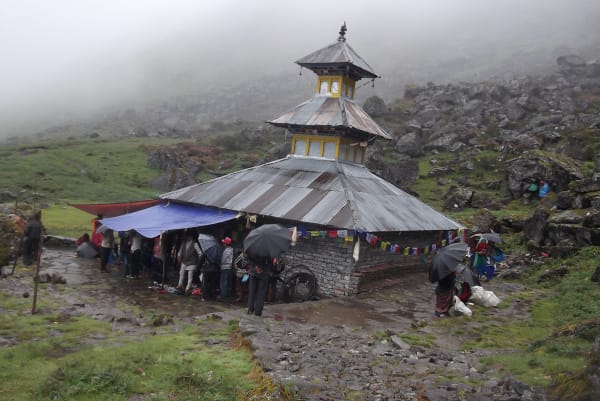
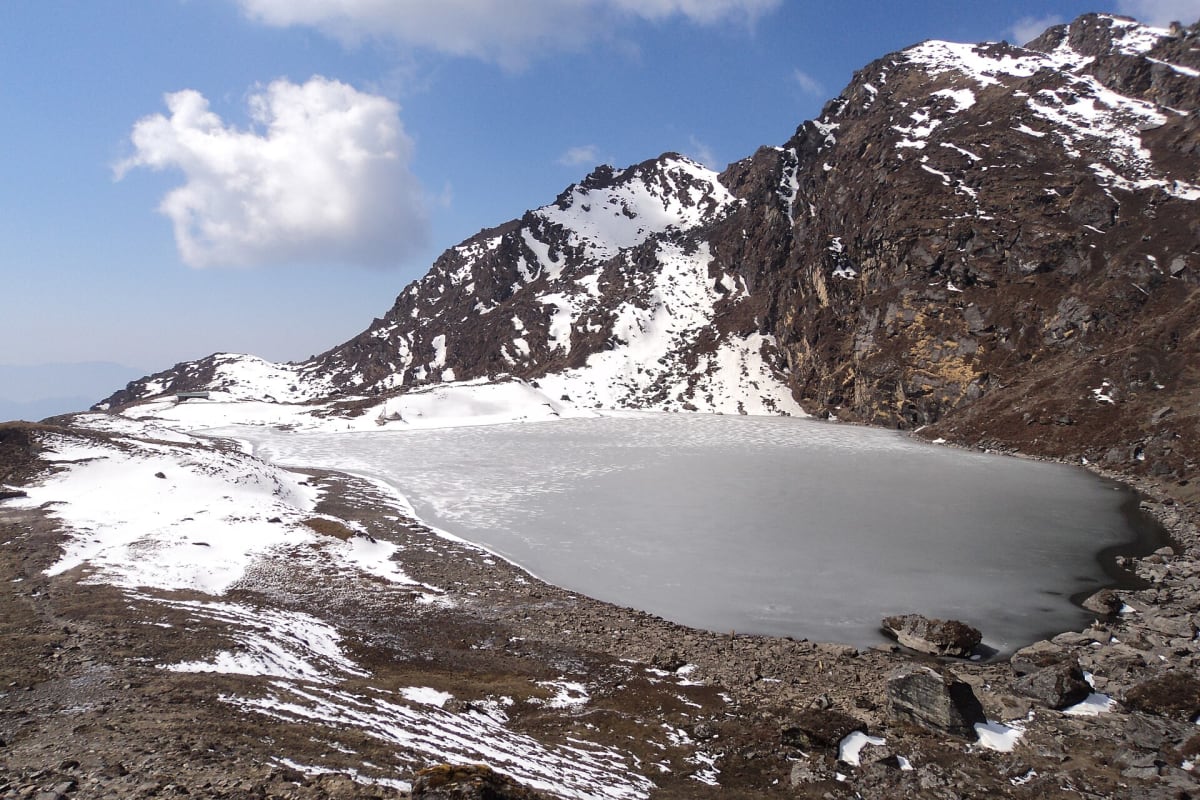
Panch Pokhari is a chain of five glacial lakes at 4,100 m, sacred to Hindus and the site of a pilgrimage each August at Janai Purnima, when several thousand people walk up from the valleys below. Outside that week the basin is empty.
The Climb
Base camp and two preparation days (4,700 m)
Above the lakes to base camp at 4,700 m on the moraine, then a training and skills day and a separate acclimatisation day. On a route with no fixed rope left by other teams and no established platforms, that preparation is not padding.
High camp and the summit (5,400 m to 6,151 m)
High camp at 5,400 m at the edge of the glacier, then the summit day on a clean snow and ice line. Weather off the front range is the commonest reason for turning back — the Jugal catches cloud that the ranges behind it do not, being the first wall the weather meets coming north.
The itinerary carries two reserve days at base camp. On a mountain this weather-exposed they are used more often than not, and if the peak turns out to be out of condition the Panch Pokhari trek stands on its own.
What It Costs
| Group size | Price per person |
|---|---|
| 1 climber | USD 6,040 |
| 2 to 4 | USD 5,590 |
| 5 to 7 | USD 5,300 |
| 8 to 10 | USD 5,150 |
| 11 to 14 | USD 5,020 |
| 15 and over | USD 4,950 |
The cost is driven by carrying everything for nineteen days on a route with no infrastructure at any point — not by the technical difficulty, which is moderate.
What Is Included
- Airport transfers, a briefing, permit and equipment-check day in Kathmandu.
- Private transport Kathmandu to Bhotang and back — no flight.
- Hotel accommodation in Kathmandu with breakfast.
- Full camping support from the roadhead onward — tents, mess tent, kitchen tent and toilet tent at every camp, with a cook and kitchen crew.
- Three meals a day throughout.
- Climbing permit for Gyalzen Peak and the required area permits.
- A government-licensed climbing guide and climbing Sherpas above base camp.
- Group climbing equipment and route fixing on the steep sections.
- A training and skills day plus a separate acclimatisation day at base camp.
- Two reserve days, porter and pack-animal transport, garbage deposit, summit certificate and all taxes.
What Is Not Included
- International flights and the Nepal entry visa fee.
- Travel insurance covering mountaineering to 6,151 m, with helicopter evacuation and repatriation.
- Personal climbing equipment, available to rent as an add-on.
- Personal clothing and a sleeping bag rated to -25 °C.
- Porter services for your personal duffel.
- Lunch and dinner in Kathmandu.
- Snacks, bottled water, hot showers, Wi-Fi, charging and drinks.
- Laundry, phone calls, souvenirs and personal expenses.
- Tips for the guide, climbing Sherpas, cook crew and porters.
- Extra costs caused by weather, road conditions or an early descent.
There is patchy NTC coverage on the ridges as far as Hile Bhanjyang and nothing above Panch Pokhari, and no lodges to charge in. Bring a power bank.