This is the best day walk within reach of Kathmandu: around four hours on old village trails along the southern rim of the valley, from the Newar town of Dhulikhel through terraced farmland and pine ridge to the Buddhist monastery at Namobuddha (1,750 m).
It is a real walk rather than a stroll, with a few hundred metres of climbing, and it ends at one of the three holiest Buddhist sites in Nepal. Namobuddha marks the spot where, in a previous life, the Buddha is said to have given his body to a starving tigress and her cubs. The stupa on the hilltop is old; the Thrangu Tashi Yangtse monastery beside it is large, active and welcoming, with several hundred monks and a view along the Himalaya on a clear day.
The return goes through Panauti, a small and almost untouched Newar town at the confluence of two rivers.

The Hike at a Glance
| Duration | 1 day |
| Distance | About 12 km |
| Walking time | Around 4 hours |
| Ascent | Roughly 400 m cumulative |
| Highest point | Namobuddha, 1,750 m |
| Difficulty | Moderate — uneven village trails, not a paved path |
| Best season | October to April |
| Price | From USD 110 per person |
We run it as a full-day guided hike with lunch at the monastery included. For other walking near the capital, see the Ama Yangri trek and the Helambu trek.
The Walk
Dhulikhel (1,550 m)
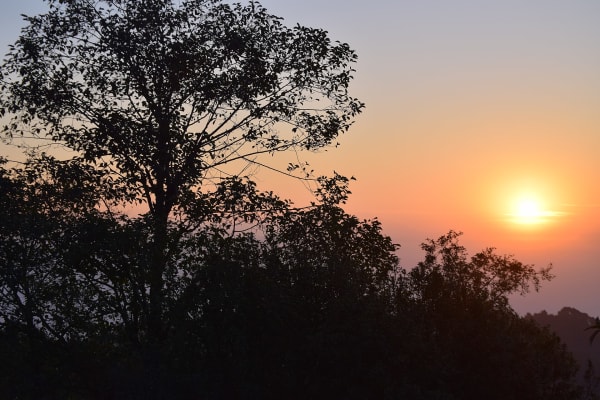
An hour and a half by road from Kathmandu to a Newar hill town on the valley rim, with an old quarter of brick houses and carved windows and a well-known sunrise viewpoint. The walking starts from the edge of town.
The ridge to Namobuddha
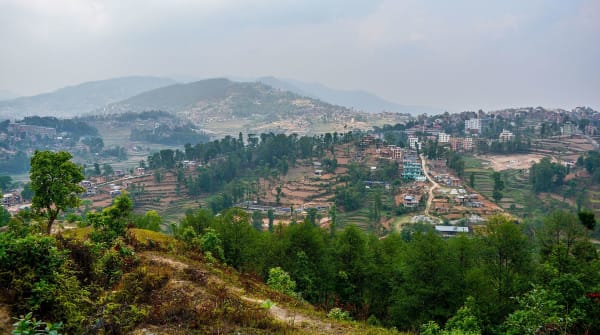
Old village trails through terraced farmland, small settlements and pine ridge — about twelve kilometres and four hours, with roughly 400 m of cumulative climbing. It is uneven underfoot rather than technical, and on a clear day Langtang Lirung, Dorje Lakpa, the Jugal Himal and Gauri Shankar are visible along the northern horizon for much of the way.
Namobuddha (1,750 m)
The stupa marks the tigress story, and the Thrangu Tashi Yangtse monastery beside it houses several hundred monks. It is a large, working institution and visitors are welcome. Lunch is at the monastery canteen — simple vegetarian Tibetan food — and is included.

Panauti and the return
The vehicle meets you at Namobuddha and returns via Panauti, a small Newar town at the confluence of the Roshi and Punyamati rivers with a twelfth-century temple complex and almost no tourism. An hour there is time well spent.
What It Costs
| Group size | Price per person |
|---|---|
| 1 traveller | USD 155 |
| 2 to 4 | USD 135 |
| 5 to 7 | USD 125 |
| 8 to 10 | USD 120 |
| 11 to 14 | USD 115 |
| 15 and over | USD 110 |
What Is Included
- Private transportation — a vehicle and driver from Kathmandu to Dhulikhel, meeting you at Namobuddha and returning via Panauti.
- Lunch at the Namobuddha monastery canteen.
- Namobuddha monastery donation and the Panauti heritage fee.
- A government-licensed English-speaking hiking guide for the day.
- Bottled water for the walk.
- A light daypack if you need one.
- All government taxes and service charges.
What Is Not Included
- Travel insurance covering medical treatment and emergency evacuation.
- Breakfast and dinner, and any meals not specified.
- Offerings and donations beyond the monastery entrance.
- Luxury vehicle upgrade — private transport is included as standard.
- Drinks, snacks, laundry, phone calls and souvenirs.
- Tips for the guide and driver.
- Any additional cost caused by roadblocks, weather or other circumstances beyond our control.
Variations
- Drive instead of walking. There is a road all the way to Namobuddha. We can drive up, spend longer at the monastery, and add Panauti and Dhulikhel as stops. Tell us at booking.
- Stay overnight at the monastery. Thrangu Tashi Yangtse runs a simple guesthouse, which lets you attend the dawn prayers — the best reason to do it. Arranged at booking, subject to availability.
- Walk in the other direction, starting at Panauti and finishing at Dhulikhel for the sunset from the rim.
- Add Bhaktapur on the drive back, which is roughly on the way.
Avoid the monsoon if you can. The field trails become slippery clay and leeches are present in the forest sections from June to September.