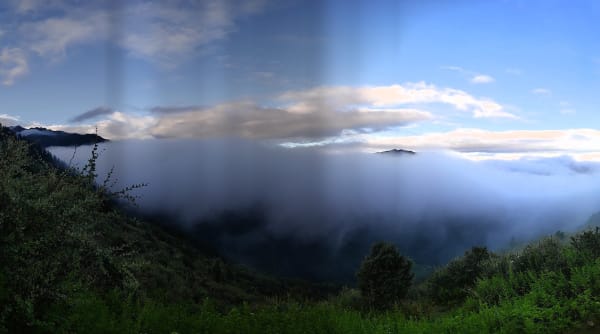
Most Langtang itineraries walk up the valley to Kyanjin Gompa and come back down the same way. This one turns south at the head of the valley and crosses the Ganja La Pass (5,130 m) into Helambu — a steep, frequently snow-covered crossing that needs a rope on the descent in poor conditions, followed by three days of high camps where there are no lodges at all.
What makes it unusual is the combination. The first half is comfortable teahouse trekking through forest and yak pasture to Kyanjin Gompa (3,870 m), with an exploration day at the valley head. The second half is a committing wilderness crossing through Keldang and Dhukpa with a camp crew, ending in the Hyolmo Buddhist villages of Tarkeghyang and Sermathang.
This is a trek for people who have already done a Himalayan route or two. It is not a first trip to Nepal.

The Trek at a Glance
| Duration | 14 days Kathmandu to Kathmandu |
| Highest point | Ganja La Pass, 5,130 m |
| Highest night | Nyengang Kharka, 4,430 m |
| Difficulty | Moderate to challenging — a committing pass and three camping nights |
| Best seasons | April to May, October to November |
| Accommodation | Teahouses in Langtang and Helambu, tents in between |
| Access | Road to Syabrubesi, out by road from Melamchi Pul Bazar |
| Permits | Langtang National Park entry permit and trekking registration |
| Price | From USD 750 per person |
We run it as a 14-day trek. If you want the same country entirely in teahouses, the Langtang Gosaikunda trek covers it without the pass.
The Route
Syabrubesi to Kyanjin Gompa (1,467 m to 3,870 m)
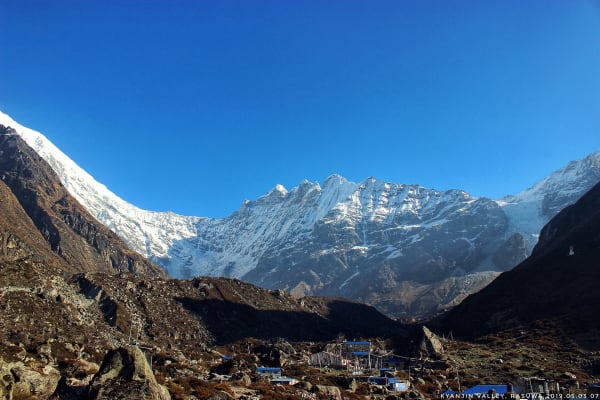
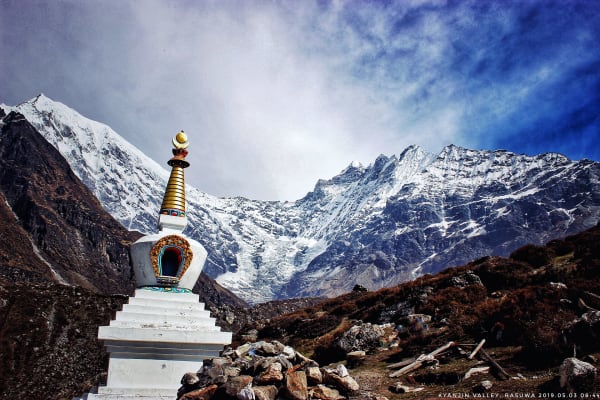
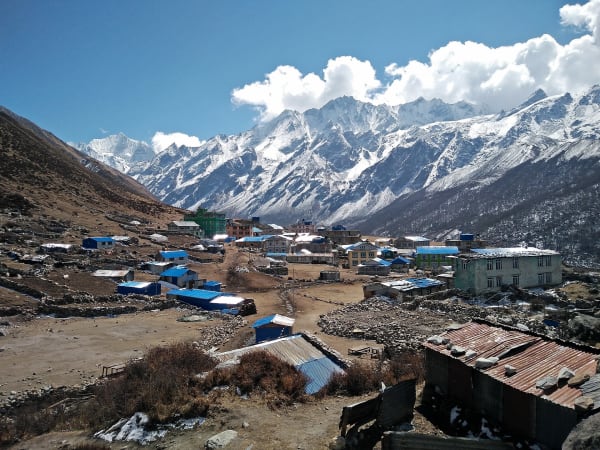
The classic Langtang approach: three days up the Langtang Khola through Lama Hotel and Langtang Village into yak pasture and open valley, with the rebuilt village a reminder of the 2015 earthquake. Kyanjin Gompa has a gompa, a cheese factory and the best lodges on the route, and gets a full exploration day — most groups climb Kyanjin Ri or Tserko Ri for the view.
Kyanjin Gompa to Nyengang Kharka (3,870 m to 4,430 m)
The last day with a trail in the ordinary sense. A steady climb to the high camp below the pass — tents, camp crew, and a cold night at 4,430 m to sleep before the crossing.
The Ganja La (5,130 m)
A pre-dawn start and nine to eleven hours of walking. The northern approach may need crampons depending on snow, and the descent on the far side is steep and loose — your guide sets and briefs a fixed rope where conditions require it. No climbing skills are needed, but you must be comfortable descending steep ground on a rope.
The pass does not always go. If your guide judges it unsafe, the group returns down the Langtang valley to Syabrubesi and travels to Helambu by road, or ends the trek there. Build flexibility into your onward travel.

Keldang and Dhukpa to Helambu (4,270 m to 2,590 m)
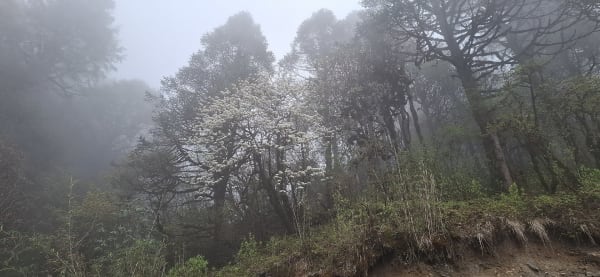
Two long days on rough, trackless ground with no lodges — high, empty ridge country that very few people see. Then the long descent into Tarkeghyang, and the world changes again: whitewashed Hyolmo villages, monasteries and apple orchards. A final traverse to Sermathang and out at Melamchi Pul Bazar.
Difficulty: What Makes This One Serious
The first half is a moderate teahouse trek. The second half is not, and the grade belongs to the second half.
- Six to eight hours on most days, and nine to eleven on the pass day from a pre-dawn start.
- A roped descent off the Ganja La in poor conditions, and crampons on the northern approach depending on snow.
- Three nights of high camps at Nyengang Kharka, Keldang and Dhukpa with no lodges and no escape.
- -15 °C or below at those camps, colder with wind. A four-season bag rated to -20 °C and an insulated mat are essential, not optional.
- Three to four days with no phone signal between Kyanjin Gompa and Tarkeghyang.
Groups are kept small and led by a guide with specific Ganja La experience, with a camp crew and extra staff for the pass. Read our difficulty grades guide before committing.
What It Costs
At USD 750 this is inexpensive for what it includes — the pass section needs a camp crew, group climbing equipment and a higher staff ratio than a teahouse trek.
| Group size | Price per person |
|---|---|
| 1 trekker | USD 875 |
| 2 to 4 | USD 850 |
| 5 to 7 | USD 825 |
| 8 to 10 | USD 800 |
| 11 to 14 | USD 775 |
| 15 and over | USD 750 |
There are no ATMs on the route and only an unreliable one in Dhunche, so carry all your rupees from Kathmandu.
What Is Included
- Airport pickup and drop-off in Kathmandu.
- Private transport Kathmandu to Syabrubesi and Melamchi Pul Bazar back to Kathmandu.
- Hotel accommodation in Kathmandu with breakfast.
- Teahouse accommodation in the Langtang valley and Helambu.
- Tented accommodation and a full camp crew for the high camps at Nyengang Kharka, Keldang and Dhukpa.
- Group climbing equipment for the Ganja La crossing, including ropes and fixed line where required.
- Three meals a day during the trek.
- Langtang National Park entry permit and trekking registration.
- A licensed English-speaking guide with Ganja La experience, group map, first aid kit, and all taxes and service charges.
What Is Not Included
- International flights and the Nepal entry visa fee.
- Travel insurance including emergency helicopter evacuation above 5,000 m.
- Personal trekking equipment and clothing, including a four-season bag rated to -20 °C and an insulated mat.
- Porter services, available at additional cost.
- Lunch and dinner in Kathmandu.
- Snacks, bottled water, hot showers, Wi-Fi, charging and drinks.
- Laundry, phone calls, souvenirs and personal expenses.
- Tips for guides, crew and drivers.
- Extra accommodation or transport caused by pass closures, bad weather or anything else outside the itinerary.
That last exclusion is the one that matters. Pass closures are a real possibility in any season, and the fallback involves a road transfer around to Helambu.