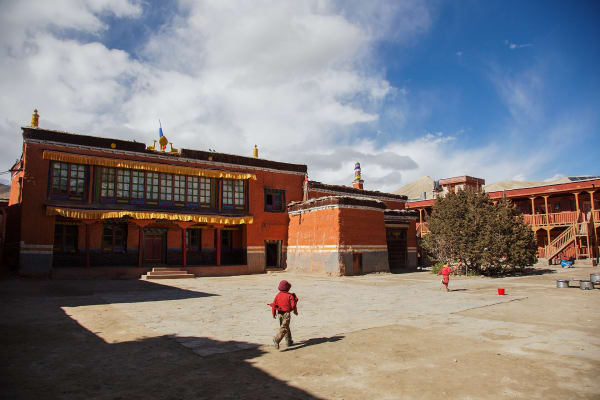
The monasteries along Nepal's trails are not museums. Monks and nuns live, study and pray in them; villagers bring offerings; children are sent there for an education. A trekker who walks in at the right hour and sits quietly at the side of the prayer hall is witnessing something that has gone on, in most cases, for centuries.
It is also one of the most powerful settings for meditation you will ever find: a dim, butter-scented hall at 3,800 m, low chanting, the thud of a drum, the sudden blare of long horns. You do not need to understand a word. This guide covers the monasteries you can realistically visit on the main trekking routes, and how to be a good guest in them.
What Meditating at a Monastery Really Means
Set expectations first. With a few exceptions, trail monasteries do not run classes for visitors. Nobody will teach you a technique, and there is no timetable for tourists. What you can do is this:
- Attend a puja — the daily communal prayers — and sit in silence while it happens around you.
- Sit in the hall outside prayer times, when it is empty and still, if the caretaker lets you in.
- Walk the kora around the monastery, spinning the prayer wheels.
- Receive a blessing from a resident lama, where that is offered.
- Practise on your own on a terrace or hillside nearby, with the monastery and the mountains in front of you.
For guided instruction, arrange a session in Kathmandu or Pokhara before or after the trek — see meditation before and after a Nepal trek. On the trail, the monastery provides the setting and you bring the practice.
The Monasteries, Route by Route
| Monastery | Trek | Altitude | What trekkers can do |
|---|---|---|---|
| Tengboche | Everest Base Camp | 3,867 m | Attend morning or mid-afternoon prayers in the main hall; the best-known puja on any trek |
| Pangboche | Everest Base Camp | about 3,985 m | Visit the oldest monastery in the Khumbu, in the upper village above the main trail |
| Thupten Chholing | Pikey Peak and the Solu trails | about 3,000 m | Visit a large retreat community of monks and nuns near Junbesi |
| Kyanjin Gompa | Langtang Valley | about 3,870 m | Sit in the small gompa at the head of the valley; practise beside it with Langtang Lirung above |
| Braga | Annapurna Circuit | about 3,450 m | Visit one of the oldest monasteries in Manang on your acclimatisation day |
| Mu Gompa and Rachen Gompa | Tsum Valley | 3,700 m and about 3,240 m | Stay overnight in monastery accommodation; attend prayers with monks or nuns |
| Serang Gompa | Serang Gompa trek | 3,600 m | Spend a full day or more at a retreat monastery with meditation caves above it |
| Lo Manthang's three monasteries | Upper Mustang | about 3,800 m | Visit fifteenth-century halls with some of the finest murals in the Himalaya |
| Muktinath | Jomsom Muktinath | 3,760 m | A shrine sacred to Hindus and Buddhists alike; sit in the grounds above the 108 water spouts |
Each has its own character. Tengboche is the grandest and the busiest, on a ridge facing Everest and Ama Dablam; our Tengboche guide covers it in detail. Kyanjin is tiny and intimate. Braga clings to a cliff above the Marsyangdi and is often unlocked for you by a caretaker with a large key. The monasteries of Tsum and Serang are in a different category: remote, rarely visited, and places where practice — not trekking — is the reason anyone is there.

Sitting In on a Puja: What Happens
A puja is a communal ritual of chanting, music and offerings. Most monasteries hold one early in the morning and another in the afternoon. A visit goes roughly like this.
- Arrive ten minutes early. Leave boots, poles and hats at the door.
- Enter quietly and go to the side or the back. Benches or cushions along the walls are for visitors; the central rows are for the monks.
- The monks file in and sit in facing rows, the most senior nearest the shrine.
- Chanting begins — low, rhythmic, from texts laid on narrow tables in front of each monk.
- Instruments punctuate it: a large hanging drum, hand bells, cymbals, conch shells, and the long horns called dungchen, which are startlingly loud.
- Butter tea is served to the monks partway through, poured by young novices. Visitors are sometimes offered a cup.
- It lasts anything from forty minutes to two hours. You may leave quietly at a pause.
How to use the time: sit upright, close your eyes or lower them, and rest your attention on the sound. Let the chant carry it. When the mind wanders, come back to the drum. It is the easiest long sit most people ever manage, because the room is doing half the work.
Monastery Etiquette
- Walk clockwise around the monastery, its chortens and prayer wheels, and around the inside of the hall.
- Remove shoes and hats before entering. Shoulders and knees covered.
- No photography inside unless you are clearly told otherwise. Never use flash, and never photograph during prayers.
- Do not sit in the monks' rows or on the raised seats.
- Do not point your feet at the shrine or at people. Sit cross-legged or kneel.
- Do not touch statues, texts, instruments or offerings.
- Do not touch monks or nuns, and do not hand objects directly to a monk if you are a woman, or to a nun if you are a man — place them down instead.
- Keep silent. Phones off, not merely on vibrate.
- Leave a donation in the box. Monasteries on trekking routes depend on it.
- A khata — a white ceremonial scarf — is the traditional offering if you meet a lama. Your guide can help you find one.
- Ask your guide if you are unsure about anything. That is part of the job.
More on trail manners generally is in responsible trekking in Nepal.
Staying Longer: Extra Nights and Retreat Valleys
Most itineraries pass a monastery in an afternoon. If practice is part of why you are trekking, build in time.
- An extra night at Tengboche lets you attend both the afternoon and the following morning's prayers, and see the monastery at dawn before the day's trekkers arrive.
- Tsum Valley is the richest area for this. It was closed to outsiders until 2008, its people follow a tradition of non-violence that forbids killing animals in the valley, and Mu Gompa and the nunnery at Rachen both offer simple accommodation. See our Tsum Valley guide.
- Serang Gompa is a retreat monastery in a hanging valley above Bihi, with meditation caves in the cliffs where practitioners spend months or years. Our itinerary includes a full day there and can be extended. See the Serang Gompa guide.
- Junbesi and Thupten Chholing in the Solu hills make a quiet two-night stop on the Pikey Peak route.
- Kyanjin Gompa rewards a second or third night: there are day walks in every direction and the valley is silent after the day trekkers go to bed.

Festivals Worth Timing a Trek Around
| Festival | Where | Usual time | What you see |
|---|---|---|---|
| Mani Rimdu | Tengboche | October or November | Three days of masked dances and public blessings |
| Tiji | Lo Manthang, Upper Mustang | May | Three days of ritual dance in the walled city |
| Losar | All Buddhist regions | February or March | Tibetan New Year; family and monastery ceremonies |
| Saga Dawa | All Buddhist regions | May or June | The month marking the Buddha's birth, enlightenment and passing |
| Dumje | Khumbu villages | June or July | A Sherpa community festival, before the monsoon closes in |
Dates follow the lunar calendar and move every year. Lodges at Tengboche and Lo Manthang fill months ahead for the big festivals, so book early. More dates are in our Nepal festival calendar and the Tiji festival guide.
We Provide This Service: Monastery Visits with Meditation Before and After
Green Compass Treks plans treks around monastery visits for guests who want them, and frames the walk with meditation sessions before and after.
- Itineraries timed for prayers. We schedule the day so you arrive at Tengboche, Kyanjin or Braga for the puja rather than an hour after it ends.
- Guides who can explain what you are seeing — the wall paintings, the instruments, the etiquette — and who know the caretakers.
- Extra nights where they count: Tengboche, Mu Gompa, Serang, Junbesi.
- Restricted-area permits for Tsum Valley and Upper Mustang, which must be issued through a registered agency.
- A pre-trek session in Kathmandu to learn a simple sitting practice, so that an hour in a prayer hall is time well used.
- A post-trek session in Pokhara or Kathmandu to bring it to a close.
If you want a trek built around practice rather than around a summit, tell us how many days you have, and we will suggest the route that fits — from a week on the Pikey Peak trails to three weeks in Tsum.