The last day of a trek is strange. You have spent two weeks with one job — walk to the next village — and a body that did it. Then a jeep arrives, the mountains shrink in the rear window, and by evening you are holding a phone with several hundred notifications. The physical trek is over. The mental one has just started.
Many trekkers describe the days afterwards as flat, restless or unexpectedly sad. It is common enough to have a name — the post-trek blues — and it is not a sign that anything is wrong. It is what happens when a nervous system that has been living simply and working hard is dropped back into ordinary life without a transition.
Post-trek meditation is that transition. This guide explains what is going on, what to do in the first three days, and how to make sure the trek changes something beyond your camera roll.
Why the End of a Trek Feels Strange
Several things stop at once, and each of them was doing something for you.
- Daily exertion stops. Six hours of walking a day produces a steady supply of the body's own mood-lifting chemistry. Sitting in a bus does not.
- The structure disappears. On the trail, every day has the same clear shape: wake, walk, eat, sleep. At home there are forty decisions before breakfast.
- The goal is gone. Months of anticipation pointed at one place. You reached it. The mind does not immediately know what to point at next.
- The group dissolves. People you ate every meal with for two weeks — guide, porters, fellow trekkers — scatter within hours.
- The noise returns. Traffic, screens, messages and news arrive together after a fortnight of relative silence.
- The body is depleted. You are short of sleep, have probably lost weight, and may be fighting a cough. Tired bodies produce low moods.
Put together, a dip is close to inevitable. Knowing that in advance is half the remedy. The other half is not rushing: the single biggest mistake is flying home the morning after the trek ends.
The First 72 Hours
| When | What is happening | What to do |
|---|---|---|
| Evening you finish | Relief, tiredness, a celebratory mood | Hot shower, a proper meal, thank your crew. Leave the phone in the bag for tonight |
| Day 1 | Deep physical fatigue; the body finally lets go | Sleep late. Walk gently by the lake. One long body scan lying down. No sightseeing schedule |
| Day 2 | Restlessness; the mind starts reaching for stimulation | Restorative yoga, a guided meditation, perhaps a sound session. Open messages in one sitting, not all day |
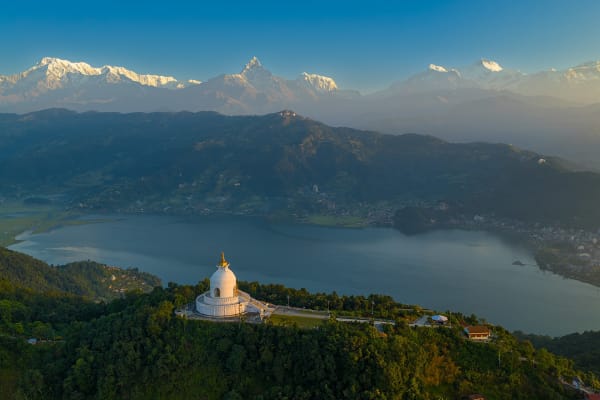
| Day 3 | The flat feeling, if it is coming, usually arrives now | Sit for twenty minutes, then write. A walk to a quiet place — the Peace Pagoda, a monastery, a lakeshore |
| Days 4 to 14 | Re-entry at home; the trek starts to feel distant | Ten minutes of daily practice and one long walk a week. Look at your notes, not just your photos |
The physical side of those days — rehydration, food, sleep, sore knees — is covered in our guide to what your body needs after a trek. The two go together: it is hard to feel settled in a body that is still depleted.
Four Practices for Recovery
1. The long body scan
Lie on your back with a pillow under your knees. Spend twenty to thirty minutes moving attention slowly from the soles of the feet to the crown of the head, giving extra time to the places that worked hardest: feet, calves, knees, hips, lower back, shoulders. You are not trying to fix anything. Attention alone lets muscles that have been braced for two weeks start to release.
2. Yoga nidra
Yoga nidra is guided relaxation done lying down — a teacher's voice leads you through the body, the breath and a sequence of images while you hover between waking and sleep. It demands nothing, which is why it suits a tired trekker better than a sitting practice. A 30-minute session is commonly described as feeling like a much longer rest, and it is the easiest way into meditation for people who find sitting still difficult.
3. The gratitude review
Sit quietly for five minutes, then go through the trek day by day and note, for each day, one thing you were glad of. Not the highlights you have already posted — the small ones. The hot lemon at the top of the stairs. The porter who waited at the bridge. The morning the cloud lifted. This is not sentimentality; deliberately recalling good experiences in detail is one of the better-supported ways of making them last.
4. Loving-kindness for the people who carried you
Loving-kindness practice, or metta, means silently wishing others well. After a trek there are obvious people to start with.
- Sit comfortably and take a few slow breaths.
- Bring your guide to mind. Silently repeat: may you be safe, may you be well, may you be at ease.
- Do the same for your porter, the lodge owners, the people you walked with.
- Then yourself — the tired, sunburnt version who got up at 4 am.
- Finish with everyone still on the trail today.
It takes ten minutes and it reliably shifts a low mood. It also tends to make people more generous at tipping time, which is no bad thing — see our guide to guides and porters.
Integration: Keeping What the Trek Gave You
Most people come down from a trek with a clear sense of what they want to change — less screen time, more walking, earlier mornings — and have lost it within a month. Integration is the practical work of making some of it stick.
- Write it down before you fly. Three things you noticed about how you lived on the trail that you want to keep. Be specific: not more exercise but a long walk every Sunday morning.
- Pick one anchor practice. Ten minutes of breath awareness each morning, at the time you used to start walking. One practice kept is worth five intended.
- Keep one trail rule. No phone for the first hour of the day is the one most trekkers find they miss.
- Walk. The simplest way to recover the state of mind is to recreate the conditions: a long, steady walk, weekly, without headphones.
- Stay in touch with the group. Shared experience fades slower when it is talked about.
- Plan the next one, slowly. Having something on the horizon helps — but book it because you want to go, not to escape the dip.
The trek does not end at the trailhead. It ends when you have decided what to do with it.
Where to Do It: Pokhara or Kathmandu
Pokhara is the better place to recover if your route allows it. At around 820 m it is warm and oxygen-rich after the heights, the lake is calm, and the pace is slow. Treks in the Annapurna region — Annapurna Base Camp, Mardi Himal, Poon Hill, the Annapurna Circuit — all finish here. See our guide to meditation and yoga in Pokhara.
Kathmandu is busier, but treks in the Everest, Langtang and Manaslu regions return there, and it has the deepest choice of teachers and monasteries. Stay near Boudhanath rather than in Thamel and the city feels entirely different: the stupa at dawn, monasteries on every lane, and far less traffic.

If you have a week or more to spare, a structured retreat is the deepest form of post-trek recovery. Options from weekend courses to ten-day silent retreats are in meditation retreats in Nepal after a trek.
When Low Mood Is More Than Post-Trek Blues
A dip that lasts a few days to a couple of weeks and lifts as you settle back into routine is normal. Some signs suggest something else is going on and deserve a conversation with a doctor rather than more meditation:
- Low mood, anxiety or poor sleep lasting more than two or three weeks.
- Losing interest in things you normally enjoy.
- Intrusive memories of a frightening event on the trek — an evacuation, an accident, a serious illness.
- Persistent exhaustion with fever, weight loss or stomach symptoms, which may be a physical illness picked up on the trip. See illness after a trek: symptoms not to ignore.
Meditation is a support for mental health, not a treatment for depression or trauma. If any of the above applies, seek professional help.
We Provide This Service: Post-Trek Meditation and Recovery
Green Compass Treks arranges post-trek meditation and recovery sessions for guests finishing any of our treks. We were founded in Pokhara, and most of our Annapurna-region trips end here, so adding one or two recovery days is simple — the hotel, the teacher and the transfers are arranged together with the trek.
- Restorative yoga for legs, hips and back, taught for people who have just walked a long way.
- Guided meditation and yoga nidra with a local teacher, privately or for your group.
- A singing bowl sound session — the easiest practice of all after two weeks of effort.
- A quiet half day at the World Peace Pagoda, a Tibetan monastery or a lakeshore away from Lakeside.
- Extra nights and onward plans — including help arranging a longer retreat if you want one.
The same can be arranged in Kathmandu for treks that finish there. Tell us at the time of booking, or tell your guide during the trek once you know how you feel — we can usually add recovery days at short notice. Contact us to add post-trek meditation to your itinerary.