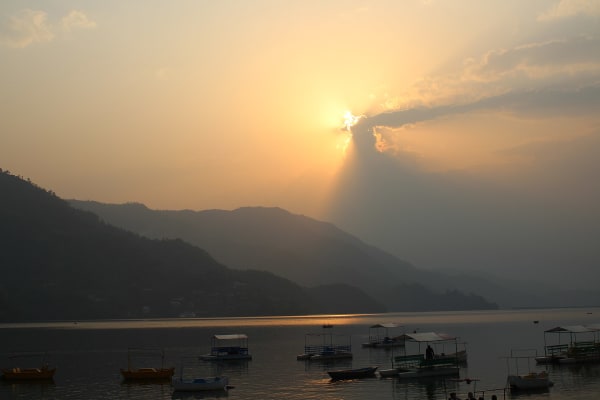
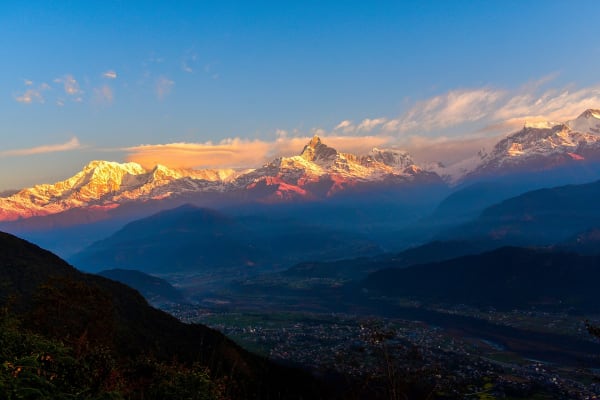
Pokhara is the gentlest town in Nepal. It lies at about 820 m beside a lake, with the Annapurna range filling the northern sky, and after a fortnight in the mountains it feels improbably warm, soft and well-supplied with oxygen. Every trek in the Annapurna region finishes here.
Most trekkers give it one night and a celebratory dinner, then take the morning flight or the long road back to Kathmandu. That is a waste. One or two days of deliberate recovery here — yoga for the legs, meditation for the head, and a great deal of sitting by water — is the best possible ending to a trek.
Why Pokhara Is the Right Place to Stop
- It is low and warm. After nights at 3,000 to 5,000 m, sleeping at 820 m is deep and unbroken.
- It is quiet. The lakeside road has no heavy traffic, and ten minutes' walk north the cafes thin out into rice fields.
- The mountains are still there. You look up at Machhapuchhre and Annapurna South from a deckchair, which makes for a kinder transition than a city.
- It is set up for it. Yoga studios, meditation centres, massage and sound healing are all within walking distance of the lake.
- It is where we are from. Green Compass Treks was founded in Pokhara, and we know who teaches well.
Treks that end here include Annapurna Base Camp, Mardi Himal, Poon Hill, Khopra Danda and the Annapurna Circuit. For the town itself, see our Pokhara travel guide.
The World Peace Pagoda
The white Shanti Stupa stands on the ridge above the southern shore of Phewa Lake at about 1,100 m. It was built by the Japanese Buddhist order Nipponzan Myohoji, which has raised peace pagodas around the world, and its precinct is a designated silent zone.
- Getting there: the classic approach is a boat across the lake followed by a 45-minute walk up through forest. You can also drive most of the way.
- When to go: early morning for clear mountain views and almost no people. Late afternoon for light on the lake.
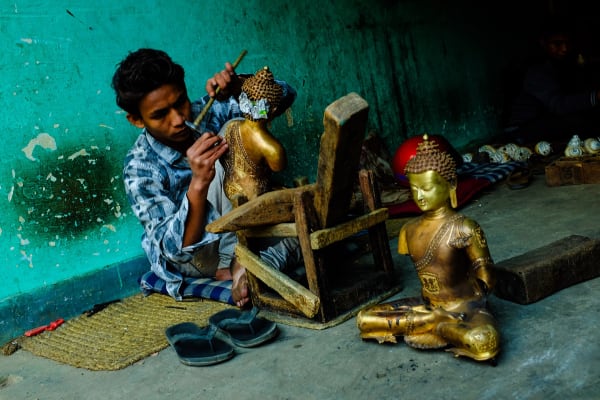
- What to do: walk the two tiers of the stupa clockwise, past the four Buddha images given by different countries. Then find a place on the terrace wall and sit.
- The view takes in the lake, the town and, on a clear day, the range from Dhaulagiri across the Annapurnas to Manaslu — including the valleys you have just walked.
The walk up is short, but after a long trek your legs will notice it. Go on day two, not day one. It is part of our Pokhara day tour.

Lakeside Yoga and Meditation Classes
Pokhara has dozens of yoga studios and retreat centres, from single-room schools on the Lakeside strip to hillside retreats with their own gardens. Quality varies widely, and the newest sign is not always the best teacher.
| What you want | What to look for | Typical format |
|---|---|---|
| Loosen up tired legs | Hatha, yin or restorative class | 60 to 90 minute drop-in, morning or late afternoon |
| Deep rest | Yoga nidra or guided relaxation | 30 to 45 minutes, often after a class |
| Learn to meditate | A small-group or private introduction | One to two hours with time for questions |
| Sound healing | Singing bowl session or sound bath | 45 to 60 minutes, lying down |
| A full reset | Residential yoga retreat | Three to seven days, meals included |
- Tell the teacher you have just finished a trek. A good one will skip the strong standing sequences and go straight to hips, hamstrings and back.
- Choose the hillside over the strip. Studios above the north end of the lake are quieter and often have mountain views.
- Avoid vigorous classes for the first two days. Your muscles need release, not more load.
The sequences themselves are in our guide to yoga for trekkers, and what to expect from a bowl session is in singing bowl sound healing.
Buddhist Meditation Centres and Vipassana
For something more structured than a drop-in class, Pokhara has two well-established options.
- A Tibetan Buddhist meditation centre in Lakeside offers short residential courses — typically three days over a weekend — along with daily drop-in meditation and yoga sessions. The teaching is in English and aimed at beginners, and it is the easiest serious introduction in town.
- A Vipassana centre near Begnas Lake, east of the town, runs ten-day silent courses in the tradition of S. N. Goenka, on a donation basis. Courses have fixed dates and fill early.
Both need planning. A weekend course can sometimes be joined at short notice; a ten-day course must be applied for well ahead. How these compare with the centres in Kathmandu and Lumbini is covered in meditation retreats in Nepal after a trek.
Quiet Places Without a Teacher
You do not need a class. Some of the best post-trek hours are spent simply sitting somewhere calm.
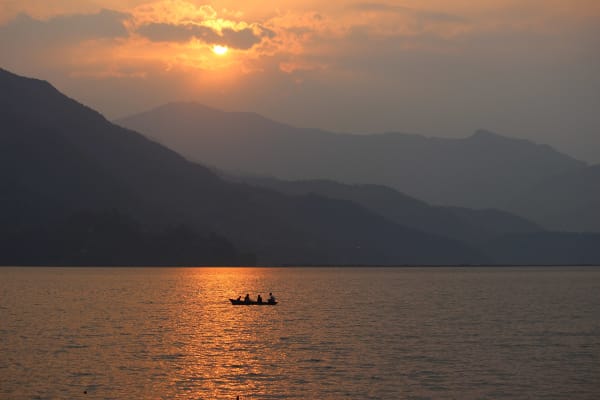
- Phewa Lake by boat. Hire a rowing boat for an hour in the early morning, paddle out past the island temple of Tal Barahi, ship the oars, and drift.
- The north shore. Walk north from Lakeside until the buildings give way to fields and fishing boats.
- Begnas Lake. Forty-five minutes east of town, far quieter than Phewa, ringed with forest and small farms.
- The Tibetan settlements. The settlement north of the city has a large monastery where visitors can sit in on afternoon prayers.
- Sarangkot at sunrise. The ridge above the town for first light on the Annapurnas — see the Sarangkot sunrise tour.
- Tal Barahi temple. The small Hindu shrine on the island in the lake, reached by boat.
A Sample Two-Day Post-Trek Programme
| When | What | Why |
|---|---|---|
| Day 1, morning | Sleep in. Late breakfast by the lake | The body takes what it has been owed |
| Day 1, midday | Massage for legs and back | Circulation and muscle release |
| Day 1, late afternoon | Restorative yoga, then yoga nidra | Supported stretches; deep rest |
| Day 1, evening | Early dinner, no alcohol, early bed | The first proper night's sleep |
| Day 2, dawn | Boat across the lake and walk to the World Peace Pagoda; sit in silence | Stillness with the mountains in view |
| Day 2, late morning | Guided meditation with a teacher; time to write | Integration |
| Day 2, afternoon | Singing bowl sound session | The easiest practice there is |
| Day 2, evening | Monastery prayers, or sunset from the north shore | A quiet close |
With a third day, add Begnas Lake or a short course at a meditation centre. The reasoning behind each element is in post-trek meditation and recovery.
Massage, Hot Springs and Other Recovery
- Trekkers' massage. Lakeside has many massage centres, including clinics staffed by trained blind therapists, which have a strong reputation for deep, skilled work. Ask for a trekker's or sports massage and say where you are sore.
- Jhinu Danda hot springs. If your route comes down the Modi Khola valley from Annapurna Base Camp, the riverside hot pools at Jhinu are the best recovery stop on any trek in Nepal — a long soak the day before you walk out.
- Swimming and gentle walking. Light movement clears stiffness faster than lying still.
- Food. Pokhara has excellent food, and after two weeks of dal bhat you have earned it. Eat protein and plenty of it.
- Ayurvedic treatments are widely offered. Standards vary; choose an established centre.
The physical side of recovery — fluids, food, sleep, and what to do about swollen feet and sore knees — is in post-trek recovery: what your body needs.
We Provide This Service: Post-Trek Meditation and Yoga in Pokhara
Pokhara is our home town, and arranging post-trek recovery here is something Green Compass Treks does for guests every season. We add the days to your itinerary, book the hotel, and set up sessions with teachers and therapists we know personally.
- Restorative yoga and yoga nidra, private or for your group.
- Guided meditation with an experienced local teacher.
- A singing bowl sound session.
- A dawn trip to the World Peace Pagoda by boat, with a guide who knows when to stop talking.
- Massage booked for the afternoon you arrive.
- Extra nights, a quiet lakeside hotel, and onward transport to Kathmandu when you are ready.
You can book it with the trek or decide on the trail — tell your guide, and we can usually arrange it for the day you walk out. The same is available before a trek, for guests who start in Pokhara. Contact us to add recovery days to your itinerary.