People plan the trek in detail and the days after it not at all. The usual pattern is a celebratory dinner, a late night, an early flight, and back to work on Monday wondering why they feel terrible. Then a cold arrives.
A long trek at altitude is a sustained physical stress. You have burned more than you ate for two weeks, slept badly, breathed dry air, and asked your legs for six hours a day. Recovery is not just rest — it is deliberately replacing what was used. Done well, it takes about two weeks. Done badly, it can take a month.
This article is general information, not medical advice. Symptoms that worry you after a trek should be assessed by a doctor.
What Two Weeks on the Trail Does to Your Body
| System | What has happened | How long to recover |
|---|---|---|
| Weight | Most trekkers lose 2 to 5 kg on a high trek: appetite falls at altitude while energy use rises. Some of it is muscle | Two to four weeks, with enough protein |
| Muscles | Microscopic damage, especially in thighs and calves from descents | Soreness peaks one to three days after the last descent; a week or so to settle |
| Joints and tendons | Knees, ankles and Achilles tendons are irritated and often slightly swollen | One to three weeks |
| Fluids | Mild chronic dehydration from fast breathing in dry air | Two to three days |
| Sleep | Broken sleep above 3,500 m adds up to a real deficit | Several nights of long sleep |
| Airways | Dried and irritated; often a lingering cough | One to three weeks |
| Immune system | Dipped by prolonged exertion and poor sleep | One to two weeks — which is when post-trek colds strike |
| Skin and lips | Sunburn, wind chap, split fingertips | A week or two |
| Blood | Extra red blood cells made at altitude | Returns to normal over a few weeks |
None of this is harmful. It is simply a debt, and the next fortnight is when you repay it.
The First 48 Hours
- Drink. Water, soup, tea, and a sachet or two of rehydration salts. Aim for pale urine by the end of the first day.
- Eat properly, and eat protein. Your appetite returns with a vengeance at low altitude. Eggs, chicken, fish, dal, curd — protein at every meal to rebuild muscle, plus all the carbohydrate you want.
- Sleep without an alarm. Nine or ten hours on the first two nights is normal. Vivid dreams are common.
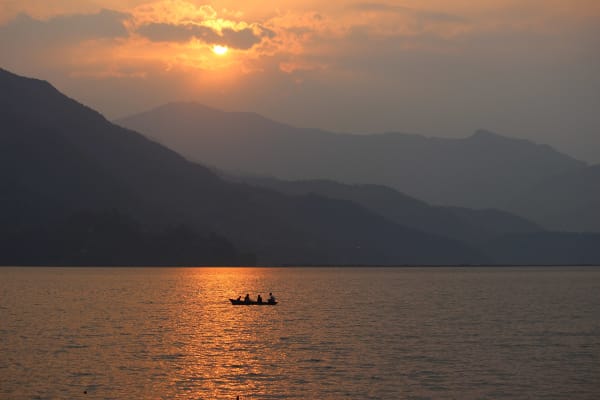
- Move gently. A slow walk by the lake, an easy swim. Light movement clears stiffness faster than lying still.
- Shower, then look after your skin. Clean any blisters and cuts, moisturise, treat sunburnt lips.
- Inspect your feet. Now is when you find the blister or bruised nail you ignored.
- Raise your legs for twenty minutes if your ankles are swollen.
- Go easy on alcohol. One celebratory beer, not six. You are dehydrated, underweight and short of sleep, and it will hit far harder than usual.
- Do not fly long-haul tomorrow if you can avoid it.
A massage on the first or second afternoon is well worth it, once you have rehydrated and eaten. Pokhara and Kathmandu both have plenty of options — see recovering in Pokhara.
Days 3 to 14
| Period | What to expect | What to do |
|---|---|---|
| Days 3 to 5 | Soreness fading; a wave of deep tiredness often arrives now, once the adrenaline has gone. Mood may dip | Rest without guilt. Gentle walking, stretching, restorative yoga. Keep eating well |
| Days 5 to 7 | Energy returning. Cough and peeling skin lingering. This is the peak window for a post-trek cold | Sleep, wash your hands, eat fruit and vegetables. Easy exercise only |
| Week 2 | Most people feel normal. Knees or tendons may still grumble | Return to normal training at about half your usual volume, building back over the week |
| Weeks 3 to 4 | Weight and strength returning | Normal activity. Anything still hurting should be looked at |
- Swollen feet and ankles for a few days after a trek, and especially after the flight home, are common and harmless when both sides are equal. One swollen, painful calf is different — see below.
- Numb or tingling toes from cold or tight boots can take weeks to recover fully.
- Peeling skin, cracked lips and brittle nails are the price of sun and dry air.
- A dry cough often lasts one to three weeks. See Khumbu cough.
- A flat mood is extremely common. See post-trek meditation and the post-trek blues.
Medication After the Trek
| Medicine | What to do |
|---|---|
| Acetazolamide (Diamox) | Stop once you have descended. No tapering needed. The tingling and frequent urination go within a day or two |
| Antibiotics | Finish the course exactly as prescribed, even if you feel well |
| Antimalarials, if prescribed for the lowlands | Continue for the full period after leaving the risk area — often one to four weeks depending on the drug. Stopping early is the main reason they fail |
| Painkillers | Taper off within a few days. Ongoing pain needs assessment, not more tablets |
| Loperamide | Not for continued use. Diarrhoea lasting beyond two weeks needs a stool test |
| Your regular medicines | Resume your normal doses and timing. If you reduced insulin or other doses for the trek, your needs will rise again as activity falls — review with your doctor |
| Unused prescription medicines | Take them home; do not hand them on. Return leftovers to a pharmacy for disposal |
If your trek was followed by a few days in Chitwan or another lowland area and you were prescribed antimalarials, set a reminder. The overview of what to take and when is in the pre- and post-trek medication guide.
The Flight Home
A long-haul flight straight after a hard trek is a recognised risk for deep vein thrombosis — a blood clot in the leg. You are dehydrated, your leg muscles are inflamed, your blood is thicker than usual from altitude, and you are about to sit still for ten hours.
- Leave a day or two between the end of the trek and an international flight. It also protects you against delays on mountain flights — see domestic flights in Nepal.
- Drink water through the flight; limit alcohol and coffee.
- Walk the aisle every hour or two and flex your ankles in your seat.
- Wear compression socks — sensible for anyone, and particularly if you have other risk factors.
- Choose an aisle seat so you actually get up.
- If you have had a clot before, take the contraceptive pill, or have other risk factors, ask your doctor for advice before you travel.
After the flight: pain, swelling, warmth or redness in one calf needs same-day medical attention. Sudden breathlessness or chest pain is an emergency.
Food, Sleep and Getting Your Weight Back
- Protein first. Around 20 to 30 g at each meal for the first fortnight helps rebuild the muscle you lost.
- Do not fear the appetite. Intense hunger for a week is your body making up a real deficit.
- Iron-rich foods — red meat, lentils, leafy greens — support the blood your body built at altitude and is now turning over.
- Fruit and vegetables. Two weeks of rice, lentils and noodles is short on fresh produce.
- Go carefully with rich food on day one. A stomach used to dal bhat can protest at a large steak and several beers.
- Sleep as much as you want for the first week. If jet lag is added on top, get morning daylight and keep to local time.
- Resist weighing yourself for a week — early changes are mostly fluid.
Getting Back to Exercise
- Days 1 to 4: walking, swimming, gentle stretching and restorative yoga only. See yoga for trekkers.
- Days 5 to 7: easy cycling or a short jog if nothing hurts.
- Week 2: normal sessions at about half your usual volume.
- Week 3: back to normal.
You will notice, in the first week at low altitude, that you can walk uphill without getting out of breath. Enjoy it — the extra red cells last a few weeks — but do not mistake it for recovered legs. Tendons and joints heal more slowly than muscles, and the commonest post-trek injury is a strained Achilles or knee from running hard too soon.
Signs That Are Not Normal Recovery
- Fever, at any point in the weeks after the trek.
- Diarrhoea lasting more than two weeks.
- A cough lasting more than three weeks, or with fever, coloured phlegm or breathlessness.
- One swollen, painful calf, or sudden breathlessness.
- Headache, unsteadiness or visual disturbance persisting after descent.
- Yellow skin or eyes, or dark urine.
- Exhaustion that is getting worse rather than better after a week.
- An animal bite or scratch during the trip that was not treated.
Each of these is explained in illness after a Nepal trek: symptoms you should not ignore. See a doctor, and say you have been trekking in Nepal.
We Provide This Service: Pre- and Post-Trek Health Support
Green Compass Treks provides health support before, during and after every trek, and we treat the days after the walk as part of the trip rather than an afterthought.
- Recovery days built into your itinerary in Pokhara or Kathmandu, with a quiet hotel, before any long flight.
- Massage, restorative yoga and guided meditation arranged for the day after you come down.
- A post-trek check-in with your guide: how you are feeling, blisters and wounds dressed, anything that needs a doctor identified.
- A clinic appointment arranged at a travel-medicine clinic in Kathmandu or Pokhara if you have a fever, a persistent stomach problem or a cough — easier and quicker than waiting until you are home.
- A buffer for flight delays, so the end of the trek is not a sprint to the airport.
- Follow-up. We are a message away after you get home if a question comes up.
Extra recovery days can be booked with the trek or added on the trail. Tell us your international flight date and we will plan the end of the trip around it.