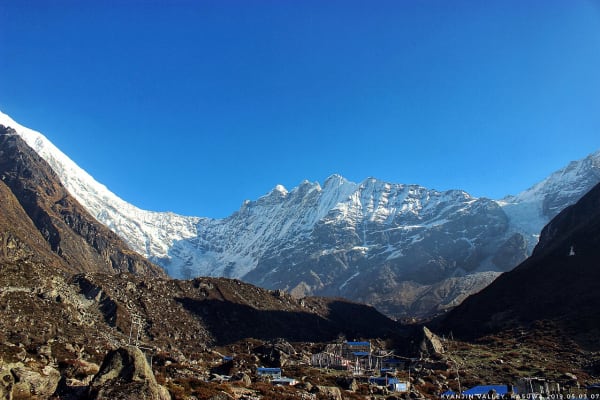
There is a sound that belongs to high lodges in Nepal: a dry, hacking cough from behind a plywood wall at two in the morning. It is so common in the Everest region that it carries the valley's name. The Khumbu cough is not an infection, it is not usually serious, and nearly everyone who spends a week above 4,000 m gets some version of it.
The difficulty is that several different things cause a cough at altitude, and one of them — fluid in the lungs — is an emergency. Knowing which you have, and what to do about each, is one of the more useful pieces of trail knowledge.
This article is general information for trip planning, not medical advice. Any breathing difficulty at altitude should be reported to your guide immediately.
What the Khumbu Cough Is
At altitude you breathe far more air than at sea level — faster and deeper, around the clock, and largely through your mouth on climbs. That air is very cold and extremely dry. Your nose normally warms and humidifies each breath; mouth-breathing bypasses it. Over days, the lining of the throat and airways dries out, becomes inflamed, and responds the only way it can.
- Dry and persistent. Little or no phlegm.
- Worse at night and after exertion, and in smoky rooms.
- Starts above about 3,500 m, usually after several days high, and worsens with altitude and time.
- No fever, and you otherwise feel well.
- Can be violent. On long expeditions, climbers have been known to strain chest muscles and even crack ribs coughing.
- Lingers. It often continues for one to three weeks after you descend.
It is commonest on the high, dry routes: Everest Base Camp, Gokyo, the Three Passes, the upper Annapurna Circuit and Manaslu. On lower, more humid treks it is much less of a problem.
Cough, Cold, Chest Infection or HAPE?
| Feature | Khumbu cough | Common cold | Chest infection | HAPE (fluid in the lungs) |
|---|---|---|---|---|
| Cough | Dry, hacking | Mild, with a runny nose | Wet, with coloured phlegm | Dry at first, then wet; may bring up frothy or pink sputum |
| Fever | No | Slight or none | Often | Sometimes mild |
| Breathlessness | Only on effort, as for everyone | No | Somewhat, on effort | At rest, and worsening |
| Energy | Normal | A bit low | Low | Marked drop — suddenly slowest in the group |
| Lying flat | Cough worse | Blocked nose | Uncomfortable | Breathing clearly worse; may need to sit up |
| Chest sounds | Clear | Clear | May rattle | Crackling or gurgling |
| Lips and nails | Normal | Normal | Normal | May be bluish |
| Action | Protect the airway; carry on | Rest, fluids; carry on gently | Stop ascending; consider descent and treatment | Descend immediately. Oxygen. Emergency |
The two features that separate HAPE from everything else are breathlessness at rest and a sudden loss of performance. A trekker who was keeping up yesterday and today has to stop every twenty steps, and who is still breathing hard ten minutes after sitting down, needs to go down now — whatever their cough sounds like. HAPE most often appears on the second or third night at a new altitude. See altitude sickness in Nepal.
A pulse oximeter helps: a reading well below the rest of the group at the same altitude, especially one that is falling, supports the suspicion. Our guides carry one on high routes for exactly this reason.
Prevention
You cannot change the air. You can change how much of it reaches your throat raw.
- Wear a buff or thin neck gaiter over your mouth and nose whenever you are walking above about 3,500 m, and in bed on cold nights. It traps moisture and warmth from each out-breath and returns it on the next. This is the single most effective measure.
- Breathe through your nose when the gradient allows.
- Slow down. A pace that lets you nose-breathe protects your airway and helps acclimatisation.
- Drink three to four litres a day, much of it warm.
- Suck lozenges or boiled sweets while walking to keep the throat moist.
- Stay out of smoky rooms. Sit away from the stove when it is being lit, and choose the dining room over the kitchen.
- Cover up on dusty roads. Jeep traffic on the lower Annapurna Circuit and around Jomsom throws up fine dust.
- Clean your hands, and keep your distance from the heavily congested. Colds spread fast in a shared dining room.
- Do not smoke.

Treatment on the Trail
| Problem | What helps | Avoid |
|---|---|---|
| Dry Khumbu cough | Buff over the mouth; lozenges; warm drinks with honey, ginger and lemon; steam | Codeine-based cough suppressants at altitude |
| Sore throat | Lozenges; warm salt-water gargle; paracetamol | Shouting over the wind |
| Blocked nose and sinuses | Saline nasal spray; steam inhalation over a bowl of hot water; a short course of decongestant | Decongestant sprays for more than a few days |
| Common cold | Rest, fluids, paracetamol, an easier day | Antibiotics — they do nothing for a virus |
| Cough keeping you awake | Raise your head; buff over the mouth; a warm drink before bed | Sleeping tablets |
Steam is the best simple treatment for both cough and sinuses: ask the lodge for a bowl of hot water, put a towel or jacket over your head, and breathe the steam for ten minutes. Honey, ginger and lemon tea is on every lodge menu and is soothing.
When are antibiotics appropriate?
Rarely, and not for the Khumbu cough or a cold. A bacterial chest or sinus infection is more likely if you have a fever, are coughing thick coloured phlegm and feel properly unwell, or if a cold improved and then turned worse again after several days. If your doctor gave you a stand-by antibiotic, use it only as they instructed. Starting one does not make it safe to continue upward — a chest infection at altitude is a reason to hold or descend.
Sinuses, Ears and Flights
A blocked nose is more than an annoyance on a trek that begins or ends with a mountain flight. Small unpressurised aircraft climb and descend quickly, and congested sinuses and ears cannot equalise.
- If you are congested before a flight, use a decongestant about half an hour beforehand, if it is safe for you to take one.
- Swallow, yawn, or pinch your nose and blow gently during the descent.
- Saline spray morning and evening keeps things clear in dry air.
- Severe ear or face pain that persists after landing needs medical attention.
Decongestants are not suitable for everyone — people with high blood pressure or heart conditions should check first. Flight practicalities are in our Lukla flight guide.
When a Cough Means Stop
- Breathlessness at rest, or that does not ease after ten minutes of sitting.
- A sudden drop in your pace compared with yesterday or with the group.
- A wet, bubbling cough, or frothy, pink or blood-stained sputum.
- Crackling or gurgling in the chest.
- Needing to sit upright to breathe at night.
- Blue lips or fingernails.
- Fever above 38.5°C with a productive cough.
- Chest pain on breathing in.
- A falling oxygen saturation reading.
Any of the first six means immediate descent, with oxygen if available — at night if necessary. Do not wait for morning to see how it looks. The others mean no further ascent and a decision with your guide about going down. Evacuation is covered by a suitable policy; see travel insurance for trekking.
After the Trek
The Khumbu cough does not vanish at the airport. The airway lining takes time to repair, and a dry cough commonly persists for one to three weeks after descent. Warm humid air, plenty of fluids and patience are the treatment.
- See a doctor if the cough lasts more than three weeks.
- See a doctor sooner for fever, coloured or blood-stained phlegm, breathlessness, chest pain or night sweats.
- Mention where you have been and how high.
- A sore chest wall from coughing is common and settles; sharp localised pain may be a strained muscle or a cracked rib.
More on the weeks afterwards is in post-trek recovery and illness after a Nepal trek.
We Provide This Service: Pre- and Post-Trek Health Support
Green Compass Treks provides health support before, during and after every trek. For coughs and chest problems — which touch nearly every high-altitude group — that means the following.
- Before the trek: a briefing that covers the Khumbu cough, how to prevent it, and the warning signs of HAPE, so you know the difference before you are up there.
- A kit check, making sure you have a buff, lozenges and the basics, and help buying anything missing in Kathmandu or Pokhara.
- On the trek: a pace that protects your airways, guides who carry a pulse oximeter and take readings twice a day above 4,000 m, and emergency oxygen on high passes and climbing trips.
- Decisions made early. Our guides are trained to recognise HAPE and will turn a trekker round rather than wait and see.
- Evacuation coordinated with your insurer when it is needed.
- After the trek: a clinic appointment arranged in Kathmandu or Pokhara if a cough has not eased or anything else concerns you before you fly.
Questions about a particular route or your own health history? Get in touch and we will answer within 24 hours.