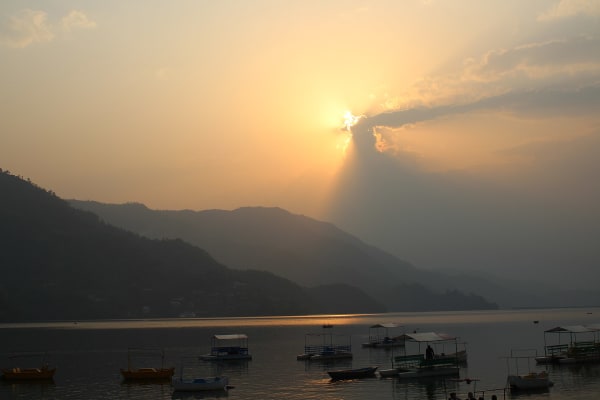
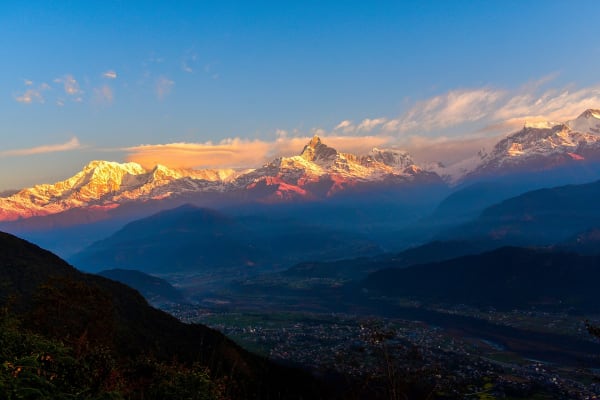
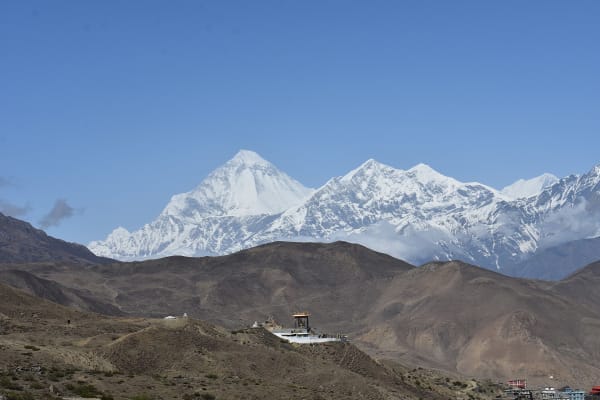
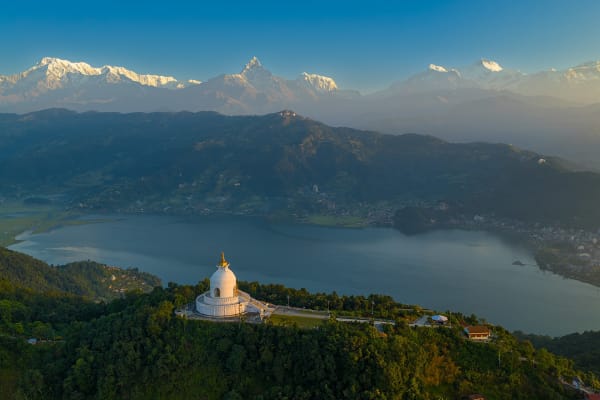
Pokhara is the second city of Nepali tourism and, for most trekkers, the better one. It sits at 820 m on the shore of Phewa Lake with the Annapurna massif rising 30 km to the north — Machhapuchhre, Annapurna South, and Dhaulagiri all visible from the lakeside on a clear morning, an altitude gain of more than seven kilometres in a single view.
It is the staging town for every Annapurna trek, a genuinely pleasant place to spend a few days either side, and Nepal's adventure sports capital.
The Essentials
| Altitude | 820 m — warm, subtropical, comfortable year-round |
| Getting there | 25 min flight or 6–7 hour drive from Kathmandu; Pokhara International Airport opened 2023 |
| Where to stay | Lakeside, the strip along Phewa Lake; quieter at the northern end |
| Best months | October to April for clear mountain views; June to September is wet |
| Trailheads | Nayapul, Kande and Phedi, all 60–110 minutes by road |
| Useful for | Gear shopping, permits, cash, storage, and doing nothing after a trek |
The practical advantage for trekkers: every Annapurna trailhead is a short drive away, which is why Pokhara-start treks are the cheapest and most reliable way into the Himalaya.
What to Do
Sarangkot at dawn
A ridge at 1,592 m above the city, reached by a 45-minute drive or a two-hour walk, and the standard Pokhara sunrise: Dhaulagiri, Annapurna South, Hiunchuli, Machhapuchhre and Annapurna II along the skyline, with the Pokhara valley and Phewa Lake under mist below. The Pokhara day tour with the Sarangkot sunrise covers it, and Nagarkot is its Kathmandu equivalent.
Paragliding
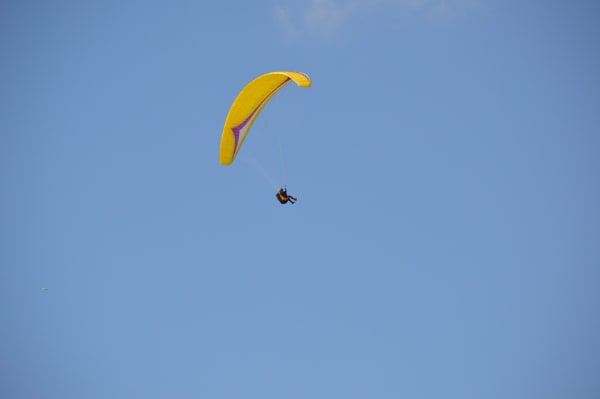
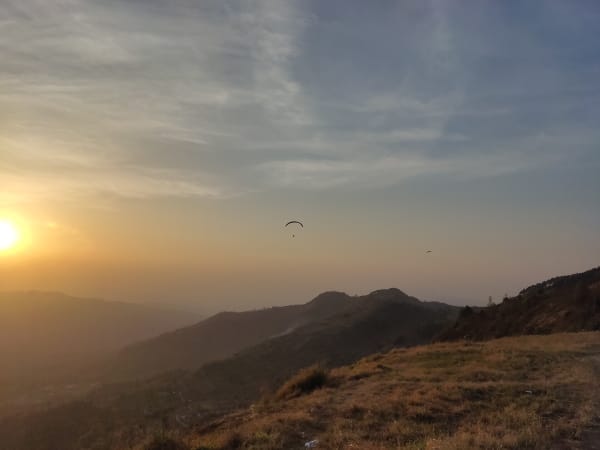
Pokhara is one of the world's best paragliding sites — a reliable thermal, a 1,000 m launch at Sarangkot, and a lake to land beside. A tandem flight takes 20 to 40 minutes and needs no experience. See paragliding in Pokhara, cross-country flights for experienced pilots, and parahawking — flying with trained raptors, which exists only here.
Phewa Lake and the World Peace Pagoda
Hire a wooden doongaa and row to the Tal Barahi temple on its island, then walk up the southern shore to the World Peace Pagoda at 1,100 m — a Japanese-built stupa with the best afternoon view of the lake and the mountains together. Two to three hours round trip, and the best half day in the city.
The rest
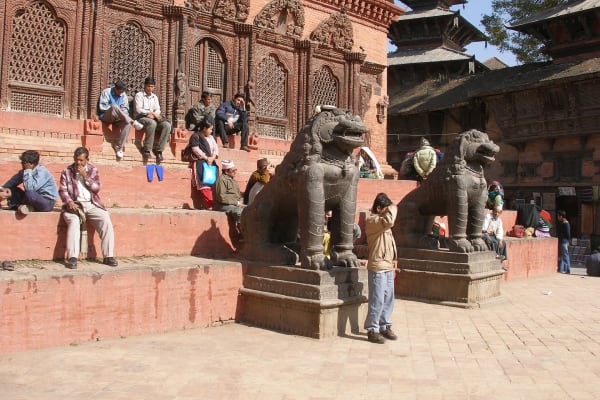
Devi's Fall and the Gupteshwor Mahadev cave behind it; the International Mountain Museum, which is genuinely good on Himalayan climbing history; Bindhyabasini temple in the old bazaar; and the old town north of the lake, which is where Pokhara was before tourism and is worth an hour.
Adventure Sports
More of Nepal's adventure activities are based here than anywhere else.
| Activity | Where | Notes |
|---|---|---|
| Paragliding | Sarangkot to lakeside | 20–40 min tandem, no experience needed, year-round except monsoon |
| Zip Flyer | Sarangkot | One of the steepest and longest ziplines in the world, 1.8 km |
| Bungee jumping | Pokhara | A tower jump in the city, easier to reach than the Kushma or Bhote Koshi bridges |
| Kushma bungee | 1.5 hr from Pokhara | 228 m over the Kali Gandaki — among the highest in the world |
| Seti river rafting | Near Pokhara | A gentle half day, good for beginners and families |
| Ultralight flight | Pokhara airport | 15–60 min open-cockpit flight toward the Annapurnas |
| Mountain flight | Pokhara airport | An hour alongside Annapurna and Dhaulagiri |
| Helicopter sightseeing | Pokhara airport | Including landings toward the Annapurna Sanctuary |
| ATV tour | Pokhara valley | Half day on trails and riverbeds outside the city |
Practical Notes
- Where to stay: Lakeside runs roughly 3 km along the eastern shore. The southern end is busiest, the northern end quieter with better mountain views. We use hotels at the quieter end.
- Eating: the best range outside Kathmandu — Nepali, Newari, Tibetan, Indian, Italian, Korean, and a good number of bakeries and lakeside cafés. Try thakali food, the Mustang regional cuisine, which is the local speciality.
- Gear: plenty of shops on Lakeside, similar to Thamel with slightly less choice. Down jackets and sleeping bags can be hired here too.
- Money: ATMs and licensed changers throughout Lakeside. Withdraw your whole trek's cash in small notes before leaving.
- Storage: hotels store what you do not take on the trail, free, for as long as you need.
- Getting around: walkable along the lake, with taxis and ride-hailing apps for everything else. Bicycles and scooters are easy to hire.
- Permits: ACAP and trekking registration can be issued in Pokhara, which is why a Pokhara-start trek needs no Kathmandu day at all.
How Long to Stay
- One night — enough to sleep before a trek, and nothing else.
- Two nights — the Sarangkot sunrise and a paragliding flight, or the lake and the Peace Pagoda.
- Three nights — the above plus the mountain museum, the old town, and a day doing nothing, which after a trek is the correct use of Pokhara.
- A week — add rafting, the Kushma bungee, a day tour, and a short trek. Several of our guests treat Pokhara as a base and do two short treks from it.
Combining it with Kathmandu: the 7-day Kathmandu and Pokhara tour covers both cities with the valley's UNESCO sites, and the 10-day Best of Nepal tour adds Chitwan. Both work well either side of a trek, or instead of one.