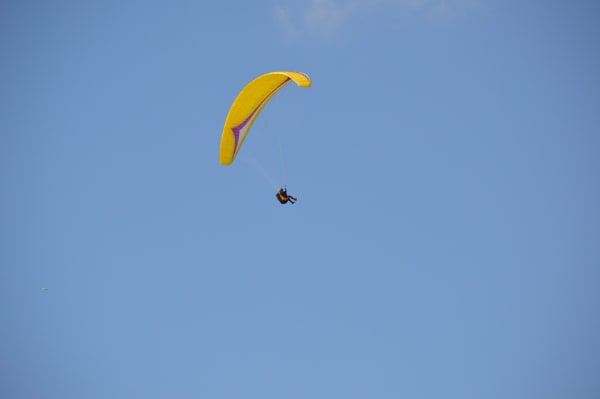
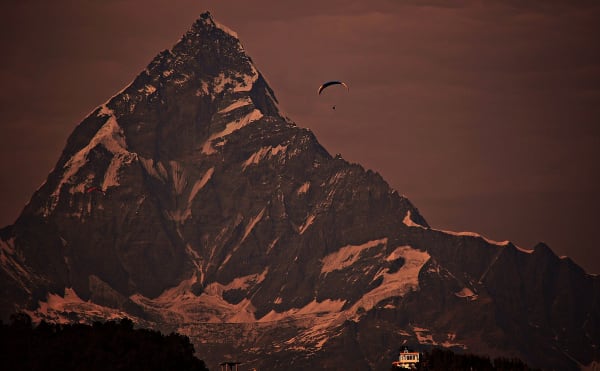
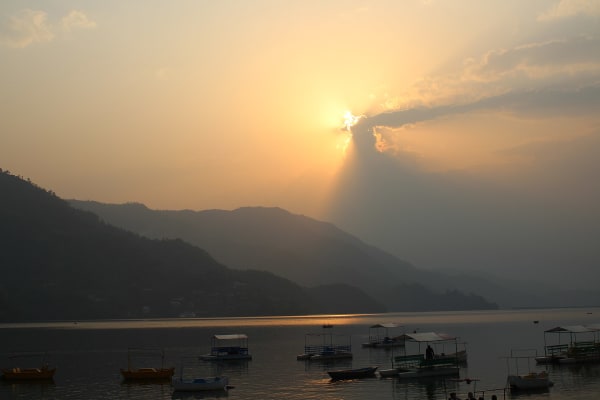
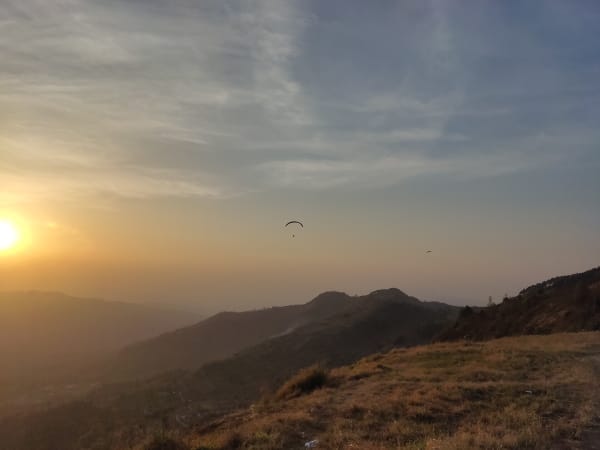
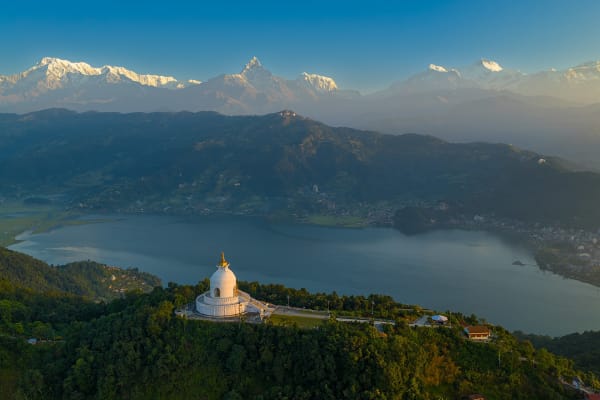
Pokhara has a rare combination for a flying site: a launch ridge at Sarangkot (1,592 m) with 800 m of clearance above the valley, reliable thermal activity through the middle of the day, a large flat landing zone beside Phewa Lake, and the Annapurna massif as a backdrop. Pilots rate it among the best tandem paragliding locations in the world.
You need no experience. A tandem flight is 20 to 40 minutes with a commercial pilot doing the flying, and it is the single most popular add-on to any Pokhara itinerary.
What a Tandem Flight Involves
- Pickup from your hotel in Lakeside and a 30 to 45 minute drive up to the Sarangkot launch.
- Briefing and kit. Harness, helmet, and the instruction — which is genuinely all you need: run forward when told, do not sit down until the pilot says so.
- Launch. Ten steps down a grassy slope and your feet leave the ground. It is far less dramatic than it sounds.
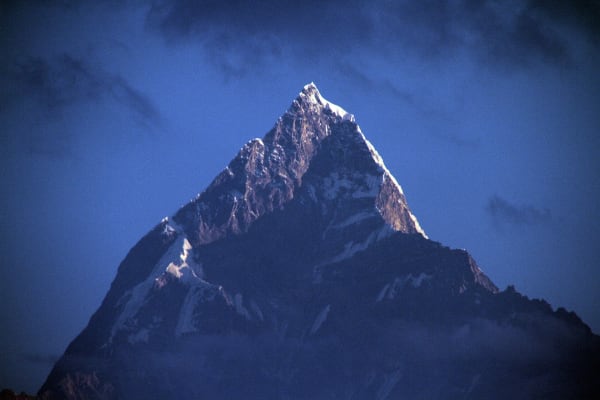
- The flight. 20 to 40 minutes depending on the package, thermalling with the birds above the ridge, with Phewa Lake below and Annapurna South, Machhapuchhre and Dhaulagiri on the northern horizon.
- Acro, if you want it. Spirals and wingovers on request. Say if you do not want them, and say if you are prone to motion sickness.
- Landing on the flat field beside the lake at Khahare, on your feet or seated.
- Photos and video from a pole camera, sold separately or included depending on the package.
We run it as a tandem paragliding flight, with cross-country flights for licensed pilots and parahawking as the distinctive local variant.
Parahawking
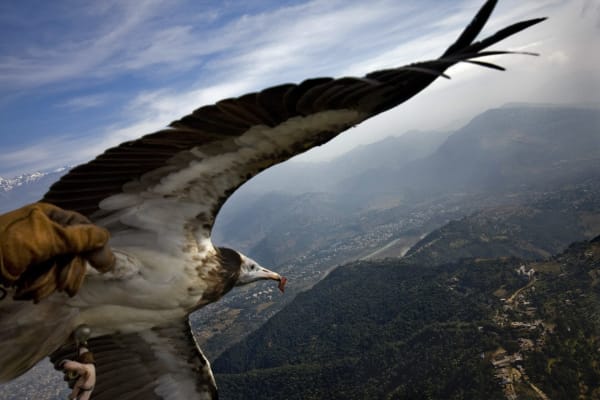
Parahawking exists in Pokhara and essentially nowhere else. It pairs a tandem paraglider with trained birds of prey — Egyptian vultures and black kites — which fly alongside the wing, land on the passenger's gloved arm in mid-air, and lead the pilot to thermals.
It began as a conservation project. South Asian vulture populations collapsed by over 95% from the 1990s onward, largely because of diclofenac, a veterinary anti-inflammatory that is fatal to birds feeding on treated livestock carcasses. The parahawking operation has used flight revenue to fund vulture conservation, including support for safe feeding sites.
- The birds are rescued or captive-bred and free-flying rather than tethered.
- You wear a glove and hold a small piece of meat; the bird lands on your arm at altitude.
- It costs more than a standard tandem and it lasts longer.
- It is genuinely extraordinary — several of our guests have described it as the single best thing they did in Nepal.
- Availability is limited, so book ahead.
When to Fly
| Season | Conditions | Verdict |
|---|---|---|
| October – December | Stable air, clear mountain views, reliable thermals | The best window of the year |
| January – March | Clear and cool, slightly weaker thermals in midwinter | Very good, quieter |
| April – May | Strong thermals, building haze | Good flying, softer mountain views |
| June – September | Monsoon — cloud, rain, unstable air | Flights frequently cancelled |
Within the day, the flying window is roughly 10 a.m. to 3 p.m., when thermals are working. Early morning flights exist and are smoother but shorter, with less lift. Mountain visibility is best in the morning, which is the one trade-off — for the clearest Annapurna backdrop, take an early flight; for the longest airtime, fly at midday.
Safety and Practical Notes
- Check the pilot's licence. Commercial tandem pilots in Nepal should hold a recognised tandem rating. Ask, and expect a straight answer.
- Insurance. Paragliding is excluded from many standard travel policies as an extreme sport. Check your wording before you fly — this is the same clause problem as with mountaineering. See our insurance guide.
- Weight limits. Typically 25 to 100 kg for tandem passengers, varying by operator and wing.
- Motion sickness. Thermalling involves continuous turning. If you are prone to it, take something beforehand and tell the pilot to fly gently.
- What to wear: long trousers, closed shoes with ankle support, a light jacket — it is cooler at altitude — and sunglasses. Nothing loose that can fall.
- Glasses and cameras should be secured. Anything dropped from a paraglider is gone.
- Cancellations. Weather cancels flights and rebooking is to the next flyable slot, so do not schedule a flight for the morning of your departure.
Pokhara's paragliding industry has had incidents, as any flying site does, and standards vary between operators. We use pilots with recognised ratings and current equipment, and we would rather cancel a flight than send you up in marginal air.
The Other Ways to Get Airborne in Pokhara
| Activity | Duration | What it is |
|---|---|---|
| Tandem paragliding | 20–40 min | The standard flight from Sarangkot |
| Parahawking | Longer | Flying with trained raptors — unique to Pokhara |
| Cross-country paragliding | Hours | For licensed pilots, distance flying along the range |
| Ultralight flight | 15–60 min | Open-cockpit powered flight toward the Annapurnas |
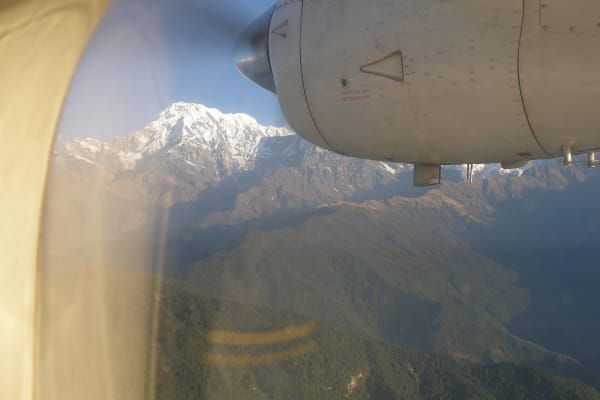
| Mountain flight | About 1 hour | Fixed-wing flight along the Annapurna and Dhaulagiri range |
| Helicopter sightseeing | Varies | Including landings toward the Annapurna Sanctuary |
| Zip Flyer | Minutes | One of the world's steepest ziplines, from Sarangkot |
If you want one, take the paraglider — it is the one that uses the geography rather than fighting it. Our Pokhara guide covers the rest of the city, and the adventure activities guide compares everything across Nepal.