Langtang is the closest high valley to Kathmandu and the least flown, which makes this the quietest of the helicopter days. Where the Everest flights queue at Lukla and Kala Patthar, you will usually have Kyanjin to yourselves.
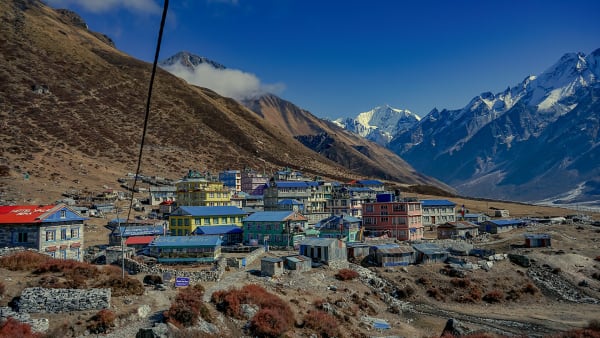
The aircraft crosses the valley rim, follows the Trishuli north to Syabrubesi and turns east into the Langtang valley — a corridor of forest and pasture running under Langtang Lirung (7,227 m) to the Tibetan border. The landing is at Kyanjin Gompa (3,870 m), the last village in the valley, with its monastery, yak cheese factory and a ring of peaks on every side.
The flight passes over the site of the old Langtang village, destroyed by an avalanche in the 2015 earthquake and since rebuilt — a part of the valley's story the pilots explain as you go.

The Flight at a Glance
| Duration | Half a day, early morning |
| Landing | Kyanjin Gompa, 3,870 m |
| Time on the ground | Around 30 minutes |
| Difficulty | Easy — no walking involved |
| Best season | October to December, March to May |
| Pickup | 5.30 to 6.30 am from your hotel |
| Permits | Langtang National Park entry and landing fees, included |
| Price | From USD 950 per person |
We run it as a one-day flight from Kathmandu. For the same valley on foot, see the Langtang Valley trek; for the Everest equivalent, the Everest Base Camp helicopter tour.
The Route
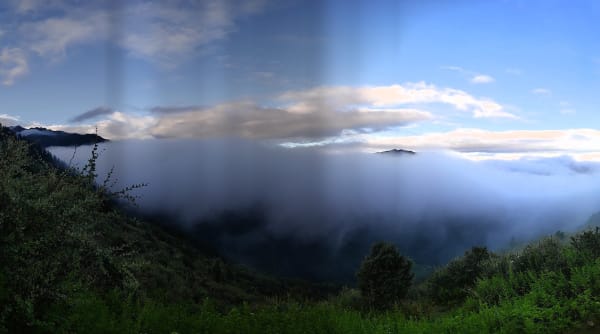
The flight north out of the valley is a genuine part of the experience rather than transit. The aircraft crosses the rim above Kakani, picks up the Trishuli and follows it to Syabrubesi, then turns east and climbs the Langtang valley itself — forest, then yak pasture, then the moraine below Kyanjin.
On the way up you pass the site of the old Langtang village. In the 2015 earthquake an ice and rock avalanche destroyed it entirely, killing several hundred people. The rebuilt village sits nearby. Pilots point it out and explain it, and it changes the tone of the flight for the better.
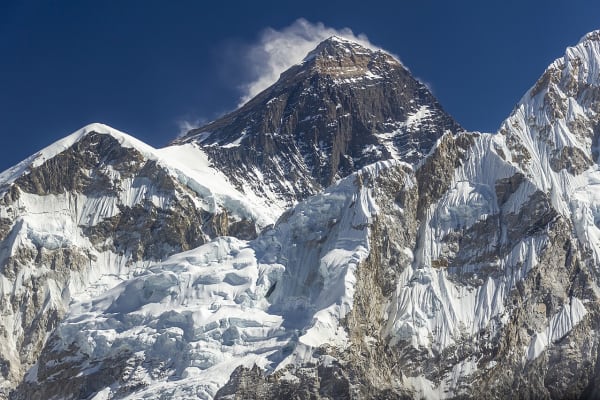
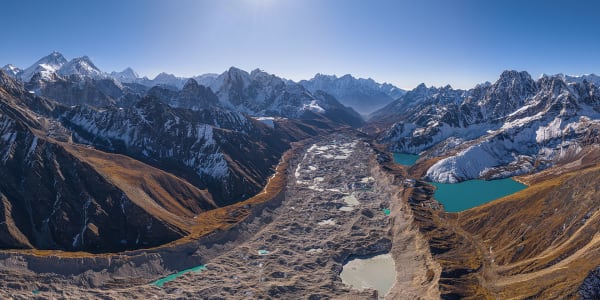
At Kyanjin Gompa you get around thirty minutes on the ground, which is longer than most high helicopter landings allow. That is enough for the monastery, the cheese factory and a walk to the edge of the moraine with Langtang Lirung, Gangchempo and the wall of the Tibetan border around you.

Altitude: The Thing to Take Seriously
You go from 1,400 m to 3,870 m in under an hour, with no acclimatisation at all. For most people that is fine for a thirty-minute visit, but it is not nothing.
- Move slowly on the ground. Walking briskly at 3,870 m straight off a helicopter is what causes the headaches.
- Supplementary oxygen and a first aid kit are carried on board, and the pilots are trained to respond.
- Tell the crew if you feel unwell — the fastest treatment available anywhere in Nepal is the aircraft you arrived in.
- Heart or lung conditions need a conversation before booking. Kyanjin is more forgiving than the Everest landings, but it is still 3,870 m.
Our altitude guide explains the symptoms; the helicopter tours guide compares the options across Nepal.
What It Costs
| Group size | Price per person |
|---|---|
| 1 traveller | USD 1,330 |
| 2 to 4 | USD 1,180 |
| 5 to 7 | USD 1,085 |
| 8 to 10 | USD 1,025 |
| 11 to 14 | USD 990 |
| 15 and over | USD 950 |
Helicopter pricing falls steeply with group size because the aircraft cost is fixed — a five-seat machine costs the same whether one person or five is in it. Both private charter and seat-in-shared options are available.
What Is Included
- Private vehicle transfers between your hotel and the helipad.
- Langtang National Park entry permit and all landing fees.
- An experienced mountain pilot and ground crew; a licensed guide accompanies groups on request.
- Supplementary oxygen and a first aid kit carried on board.
- Around thirty minutes on the ground at Kyanjin Gompa.
- All government taxes and service charges.
What Is Not Included
- Personal travel and evacuation insurance covering helicopter activity — check the wording, as many policies exclude it.
- Meals not specified in the itinerary.
- Any additional night's accommodation caused by a weather postponement.
- Drinks, snacks, laundry, phone calls and souvenirs.
- Tips for the guide and driver.
- Any additional cost caused by flight delays, roadblocks, weather or other circumstances beyond our control.
If weather cancels the flight we rebook you for the next morning where your schedule allows, and refund in full less unrecoverable costs if there is no workable window.