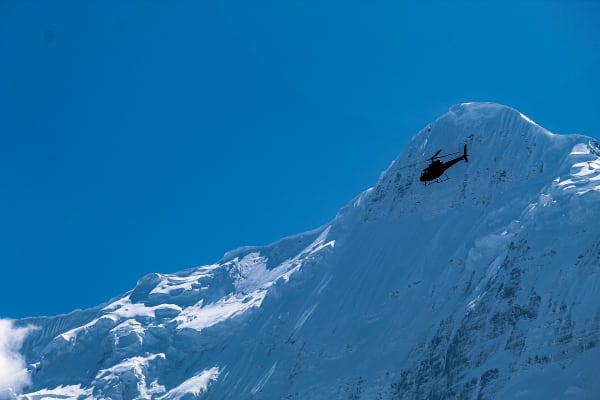
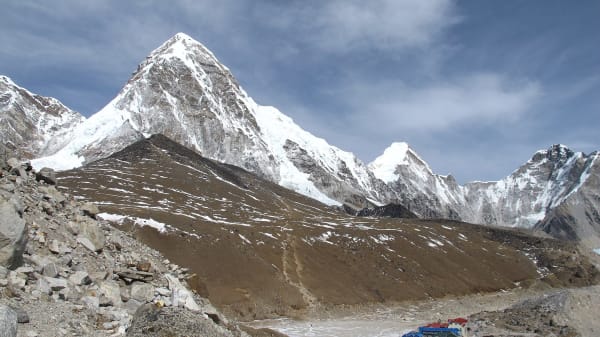
Twenty years ago a helicopter in Nepal meant a rescue. Today it means a morning from Kathmandu that lands you at 5,545 m beneath Everest and has you back for lunch — and helicopter tourism has become one of the fastest-growing parts of the Nepali travel industry.
They are genuinely remarkable and they are not uncomplicated. This guide covers every route we operate, what each actually delivers, the altitude question, and the criticisms that are worth taking seriously.
Everest Region Flights
| Flight | Duration | What it includes |
|---|---|---|
| Everest Base Camp with Kala Patthar landing | 4–5 hours | Up the Khumbu, a landing near Kala Patthar at 5,545 m, breakfast at the Everest View Hotel |
| Kathmandu to Lukla | About 1 hour | A transfer flight, avoiding the Ramechhap drive and weather delays |
| Lukla to Kathmandu | About 1 hour | The return leg, useful when fixed-wing flights are backed up |
| Namche to Kathmandu | About 2 hours | A mid-trek exit without walking back to Lukla |
| Gorak Shep to Kathmandu | About 3 hours | Flying out from the highest lodge after reaching Base Camp |
| Gorak Shep to Lukla | About 15 min | A short hop to connect with a fixed-wing flight |
| Kala Patthar to Kathmandu | About 3 hours | A landing at the viewpoint itself, then out |
| Trek in, fly out | 12 days | The full Base Camp trek with the descent replaced by a flight |
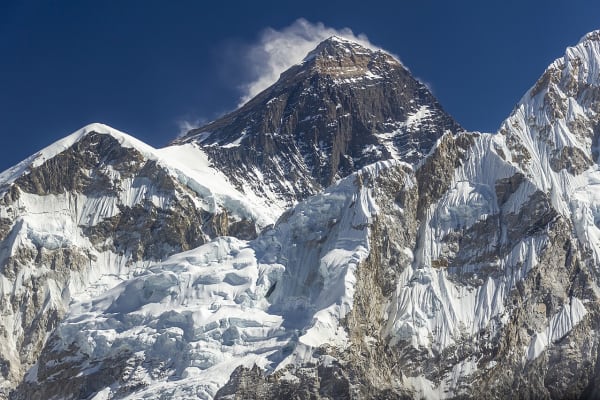
The flagship is the Base Camp tour with a Kala Patthar landing — the only way to stand at 5,545 m with Everest in front of you without two weeks of walking. Our helicopter return guide covers the trek-in, fly-out option.
Annapurna, Langtang and Mustang Flights
| Flight | Duration | What it gives you |
|---|---|---|
| Annapurna Base Camp helicopter tour | About 2 hours | Into the Annapurna Sanctuary, with a landing at Base Camp at 4,130 m |
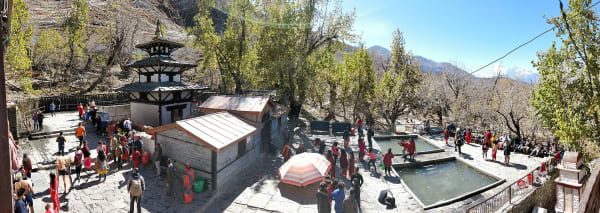
| Muktinath from Pokhara | 1 day | The pilgrimage temple at 3,760 m in Lower Mustang |
| Muktinath and Damodar Kunda | 1 day | Adding the high sacred lakes at 4,890 m in Upper Mustang |
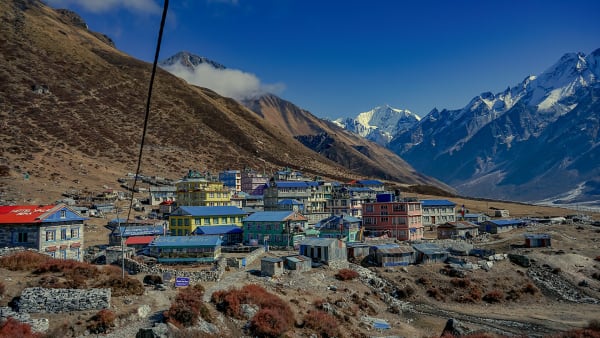
| Langtang helicopter tour | 1 day | Into the Langtang valley to around 3,870 m |
| Pokhara helicopter sightseeing | Varies | Annapurna and Dhaulagiri from the air, with landings available |
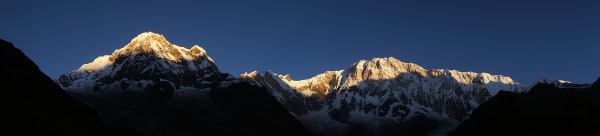
The Annapurna Sanctuary flight is the most underrated of these — flying into a ring of 7,000 and 8,000 m peaks through a gorge narrow enough to feel it is an extraordinary twenty minutes, and it is shorter and cheaper than the Everest flight.
For pilgrims, the Muktinath flights have changed access fundamentally — elderly and less mobile pilgrims who could never have walked or driven the Kali Gandaki now reach the temple in a morning. See our Muktinath guide.
The Altitude Question
This is the part that gets least attention and deserves most. A Kala Patthar landing takes you from Kathmandu at 1,400 m to above 5,300 m in well under an hour — a rate of ascent no trekking itinerary would ever permit.
- Landings are kept short — typically 10 to 15 minutes at the highest point, which is the main mitigation.
- The breakfast stop is lower. Operators land at Syangboche at around 3,880 m for the Everest View Hotel stop rather than lingering high.
- Most people feel light-headed and breathless, and that is normal and transient.
- Who should take advice first: anyone with a heart condition, uncontrolled high blood pressure, significant lung disease, severe anaemia, or who is pregnant. Talk to a doctor before booking rather than after.
- Children and older passengers generally do fine, but the same conditional advice applies.
- Do not fly if you are unwell on the morning. A chest infection plus 5,500 m is a poor combination.
Our altitude guide explains the physiology. The short version: the flight is safe for most people and it is a genuine physiological event rather than a sightseeing bus.
How Flights Actually Work
- Early morning departure. Almost all mountain helicopter flights leave between 6 and 8 a.m., because valley winds and cloud build later.
- Five passengers plus kit is standard capacity, reducing at altitude where thin air limits payload.
- Weight matters. Operators ask for passenger weights, and at landing sites above 5,000 m a helicopter may shuttle passengers in two groups.
- Sharing brings the cost down. A charter split between five passengers is a fraction of the private rate, and most tours are sold as shared seats.
- Weather cancels. Helicopters are far less weather-sensitive than fixed-wing aircraft and not immune. Build a spare day in.
- Landings are not guaranteed. Wind, cloud or snow at the landing site can mean a flyover instead. Reputable operators say this in writing beforehand.
The Honest Case Against
Three criticisms are worth stating plainly.
Noise and intrusion. Helicopter traffic in the Khumbu has increased sharply, and the noise over a valley where people have walked for ten days is a standard and legitimate complaint. Some of this traffic is necessary — supplies, rescues, staff — and a good deal of it is not.
The rescue problem. Nepal has had documented cases of unnecessary evacuations arranged for insurance commission. Reforms have tightened this, and it remains a reason to use an operator whose rescue decisions are made on medical grounds by its own operations team.
Emissions. A helicopter hour is carbon-expensive. If you are weighing a heli tour against a trek, the trek is the lower-impact choice by a wide margin, and it is also the better experience for anyone with the time.
Where we think helicopters are clearly justified: medical evacuation; reaching pilgrimage sites for people who cannot walk or drive to them; a trek-out flight that replaces days of retracing ground; and a single sightseeing flight for travellers who genuinely have no other way to see the Himalaya. Where we think they are not: as a routine substitute for walking on a trail you could walk, or as a lift past a hard day.