Muktinath sits at 3,760 m in Lower Mustang, behind the Himalayan barrier in the upper Kali Gandaki, and it is one of the few places in the world held sacred by two major religions at once. For Hindus it is Mukti Kshetra, the place of liberation, and one of the 108 Divya Desams of Vaishnavism. For Tibetan Buddhists it is Chumig Gyatsa, the hundred waters, and a place of power associated with Guru Rinpoche.
Tens of thousands of pilgrims come each year, most from India and Nepal, and a growing number by helicopter. This is what the site is, what happens there, and the realistic ways to reach it.
What Is at Muktinath
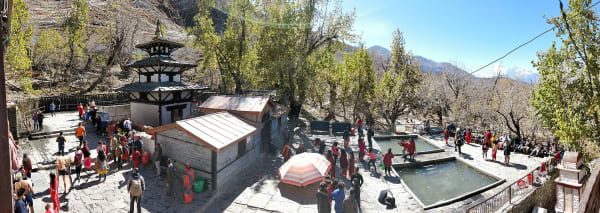
- The Vishnu temple — a modest pagoda-style shrine housing a murti of Vishnu, served by a Buddhist nun, which tells you most of what you need to know about the site's shared character.
- The 108 water spouts — brass spouts shaped as cow heads set into a wall behind the temple, fed by glacial meltwater. Pilgrims bathe under all 108 in sequence, in water a few degrees above freezing. The number corresponds to the 108 Divya Desams and to the 108 beads of a mala.
- The two pools — Laxmi and Saraswati Kunda, in which pilgrims immerse themselves after the spouts.
- Jwala Mai temple — a small Buddhist gompa below the main temple where a natural gas seep burns as an eternal flame above a spring of water. Fire and water together is the core of the site's significance in both traditions.
- The Shaligram connection — the Kali Gandaki riverbed below produces ammonite fossils held sacred as manifestations of Vishnu. Collecting them from the river is restricted; buy from licensed sellers.
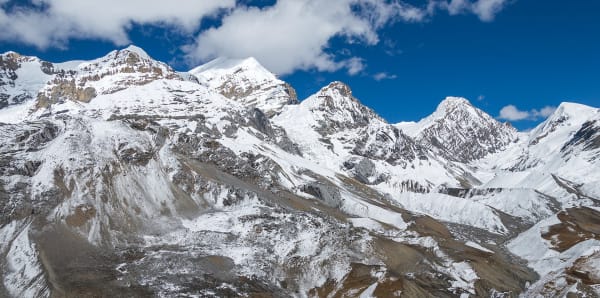
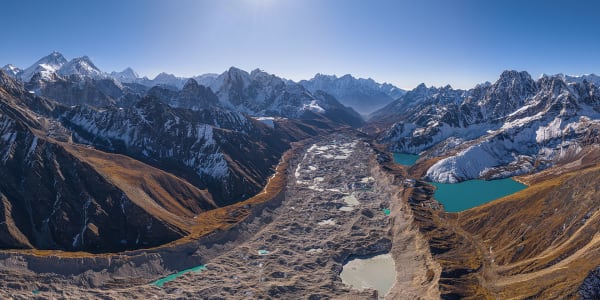
- The setting — Dhaulagiri and Nilgiri across the valley, the Thorong La above, and the dry ochre landscape of Mustang all around.
The Rituals
For pilgrims, the sequence matters. Visitors are welcome to watch and, if they wish, to participate respectfully.
- Arrive and rest. At 3,760 m, most pilgrims arriving by road or air from low altitude feel the thin air immediately. The temple complex is a further 20-minute walk uphill from the road at Ranipauwa.
- Bathe under the 108 spouts, moving clockwise, in water from glacial melt. It is genuinely freezing and done quickly.
- Immerse in the two pools.
- Enter the Vishnu temple for darshan, and make offerings.
- Visit Jwala Mai to see the eternal flame.
- Circumambulate the complex clockwise.
Etiquette for visitors: remove shoes in the temple complex, dress modestly with shoulders and knees covered, do not photograph people bathing, walk clockwise, and do not touch the murti or enter the inner sanctum if you are not participating. The nun who serves the temple, and the monks at Jwala Mai, will generally welcome questions.
How to Get There
| Route | Duration | Suits |
|---|---|---|
| By road from Pokhara | 6 days | Pilgrims and travellers who want the temple without trekking |
| Helicopter from Pokhara | 1 day | Limited time, limited mobility, or elderly pilgrims |
| Jomsom Muktinath trek | 9 days | Walking the Kali Gandaki with Kagbeni and Marpha on the way |
| Jomsom Muktinath from Pokhara | 5 days | The short trekking version |
| Annapurna Circuit | 15 days | Arriving over the Thorong La at 5,416 m, as trekkers have for decades |
| Muktinath and Damodar Kunda helicopter | 1 day | Adding the high sacred lakes at 4,890 m |
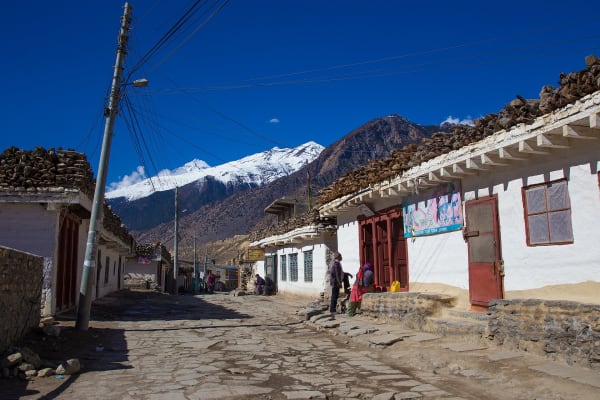
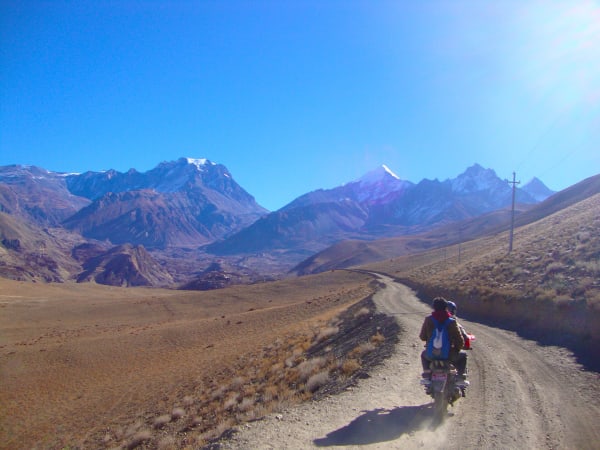
The road now reaches Muktinath itself, which has transformed access — a jeep from Jomsom takes under two hours where it was a day's walk. That has made the pilgrimage possible for elderly and less mobile pilgrims, and it has also made the valley floor dusty and busy. Walking the west-bank and high trails avoids most of that; see our Jomsom Muktinath guide.
Altitude, Season, and Practicalities
- Altitude. 3,760 m is high enough to matter, particularly for pilgrims arriving by helicopter from 820 m in Pokhara within the hour. Light-headedness and breathlessness are common. Anyone with a heart or lung condition should take medical advice before a helicopter visit, and everyone should move slowly on arrival.
- Season. Muktinath is behind the Himalaya in the rain shadow, so it works year-round in principle. October to November and March to May are the most reliable; winter is cold and clear with some snow; the monsoon is dry here but flights into Jomsom are unreliable.
- The wind. The Kali Gandaki funnels a strong valley wind from late morning. Morning visits are considerably more pleasant.
- Accommodation. Ranipauwa below the temple has a range of lodges and pilgrim guesthouses, and Jomsom and Kagbeni both have better ones.
- Crowds. Busiest during the Hindu pilgrimage season and at Yartung in August, when Mustang holds horse races and festivities.
- Combining it. Muktinath pairs naturally with Kagbeni, Marpha's apple orchards, and Upper Mustang beyond the checkpoint.
For Buddhist pilgrims, our Buddhist pilgrimage tour covers Lumbini and the Kathmandu Valley sites, and the Lumbini tour focuses on the Buddha's birthplace — see our Lumbini guide.