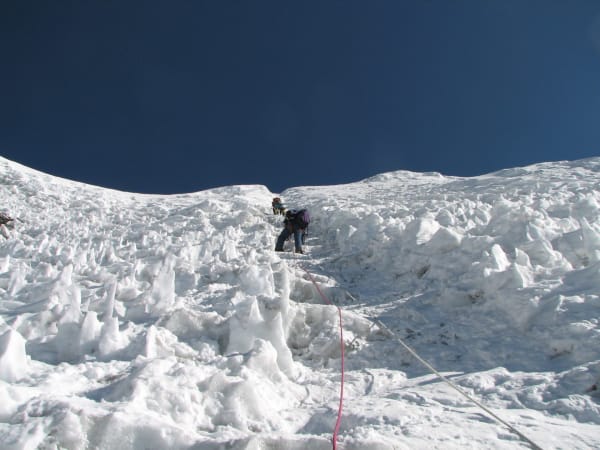
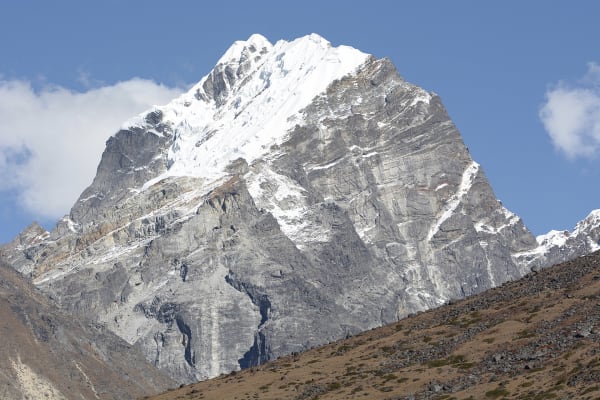
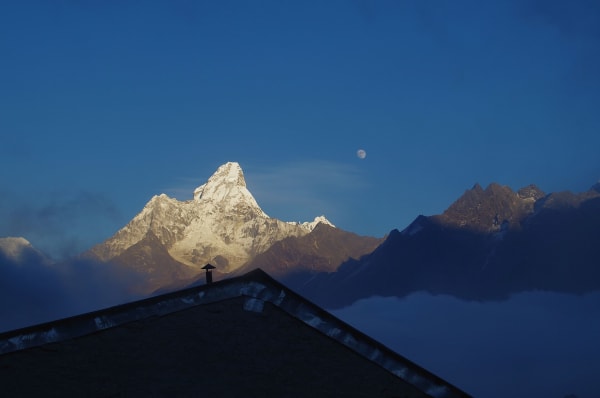
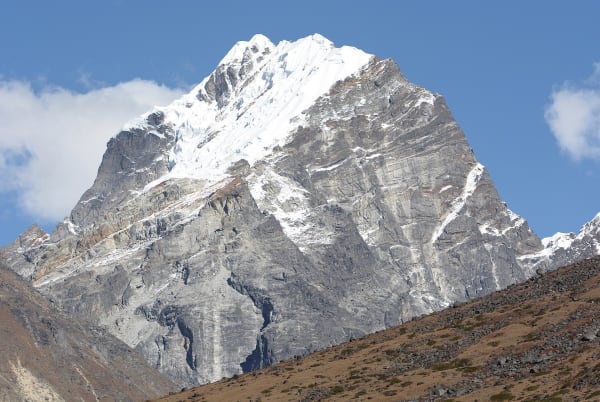
On Island Peak, Lobuche East, Ama Dablam and every eight-thousander in Nepal, the steep ground is climbed on fixed rope — a line anchored by the guides or by the route-fixing team, ascended using a mechanical ascender called a jumar. How efficiently you use it is, more than fitness or willpower, what determines whether you reach a summit.
That is an unglamorous fact and a useful one, because it is the most trainable part of Himalayan climbing. A climber who can jumar smoothly covers a 150 m headwall in ninety minutes. A climber who cannot takes three or four hours, misses the turnaround time, and goes down.
How a Jumar Works
A jumar is a handled cam device that slides freely up a rope and locks under load. Two of them, or one plus a foot loop, let you climb a rope directly.
- Attach the jumar to the rope with the cam engaged, and clip it to your harness with a short sling — the cow's tail.
- Weight it to check it locks before you commit.
- Slide it up the rope with one hand while your weight is on your feet.
- Step up on your crampon points, transferring weight onto the jumar as you rise.
- Repeat. On steep ice the rhythm is push-step-push-step, and it should be continuous rather than a series of hauls.
The commonest mistake is pulling yourself up with your arms. Your legs are far stronger than your arms and you have far less oxygen than usual — so the jumar is a balance point and a ratchet, not a rope to haul on. Climbers who arm-haul a headwall at 6,000 m are finished halfway up it.
The Skills Drilled on Every Trip
Our climbing guides run one or two full training days at base camp. What they cover, and what you should be able to do with gloves on and without thinking:
- Fitting a harness over full clothing — including down trousers — and checking it.
- Walking in crampons — flat-footing on moderate ground, front-pointing on steep ice, and keeping points clear of gaiters and rope.
- Ice axe use — as a walking aid, in self-belay position on a traverse, and a self-arrest from a slip.
- Jumar ascent on a fixed line at increasing angles.
- Clipping past an anchor — the manoeuvre where the rope is anchored mid-pitch and you must transfer your jumar and cow's tail past it without ever being unclipped. This is the one to practise most.
- Abseiling with a figure-of-eight or belay device, and arm-wrapping on moderate ground.
- Roped glacier travel — spacing, keeping the rope off the snow, and crevasse fall response.
- Communication — the calls used on the rope, which matter when wind makes speech useless.
What to Practise Before You Fly
None of this requires mountains. A climbing wall, a tree, or a stairwell with a rope will do.
- Jumar on a hanging rope until the rhythm is automatic. Twenty metres, ten times, is worth more than any amount of reading.
- Do it wearing gloves. Everything is harder with insulated gloves on, and that is how you will climb.
- Practise clipping past an anchor slowly, then faster, then with gloves, then with your eyes half shut. This is the manoeuvre that goes wrong.
- Set up an abseil and take it apart, ten times.
- Walk in your crampons on a hard surface or grass to get used to the width of your stance and the placement of your feet.
- Train your legs for step-ups — weighted box step-ups are the closest gym equivalent to front-pointing a headwall.
If you can find a one-day alpine skills course at home, take it. It is the single highest-value preparation for a Nepali trekking peak, and it means the base camp training day becomes revision rather than instruction.
Summit Day Realities
Things that are obvious afterwards and not beforehand.
- You will be cold and slow. At 6,000 m in the dark, every action takes three times as long as it does at the wall. Allow for it rather than fighting it.
- There may be a queue. On Island Peak's headwall in peak season, several groups can be on the line at once, which means waiting in the cold. Your guide will start early for exactly this reason.
- Gloves come off and go back on constantly. Have a system, and never put a glove down on snow.
- Keep your cow's tail short. A long sling means you slump below the jumar and waste energy regaining height.
- Never unclip both attachments at once. Ever. This is the whole discipline of clipping past an anchor.
- Descending the rope is faster and more dangerous. Most incidents on fixed rope happen on the way down, when people are tired and the urgency has gone.
- Your guide's turnaround time is not negotiable. It exists because the descent takes as long as the ascent and the weather does not wait.
Which Peaks Need What
| Peak | Fixed rope demand | What to be able to do |
|---|---|---|
| Yala Peak | Minimal — short sections | Crampons, axe, basic rope team |
| Mera Peak | A short steep step near the summit | Crampons, glacier travel, one short jumar section |
| Island Peak | 100–150 m headwall at 45–50°, plus an exposed ridge | Confident jumar and abseil, clipping past anchors |
| Lobuche East | Longer, sustained, on mixed ground | All of the above, efficiently, on rock and ice |
| Ama Dablam | Extensive — multiple pitches, the Yellow Tower, the Grey Couloir | Fast, automatic rope work and prior experience |
| Everest | Fixed rope from the Icefall to the summit | Professional-level efficiency over many days |
The progression is deliberate. Each peak adds one element, and doing them in order means you learn the skill before you need it under pressure. Our beginner's guide sets out the sequence, and the gear list covers the hardware.