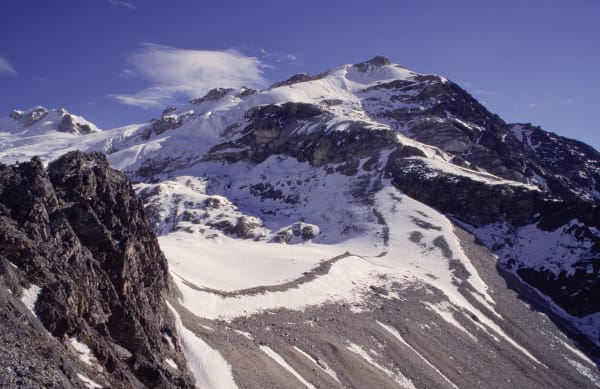
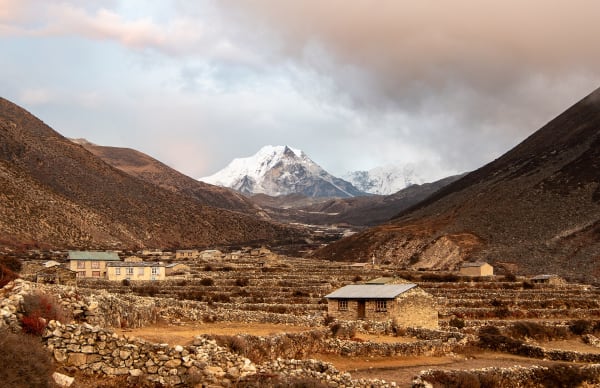
These are the two peaks almost every first-time Himalayan climber chooses between. Both are NMA Group B trekking peaks, both take around 18 days, both are climbed by fit trekkers with no prior mountaineering experience, and both are in the Everest region.
The short answer: Mera is higher and technically easier; Island Peak is lower and technically harder. Which suits you depends on whether your limiting factor is altitude or technique.
Side by Side
| Mera Peak | Island Peak | |
|---|---|---|
| Summit altitude | 6,476 m | 6,189 m |
| High camp | About 5,800 m | About 5,200 m |
| Summit day | 8–12 hours | 12–15 hours |
| Technical grade | Alpine F/PD | Alpine PD+ |
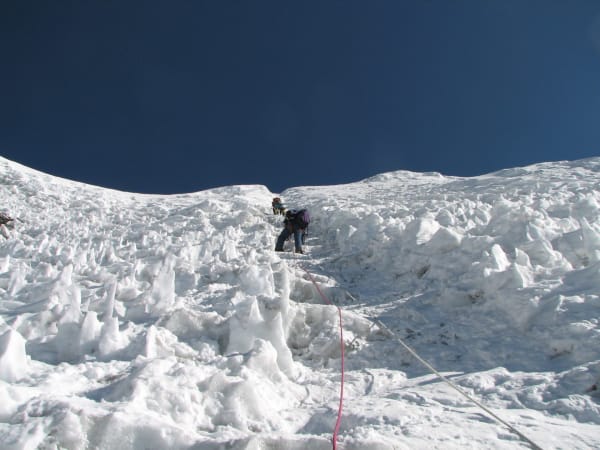
| Crux | A short 40–50 m steep step near the summit | A 100–150 m fixed-rope headwall at 45–50°, then an exposed ridge |
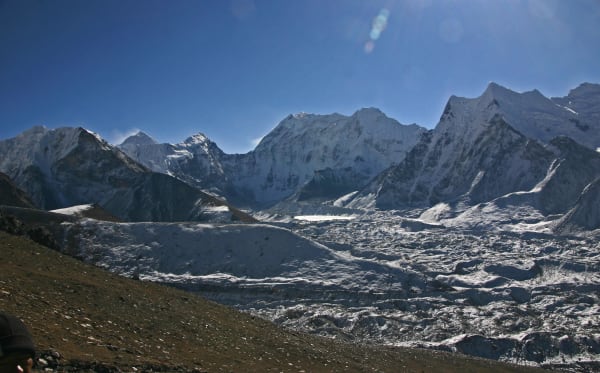
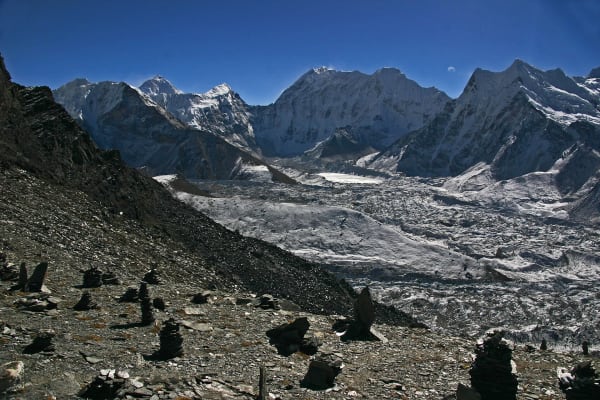
| Glacier | Long, broad, crevassed | Shorter, with crevasses and occasional ladders |
| Approach | Hinku valley over the Zatrwa La — quiet | Everest Base Camp route — busy |
| Acclimatisation | Excellent, nine days of graded walking | Excellent, via EBC and Kala Patthar |
| Cold at high camp | -20 to -30 °C | -15 to -25 °C |
| Crowds on summit day | Moderate | The busiest trekking peak in Nepal |
| The view | Five 8,000 m peaks — Everest, Lhotse, Makalu, Cho Oyu, Kanchenjunga | The Lhotse south face from close range, Makalu, Baruntse |
| Permit cost | Identical — NMA Group B | Identical — NMA Group B |
Choose Mera If…
- You want the highest number. 6,476 m is the highest trekking peak in Nepal, and standing there is the point for a lot of climbers.
- Technical ground worries you more than altitude. The Mera route is a glacier walk in crampons with one short steep step.
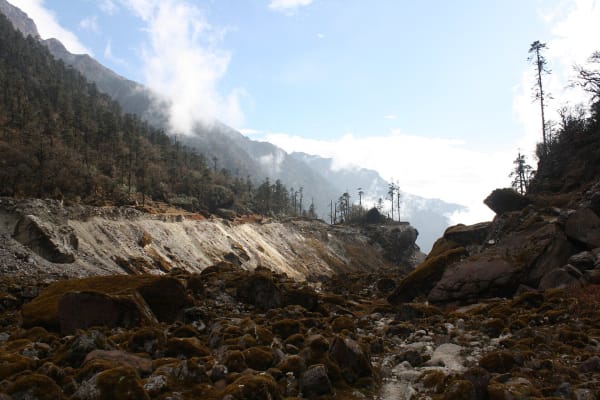
- You want a quieter approach. The Hinku valley sees a small fraction of the Everest trail's traffic.
- The summit view matters. Five eight-thousanders in one panorama is unmatched from any trekking peak.
- You have a fear of exposure. There is no equivalent of Island Peak's summit ridge.
- You want a shorter summit day. Eight to twelve hours against twelve to fifteen.
The trade-off is cold and altitude: high camp at 5,800 m is the coldest night on any trekking peak itinerary in Nepal, and 6,476 m is a genuine altitude. See our Mera Peak guide for the full route.
Choose Island Peak If…
- You want to learn real mountaineering skills. Jumaring a 50-degree headwall and abseiling it is a proper climbing day, and skills you can build on.
- You want Everest Base Camp in the same trip. The standard itinerary walks the EBC route and includes Kala Patthar before the climb.
- Altitude worries you more than technique. 6,189 m and a 5,200 m high camp are both meaningfully lower.
- You want the Khumbu experience. Namche, Tengboche, Dingboche — the classic valley, with the lodges and culture that go with it.
- The Lhotse south face is the view you want. From the Island Peak summit it fills the sky.
- You are training for Ama Dablam or a bigger objective. The technical day is far better preparation.
The trade-off is the summit day: twelve to fifteen hours with a headwall that can queue in peak season, and a summit ridge with real exposure. See our Island Peak guide.
Or Do Both
The most effective way to summit both is the 25-day combination, and the order matters: Mera first, Island Peak second.
- Mera's long graded approach through the Hinku acclimatises you thoroughly.
- Summiting at 6,476 m means Island Peak's 6,189 m feels comfortable rather than marginal.
- The Amphu Lapcha at 5,845 m links the two valleys directly, avoiding a long walk back to Lukla — that is the 21-day Amphu Lapcha route.
- By the time you reach the Island Peak headwall you have had a full expedition's worth of crampon and rope practice.
Beyond that: three peaks in 30 days adds Lobuche East, and Mera with Baruntse uses Mera as acclimatisation for a 7,129 m expedition peak.
What About the Others?
| Peak | Altitude | Compared with these two |
|---|---|---|
| Yala Peak | 5,520 m | Much easier and lower — the best genuine first climb in Nepal |
| Lobuche East | 6,119 m | More technical than Island Peak, with mixed rock and ice |
| Pokalde | 5,806 m | Short and rocky, easily added to a Khumbu trek |
| Naya Kanga | 5,844 m | A quiet Langtang snow peak, straightforward and uncrowded |
| Kyajo Ri | 6,186 m | Considerably harder — a serious technical objective |
| Ama Dablam | 6,812 m | A different category entirely — an expedition peak needing real experience |
If you have never worn crampons and want to find out whether Himalayan climbing suits you before committing to a 6,000 m peak, Yala Peak is the honest answer: a genuine glaciated summit in Langtang, road-accessible, with a short summit day and the same skills taught. Our Yala Peak guide covers it.