Most of what Kathmandu's residents call home is somewhere else: a village in Gorkha, a town in the Terai, a hillside in Ramechhap. At Dashain they go there. The city that is left behind for four or five days is one visitors never otherwise see — streets you can cross without looking, air you can see through, and the old Newar neighbourhoods, whose people are from here, keeping the festival in their own way.
This guide follows the city through the festival and says where to be on each of the public days. What stays open is covered in what is open and closed during Dashain.
A City in Two Halves
Before Phulpati, Kathmandu is at full stretch. The old bazaars of Ason, Indra Chowk and New Road are packed with families buying clothes, spices, kites and gifts. Goat markets appear on open ground at the edge of the city. Bus parks are chaotic. If you enjoy a crowd, this is the week for a walk through the old town — our food tour through Ason is never livelier.
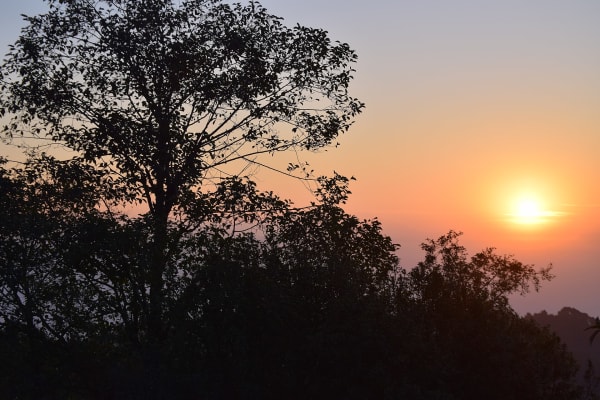
From Maha Ashtami, the shutters come down one street at a time. By the tika day Thamel's lanes are half closed, the ring road is empty, and from the rooftops you can see the snow peaks to the north that the dry-season haze usually hides. It lasts until about the third day after the tika.
Day by Day in the City
| Day | 2026 date | Where to be | What happens |
|---|---|---|---|
| Days 2 – 6 | 12 – 16 Oct | Ason, Indra Chowk, the rooftops | Festival shopping; kites over the old city |
| Phulpati | Sat 17 Oct | Tundikhel, then Hanuman Dhoka | Army parade and gun salutes; the Phulpati is carried into the old palace |
| Maha Ashtami | Sun 18 Oct | Goddess temples; or Bhaktapur | Sacrifices and worship; Newar family feasts |
| Maha Navami | Tue 20 Oct | Kathmandu Durbar Square | The Taleju temple opens; vehicles and tools are blessed everywhere |
| Vijaya Dashami | Wed 21 Oct | With a family; or walking the empty city | The tika; sword processions in the old neighbourhoods in the evening |
| Days after | 22 – 25 Oct | Boudhanath, Swayambhunath, the valley rim | Quiet city, clear views; shops reopening |
Phulpati: The Parade and the Procession
On the seventh day the sacred bundle that has been carried on foot from Gorkha reaches the capital. It is received by officials and priests, and taken in procession through the old city to the Dashain house inside Hanuman Dhoka, the palace of the Malla and Shah kings on Durbar Square.
Meanwhile the Nepal Army holds its Phulpati parade on Tundikhel, the open ground in the centre of the city: massed ranks in dress uniform, military bands, and volleys of ceremonial gunfire that can be heard across the valley. The president and senior officials attend, as the king once did.
- The parade is in the afternoon. Tundikhel itself is closed to the public; people watch from the pavements around its perimeter. Arrive an hour early.
- Security is tight. Carry identification and expect bag checks.
- Durbar Square, where the procession ends, is the better place for a camera — see photographing Dashain.
- The gunfire is loud and sudden. Warn children.
The other end of the journey is described in Gorkha and Manakamana during Dashain.
Maha Navami: The Day the Taleju Temple Opens
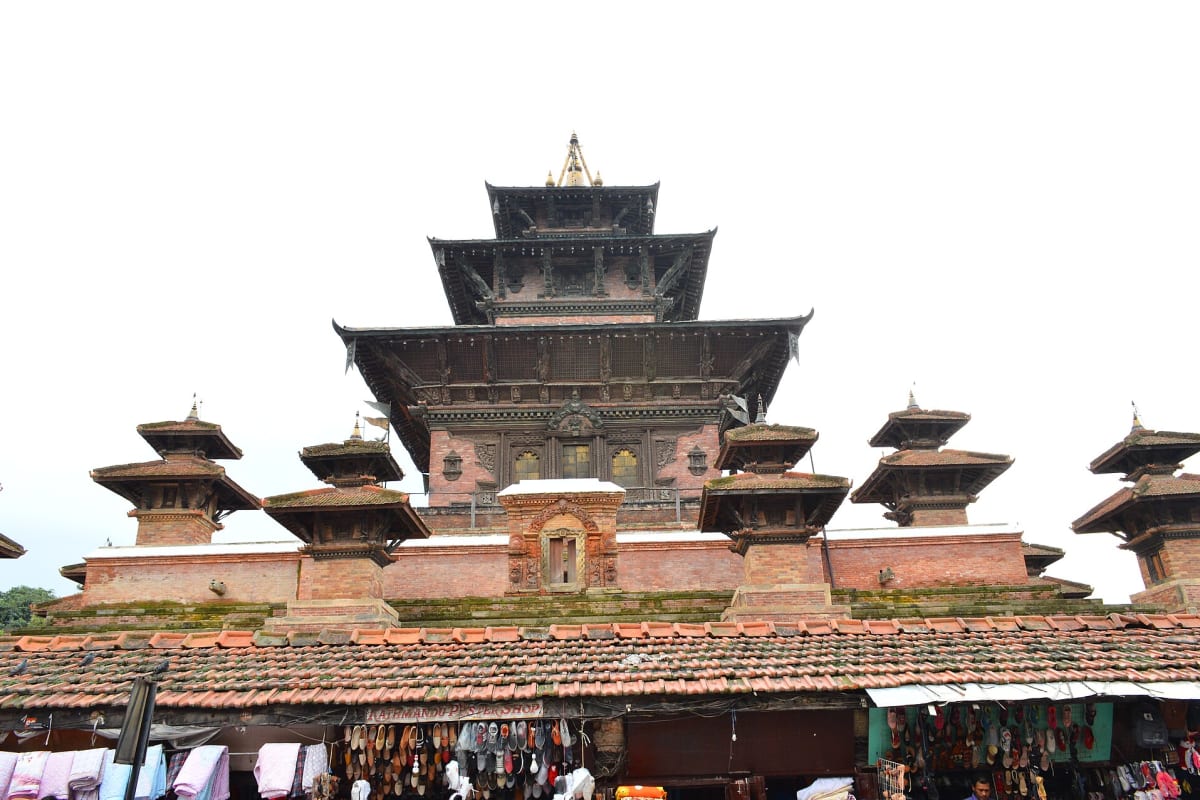
The Taleju temple is the tallest temple in Kathmandu's old city, raised on a stepped plinth at the north-east corner of Durbar Square in the sixteenth century for the royal goddess of the Malla kings. For 364 days a year its gate is locked. On Maha Navami it opens.
From before dawn a queue of worshippers forms through the square and down the surrounding streets, each carrying a plate of offerings. The temple is open to Hindus; other visitors are not normally admitted, and the place to be is the square itself, where the queue, the flower sellers and the open gate are the sight. It is the one morning of the year the building looks inhabited.
The same day is Vishwakarma's: every bus, taxi and motorbike still in the city wears a garland and a streak of red, and workshop tools are laid out for worship. A Kathmandu day tour on Navami sees both, and the square's other monuments are described in our guide to the valley's UNESCO sites.
The Old Palace and Its Dashain
Hanuman Dhoka has been the centre of the state's Dashain for centuries. The courtyard known as the Kot is where the army offers its sacrifices on the night of the eighth day, and the Dashain house inside the palace is where the Phulpati rests. A British resident's surgeon painted the scene in the 1850s, and the buildings in his picture are the ones standing today.

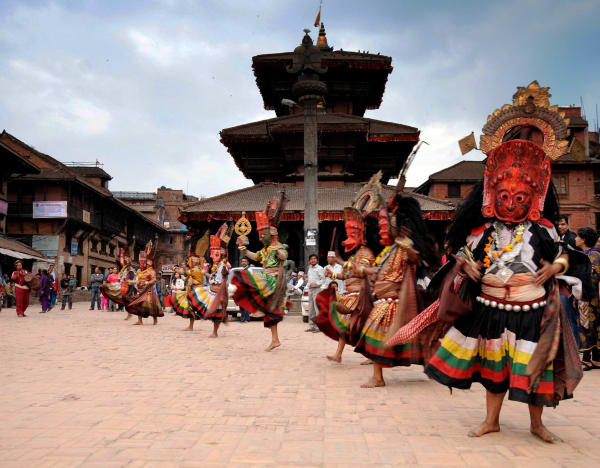
The Newar community of the old city keeps the festival as Mohani. On the evening of the tenth day, groups from some neighbourhoods walk in procession carrying swords — a rite of victory that is easy to miss and worth asking your guide about. Bhaktapur's version, with its masked dancers, is the fuller spectacle: see Bhaktapur during Dashain.
Temples of the Goddess
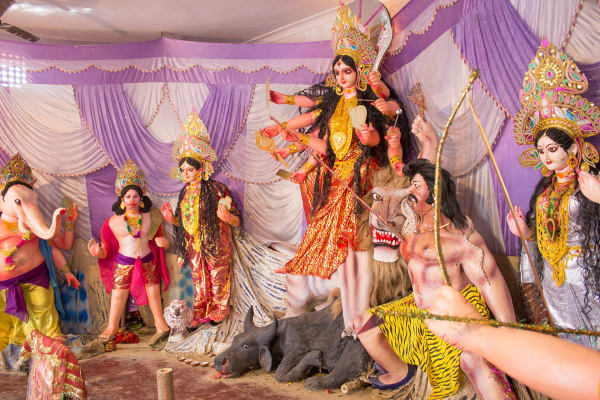
Dashain belongs to Durga, and her temples carry the festival in the city: Bhadrakali beside Tundikhel, Shobha Bhagwati on the Bishnumati, Naxal Bhagwati, Maitidevi, Sankata in the old town, and Guhyeshwari near Pashupatinath. All have queues from early morning on the eighth and ninth days, and animal sacrifice at most of them.
The best known is Dakshinkali, in a wooded gorge an hour south of the city, which is at its most intense on these two days. Go if you want to understand the festival, and read animal sacrifice at Dashain first. Our Pharping and Dakshinkali tour visits it with the Buddhist caves of Pharping nearby; the guide to that day has the detail. Boudhanath and Swayambhunath, being Buddhist, have none of it.
What to Do With an Empty City
- Walk the old town. Thamel to Durbar Square by way of Ason takes forty minutes and is, for once, a pleasure. The shrines are busy even when the shops are shut.
- See the seven heritage sites in a day. With no traffic it is comfortable rather than rushed — seven World Heritage sites tour.
- Go to the rim for the mountains. The air is the clearest of the year: Nagarkot at sunrise, or the Chandragiri cable car, which is busy with local families.
- Take the mountain flight. Clear mornings and no queue on the airport road — Everest mountain flight.
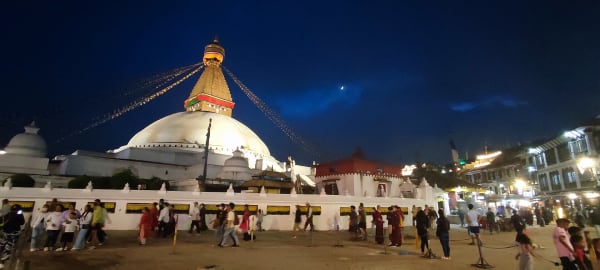
- Walk the kora at Boudhanath at dusk. It is unchanged by the festival and a good antidote to it.
- Cross to Patan. Its Durbar Square and museum courtyards are quiet — Patan day tour.
- Visit Khokana. This Newar village south of Patan does not keep Dashain; it holds its own festival, Shikali Jatra, with masked dances in the same days — Bungamati and Khokana tour.
If you carry a camera, the Kathmandu Photography Tour is at its best this week: dawn at Boudhanath, the Navami queue, and Bhaktapur's squares without the crowds.
Kites and Rooftops
Kite flying is the city's own Dashain custom. From late September the sky above the old neighbourhoods fills in the afternoons, flown from flat rooftops by boys, their fathers and increasingly their sisters, with the cry of chet! when one line cuts another. Any rooftop restaurant near Durbar Square or in Patan gives a view. The tradition is covered in Dashain swings and kites.
Staying and Eating
Stay in Thamel, Boudha or Patan, where hotels and enough restaurants remain open. Book the tika-day dinner at your hotel or confirm that your chosen restaurant is opening. Draw cash before Phulpati. And if a hotel owner or guide invites you home for the tika, go — it is the part of Dashain no itinerary can arrange. See receiving Dashain tika and, for the first days after landing, your first 48 hours in Kathmandu.