Almost every trek in Nepal begins with a day or two in Kathmandu, and how you use them affects the trek more than people expect. This is when permits are issued, kit gaps are found, your guide meets you, and your body starts adjusting to 1,400 m before you go higher.
Here is a practical order of operations, assuming you land in the evening — which most long-haul flights do.
At the Airport
- Visa. Complete the kiosk application, pay in cash at the bank counter, then queue for immigration. Allow 20 to 45 minutes. Our visa guide covers fees and the nationalities that must apply in advance.
- Luggage, then the arrivals barrier. On a booked trip our representative waits outside with a name board; if your flight is delayed they will still be there, because they track the arrival.
- Money. Change a small amount at the airport for convenience, then use an ATM or a licensed money changer in Thamel at a better rate. ATMs dispense NPR 10,000 to 35,000 per transaction with a fee.
- SIM card. Ncell and NTC both have airport counters. Bring your passport and one photograph. A data package costs a few dollars and works on most trails — far better value than lodge Wi-Fi.
- Transfer. Around 30 to 60 minutes to Thamel depending on traffic, which in Kathmandu is a significant variable.
One note: the airport is busy, the taxi touts are persistent, and the arrivals hall is chaotic by design rather than accident. If you are being met, walk straight past everyone to the name boards.
Day One: Admin, Kit, and the Briefing
On a guided trip, your first full day has a fixed core and a flexible remainder.
- Pre-trek briefing — your guide goes through the itinerary day by day, checks your insurance details and permits, and answers the questions you have been saving up. This usually happens at your hotel, late morning or afternoon.
- Kit check — the guide looks over what you have brought. This is the moment a missing layer, a too-thin sleeping bag, or brand-new boots can still be fixed.
- Gear shopping in Thamel — dozens of shops within ten minutes of most hotels. Duffels, down jackets, poles, gloves, buffs, socks, and sunscreen are all worth buying here. Bargaining is expected; start around 60% of the asking price.
- Hiring — sleeping bags and down jackets rent for a few dollars a day, which makes sense for a single trip.
- Cash — withdraw Nepali rupees for the whole trek in small notes. There are no ATMs above the road head.
- Storage — repack, and leave everything you do not need on the trail in a locked bag at the hotel. They store it free until you return.
How to Spend a Spare Day
If you have built in a buffer day — and you should, particularly before a Lukla or Jomsom flight — use it rather than sleeping through it. Light activity helps with jet lag more than a dark room does.
| Option | Time | Why it works before a trek |
|---|---|---|
| Kathmandu day tour | Half to full day | Durbar Square, Swayambhunath, Boudhanath and Pashupatinath with a guide who can explain them |
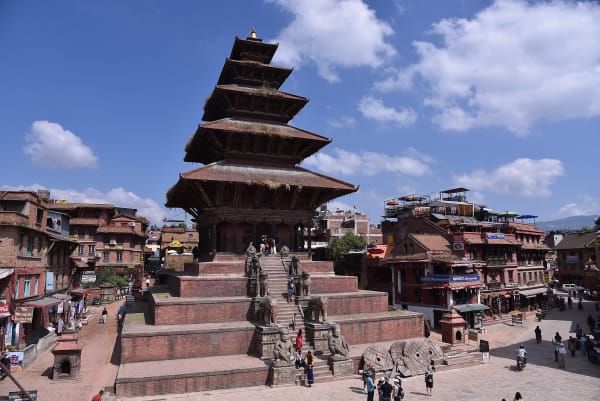
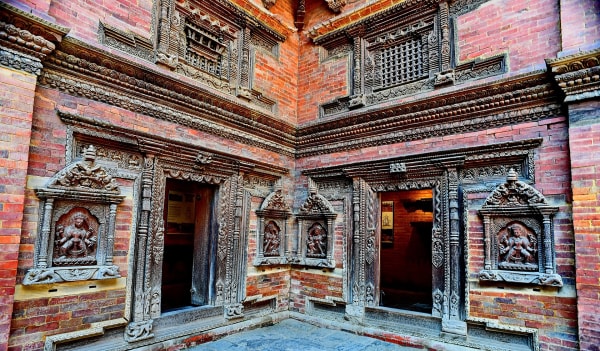
| Bhaktapur | Half day | The best-preserved Newar city in the valley, and calmer than central Kathmandu |
| Patan | Half day | Durbar Square, the Patan Museum and metalworking courtyards, 20 minutes from Thamel |
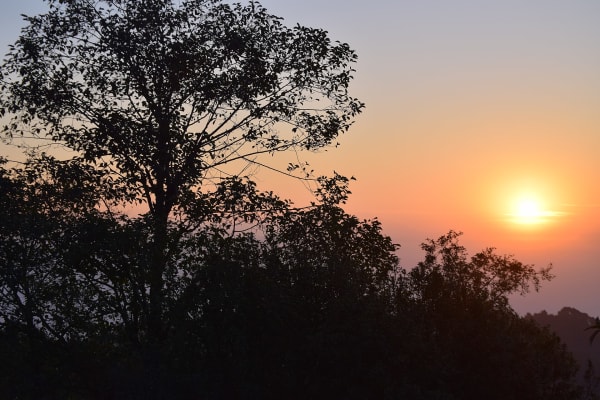
| Nagarkot sunrise | Overnight | A Himalayan skyline from 2,175 m, and a gentle first night at altitude |
| Seven UNESCO sites | Full day | All seven monument zones in one long, well-paced day |
| A walk on the valley rim | Half day | Shivapuri or Champadevi — the best pre-trek legs in the city |
For longer options before or after a trek, see our Kathmandu Valley guide.
Eating, Sleeping, and Staying Well
Kathmandu has the best food in Nepal, and Thamel has restaurants covering Newari, Tibetan, Indian, Italian, Korean, and most things between. A few practical notes:
- Drink bottled or filtered water in the city, and avoid ice in street drinks. It is worth being careful here: a stomach upset that starts in Kathmandu ruins the first trekking days.
- Eat a proper Newari meal while you can — bara, chatamari, choila, and juju dhau in Bhaktapur. You will not see this food again on the trail.
- Air quality in the valley is poor in the dry months. If you are asthmatic, a mask in traffic is sensible, and you will feel better the moment you are walking.
- Jet lag: get daylight in the morning, stay up until a normal bedtime, and resist the long afternoon sleep.
- Thamel is safe and walkable at night, though the lanes are dark and the motorbikes do not stop. Carry a torch.
The Day Before You Leave
- Repack into the two-bag system: porter duffel under 15 kg, daypack 5 to 7 kg. If your trek starts with a Lukla or Jomsom flight, the total allowance is 10 kg checked and 5 kg hand.
- Charge everything, including the power bank.
- Photograph your passport, visa, permits, and insurance policy, and keep the images offline.
- Confirm the morning pickup time with your guide. Mountain flights mean 4.30 to 5 a.m. departures, and a Ramechhap drive can mean 1 a.m.
- Set out breakfast-time clothing and your boots where you will not be hunting for them in the dark.
- Sleep. The first trekking day is usually a long road transfer or an early flight, and neither is improved by a late night in Thamel.
Our packing list is the checklist to run through at this point, and the flights guide explains why the pickup is so early.