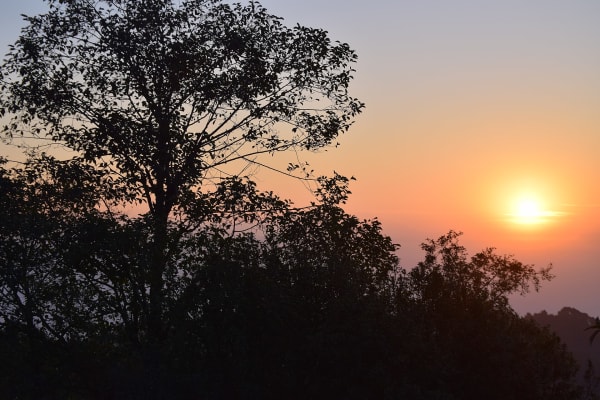
October is already the month photographers choose for Nepal: clean air after the monsoon, low warm light, mountains sharp from the valley floor. Dashain adds subjects that exist for only a fortnight of the year, most of them in the open and nearly all of them offered freely to anyone who asks first.
This guide is a working plan for the festival. For the festival itself, start with our Dashain travel guide.
What There Is to Photograph
| Subject | Where | When | Lens |
|---|---|---|---|
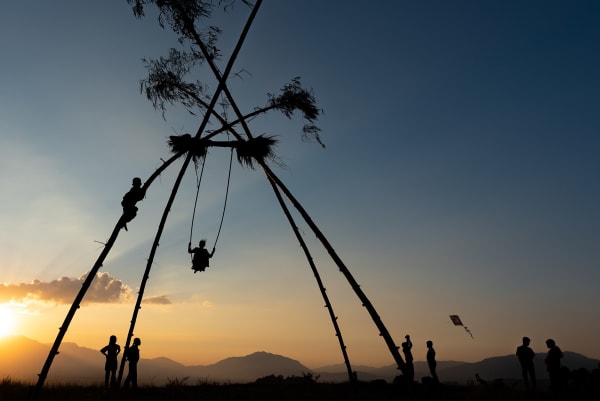
| Bamboo swings | Any village; the valley rim; ridges above Pokhara | Last hour of light | Wide, from low down |
| Kite fliers | Rooftops of old Kathmandu, Patan, Bhaktapur | Afternoons before and during the festival | Short telephoto from a rooftop; wide from beside the flier |
| Festival markets | Ason and Indra Chowk, Kathmandu | The week before Phulpati, late afternoon | 35 mm or a standard zoom |
| Goat herds and markets | The Kali Gandaki road; open ground at the edge of the cities | Two weeks before the tika | Standard zoom |
| The Phulpati parade | Tundikhel and Hanuman Dhoka, Kathmandu | Afternoon of the seventh day | Telephoto |
| The Taleju queue | Kathmandu Durbar Square | Dawn to mid-morning, ninth day | Standard zoom |
| Garlanded vehicles | Everywhere | Ninth day | Anything |
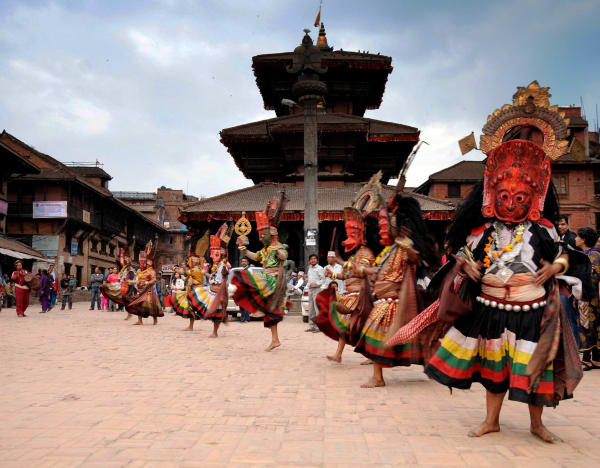
| Navadurga dancers | Bhaktapur | Tenth day and after | Fast standard zoom |
| Tika | In a home, by invitation | Tenth day, late morning | A fast prime; no flash |
| Empty streets | Central Kathmandu | Tenth day | Wide |
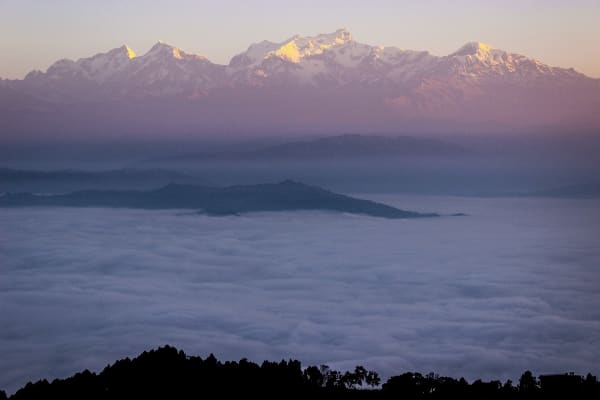
| Mountain dawns | Nagarkot, Sarangkot, any ridge | Every clear morning | Telephoto and wide |
A Shot List by Day
Dates are for 2026; the sequence holds for any year. See our Dashain calendar.
| Date | Morning | Afternoon and evening |
|---|---|---|
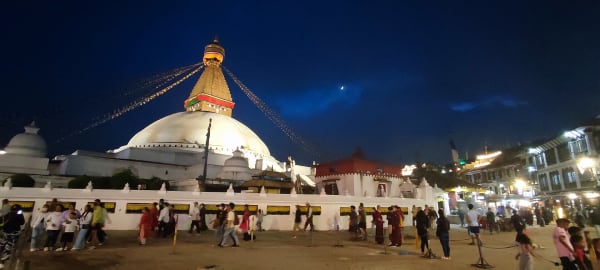
| 12 – 16 Oct | Dawn at Boudhanath; goat markets | Ason at its busiest; kites from a rooftop near Durbar Square |
| Sat 17 Oct — Phulpati | Potters' Square and the lanes of Bhaktapur | The parade at Tundikhel; the procession arriving at Hanuman Dhoka |
| Sun 18 Oct — Ashtami | Worshippers at the goddess temples | A village on the valley rim: swings in the last light |
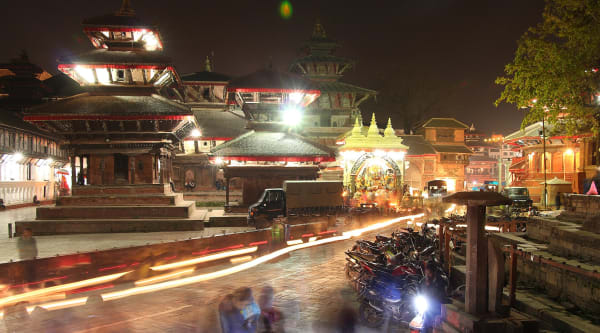
| Tue 20 Oct — Navami | The Taleju queue; garlanded buses and workshops | Patan's courtyards; blue hour in Durbar Square |
| Wed 21 Oct — the tika | Empty streets at first light; then a family tika if invited | Bhaktapur for the Navadurga |
| 22 – 25 Oct | Sunrise from Nagarkot or Sarangkot | Swings, families on the move, card games on doorsteps |
What each of these days means is in the fifteen days of Dashain, and the city's festival geography is in Kathmandu during Dashain.

Asking, and When Not to Shoot
Nepalis are among the most willing subjects anywhere, and during Dashain, in new clothes and a good mood, more so. The rule is the usual one, applied a little more carefully because so much of the festival is domestic and sacred.
- In a home, ask the head of the household before taking the camera out at all, and again before photographing the tika being given. The answer is almost always yes.
- Never photograph the prayer room where the jamara is grown unless you are invited to.
- Children: ask the adult with them. Do not hand out money or sweets for pictures.
- Sacrifice: put the camera away unless you have explicit permission and a reason. Pictures taken to shock are a poor return on hospitality. See animal sacrifice at Dashain.
- The Navadurga are deities while masked. No flash, no blocking their path, no pushing in front of worshippers. See Bhaktapur during Dashain.
- The parade is a military event. Photograph it from the public side; do not point long lenses at security positions, and do as you are asked.
- Inner sanctums are off limits to cameras, and at some temples to non-Hindus altogether.
- Drones need government permits that take weeks and are not given for heritage zones. Leave it at home.
The etiquette of the tika itself is in receiving Dashain tika.
Light and Timing in October
In the third week of October the sun rises in Kathmandu a little after six and sets at about half past five. Good light lasts roughly an hour at each end, and the middle of the day is flat and bright. Plan around it: dawn and dusk outdoors, midday in shaded courtyards, markets and interiors.
Mountain views are best in the first two hours after sunrise, before haze and afternoon cloud build. From Phulpati onward, with the valley's traffic gone, the air over Kathmandu clears noticeably and the snow peaks are visible from rooftops in the city itself — a picture that is not available at any other time of year.
Gear for the Festival
- Two lenses cover it: a standard zoom and a short telephoto. A fast prime earns its place for interiors and the tika.
- Leave the tripod for dawn viewpoints and blue hour in the squares. In festival crowds it is a hazard.
- Spare batteries and cards. Shops are shut; you cannot buy either on the tika day.
- A small bag you can keep in front of you in the markets and the parade crowd.
- A cloth and blower. October is dry and the valley is dusty.
- A phone is enough for most of this. Being in the right place at the right hour matters more than the camera.
If you are continuing to a trek, the cold-weather kit is in our trekking packing list.
Giving Pictures Back
The best thing a photographer can do at Dashain costs nothing. Families gather once a year, and a good picture of four generations on the tika day is something they will keep. Take one for them as well as for yourself, get a phone number or have your guide take it, and send the files. In a homestay village, prints posted afterwards are remembered for years.
Photography Tours Timed for Dashain
Our photography tours are built around light rather than a checklist of sites, and each can be dated to put the festival's best days in the right places.
| Tour | Length | How it fits the festival |
|---|---|---|
| Kathmandu Photography Tour | 1 day | Dawn at Boudhanath to blue hour in Bhaktapur. Run it on Navami for the Taleju queue, or on the tika day for the empty city and the Navadurga |
| Nepal Photography Tour | 10 days | The valley for Phulpati to the tika, then Bandipur, Pokhara and Chitwan as the swings and the homecoming continue |
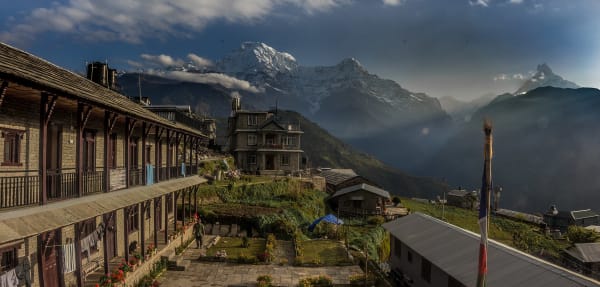
| Annapurna Photography Tour | 7 days | Ghandruk and the ridge villages above Pokhara: swings with the Annapurna range behind them |
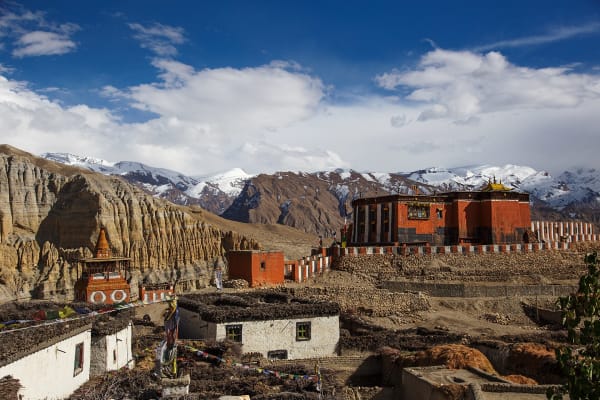
| Upper Mustang Photography Tour | 11 days | Beyond the festival, but on the road the goat herds come down; needs the permit arranged before the holiday |
For more on the places to stand, see where to see Dashain celebrations and Dashain swings and kites.