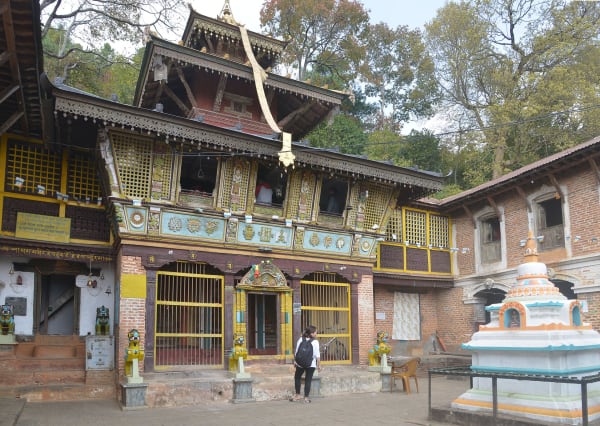
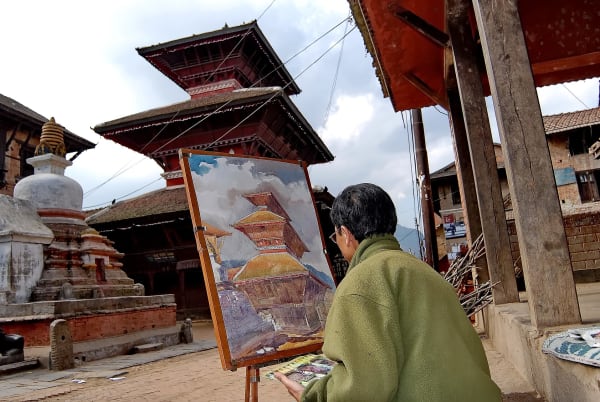
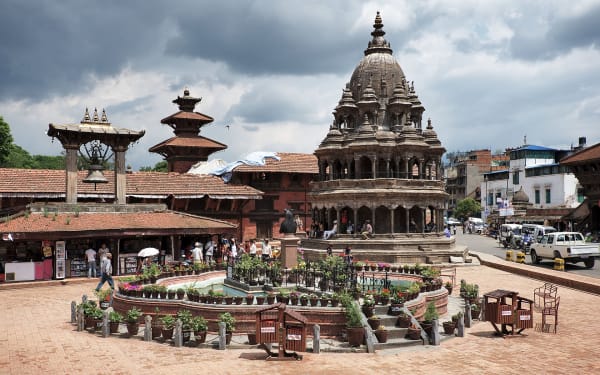
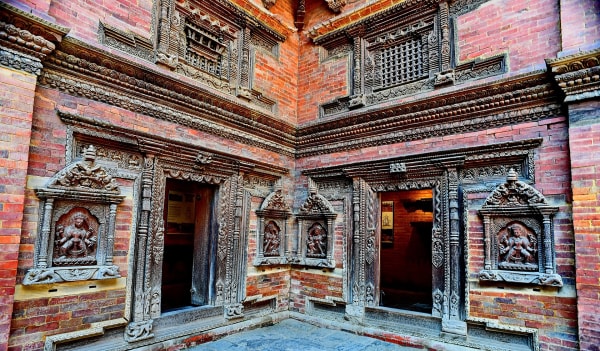
The southern rim of the Kathmandu valley holds two of the most charged religious sites in Nepal within a few kilometres of each other, and the contrast between them is the reason to do them in one day.
Dakshinkali is a Kali shrine in a wooded gorge where animal sacrifices are made on Tuesdays and Saturdays — the most direct encounter with living Hindu practice available near Kathmandu. It is loud, crowded and entirely unfiltered.
Pharping, on the hillside above, is one of the great Vajrayana pilgrimage places, where Guru Rinpoche is said to have attained realisation in the Asura cave. It is quiet: a hillside of Tibetan monasteries and retreat huts around the self-arisen Tara that emerges from the rock face, and caves where practitioners still do three-year retreats.
Both are entirely real, and neither is arranged for visitors.

The Tour at a Glance
| Duration | 1 day |
| Where | Dakshinkali and Pharping, southern Kathmandu valley |
| Highest point | 1,600 m |
| Difficulty | Easy — two to four hours of walking, with stairs at Pharping |
| Best season | October to March |
| Starts | Hotel pickup, normally 8 to 9 am |
| Sacrifice days | Tuesdays and Saturdays at Dakshinkali |
| Price | From USD 70 per person |
We run it as a full-day private tour. It pairs well with the Bungamati and Khokana tour, which covers the other side of southern Lalitpur.
Dakshinkali
The shrine sits at the confluence of two streams in a steep wooded gorge, reached by a flight of steps down from the road. Kali is worshipped here in her southern aspect, and the shrine is one of the very few major sites in the valley where animal sacrifice remains central to the practice.
On Tuesdays and Saturdays the queue starts well before dawn and runs for hours — families bringing cockerels and goats, the slaughter done at the shrine itself, the meat taken home and cooked in the picnic grounds beside the river. It is confronting if you are not expecting it, and it is also ordinary religious life for a very large number of Nepalis.
If you would rather not see it, come on another day. The site is quiet and quite beautiful the rest of the week, and your guide will schedule around your preference — tell us at booking which you want.
Pharping
Up the hill and into a different religious world entirely. Pharping — Yanglesho in Tibetan — is where Guru Rinpoche is said to have attained the realisation of Mahamudra, and it is consequently one of the most important Vajrayana pilgrimage places outside Tibet.
- The Asura cave, with a handprint in the rock attributed to Guru Rinpoche.
- The self-arisen Tara, an image said to be emerging from the rock face of its own accord, and visibly more prominent than in old photographs.
- The Vajra Yogini temple, a Newar Buddhist site older than the Tibetan monasteries around it.
- Retreat huts and monasteries across the hillside — dozens of them, many with practitioners in three-year retreat.

The atmosphere is the opposite of Dakshinkali below: quiet, slow, and organised around long-term practice rather than daily worship. Keep your voice down and walk clockwise.
What It Costs
| Group size | Price per person |
|---|---|
| 1 traveller | USD 100 |
| 2 to 4 | USD 85 |
| 5 to 7 | USD 80 |
| 8 to 10 | USD 75 |
| 11 to 14 | USD 75 |
| 15 and over | USD 70 |
What Is Included
- Private transportation — an air-conditioned vehicle and driver for the full day, including hotel pickup and drop-off.
- Site entry and the offering plate at the Pharping monasteries.
- A government-licensed English-speaking guide for the day.
- Bottled water in the vehicle.
- All government taxes and service charges.
What Is Not Included
- Travel insurance covering medical treatment and emergency evacuation.
- Lunch and any meals not specified.
- Offerings, donations and camera fees at individual shrines.
- Luxury vehicle upgrade — private transport is included as standard.
- Drinks, snacks, laundry, phone calls and souvenirs.
- Tips for the guide and driver.
- Any additional cost caused by roadblocks, weather or other circumstances beyond our control.
Etiquette and Practicalities
- Ask before photographing, and do not photograph the sacrifices at Dakshinkali at all unless you have been explicitly invited to.
- Dress modestly and wear shoes that come off easily — you will remove them repeatedly at Pharping.
- Walk clockwise around stupas and monasteries.
- Stairs at both sites — down into the Dakshinkali gorge and up the Pharping hillside. Tell us about mobility limits at booking.
- Start early. Pickup between 8 and 9 am; Dakshinkali on a sacrifice day is busiest late morning.
For the wider valley context, see our UNESCO sites guide and the festival calendar — Dashain in particular transforms Dakshinkali completely.