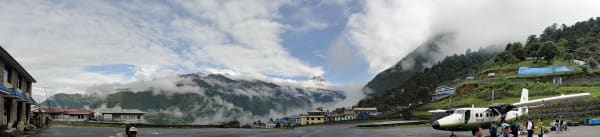

The flight to Lukla takes about twenty minutes and decides the shape of the two weeks that follow. The airstrip sits on a shelf at 2,860 metres, 527 metres long and tilted uphill, with a mountain at one end and a drop at the other. Aircraft land by sight alone. When cloud sits in the valley or the wind turns, nothing flies, and nobody can tell you at breakfast whether it will clear by ten.
In the quiet months a cancelled day is absorbed the next morning. In peak season every seat on every flight is already sold, so the passengers from a lost day join a queue behind everyone booked for the days after. That is how a single bad morning in late October strands people for three days — and why the plan you make before you leave home matters more than anything you can do at the airport.
Why Lukla Flights Are Delayed
- Visibility. Pilots must see the runway and the valley leading to it. Morning cloud or haze in the Dudh Koshi gorge closes the airport even when Kathmandu is in sunshine.
- Wind. By late morning a strong up-valley wind usually sets in, which is why flights are scheduled from first light and stop around midday.
- Weather at the other end. Fog at the departure airport delays the first rotation, and each aircraft makes several trips, so the delay rolls through the day.
- The queue. After a cancellation, airlines fly that day's passengers first and fit the stranded ones in where seats appear.
Autumn is the more reliable of the two seasons. October and November mornings are clear far more often than not, and long shutdowns are less common than in spring. But the season is also when the trail is fullest, so the consequences of a lost day are larger.
The Ramechhap Arrangement
During the peak months, most Lukla flights do not leave from Kathmandu at all. To relieve congestion at the capital's single runway, they are moved to Manthali airport in Ramechhap district, about 130 kilometres east. The exact dates are announced each season; in practice it covers the busy weeks of spring and of October and November.
| From Ramechhap (Manthali) | From Kathmandu | |
|---|---|---|
| When | Peak season | Off-peak months, and a few flights in season |
| Getting there | 4 – 5 hours by road from Kathmandu | 20 minutes from Thamel |
| Typical start | Leave the hotel between midnight and 2 am | Leave the hotel around 5 am |
| Flight time | About 20 minutes | About 30 – 35 minutes |
| If the flight is cancelled | Wait in Manthali, where rooms are basic and few | Return to your hotel and try again |
The night drive is the part people dislike. Two things help. You can travel the afternoon before and sleep near the airport, which costs a day in Kathmandu but lets you fly rested and puts you at the front of the queue. Or you can fly on a shared helicopter directly from Kathmandu. Our Lukla flight guide covers both in detail.
How Many Buffer Days You Need
A buffer day is an empty day between the end of the trek and your flight home. It is the cheapest insurance on the whole trip.
| Your situation | Buffer to allow |
|---|---|
| Trekking in October or November, flexible onward plans | 1 day minimum |
| A fixed international flight you cannot move | 2 days |
| Trekking in the first half of October or in spring | 2 – 3 days |
| A tight connection or a non-changeable ticket | 2 days, and a helicopter budget in reserve |
Put the buffer at the end, not the beginning. A delay on the way in can be recovered by shortening the trek — dropping a rest day lower down is not advisable, but taking a helicopter out from Gorak Shep or Pheriche wins back two or three days. A delay on the way out, with a long-haul flight the next morning, cannot be recovered at all.
If the spare days go unused, they are not wasted. Kathmandu has more than enough for two days: see our guide to the valley's heritage sites, or take the Bhaktapur day tour.
When the Flight Is Cancelled: Your Options
1. Wait
The default, and usually the right call for the first day. Weather that closes Lukla in autumn often clears by the next morning. Your airline or agency rebooks you; stay close and be ready to move at short notice.
2. Take a helicopter
Helicopters can fly in conditions that ground the planes, because they need less visibility and no runway. When flights are cancelled a market forms within the hour: aircraft carry five passengers, and agencies group stranded trekkers to share the cost. The price per seat rises with demand, so it pays to decide early. We operate both directions — Kathmandu to Lukla and Lukla to Kathmandu — and can usually find seats when the planes are down.
3. Go by road and walk
A jeep road now runs from Kathmandu through Salleri and on towards the villages below Lukla. It is a long day and a half of rough driving, followed by a day or more on foot to join the main trail. It is the option of last resort for getting in, and occasionally the only one for getting out when weather stops helicopters too. It adds two to three days and it always works.
4. Change the trek
If you lose more than two days at the start, it can be better to go somewhere that needs no flight. The Langtang Valley trek starts a day's drive from Kathmandu, and the Pikey Peak trek gives a wide view of Everest from a ridge you reach entirely by road.
Reducing the Risk Before You Go
- Book the earliest flight of the day. First rotations are the most likely to fly; if the weather closes at ten, the later ones are the casualties.
- Sleep near Manthali the night before if you can spare the afternoon.
- Avoid the tightest dates. In 2026 the days just after the Dashain tika (22 – 24 October) and around Tihar (6 – 12 November) are the most heavily booked.
- Keep your international ticket changeable, or at least know the change fee before you need to.
- Check your insurance. Some policies pay for extra nights or a helicopter seat after a cancelled flight, and many do not. See travel insurance for trekking.
- Carry cash in Lukla. A stranded day means extra meals and a room, and the ATM there is unreliable.
- Trek with an agency in peak season. Rebooking forty stranded clients is a matter of who answers the phone; an operator with standing arrangements gets seats that an individual does not.
Skipping the Flight Altogether
Some trekkers remove the uncertainty by design. A helicopter both ways costs considerably more but turns the least predictable hours of the trip into a scenic flight. A walk-in from the road, on the old expedition route through Solu, adds four or five days of quiet middle-hill trekking and excellent acclimatisation — the way everyone reached Everest before the airstrip was built.
And the popular compromise: fly in by plane, and fly out from Gorak Shep by helicopter on the Everest Base Camp trek with helicopter return. It saves three days of walking back the way you came and takes the return flight, the one that matters for your connection, out of the weather's hands. The details are in our helicopter return guide.