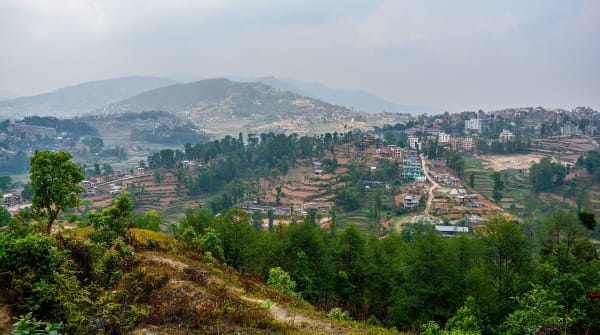

Most photographs of Nepal's terraces show them green. Come in the weeks between Dashain and Tihar and they are the colour of brass: whole hillsides stepped in ripe rice, with lines of people bent among it and the cut sheaves laid out to dry in rows. It lasts about a month in any one place, and it moves down the country from the higher villages to the plains as the weather cools.
This is the season that feeds the country, and it is done almost entirely by hand. For a visitor it has two attractions. The landscape is at its best. And the villages, which can feel closed and quiet at other times of year, are outdoors from dawn to dark — which makes them easy to walk through and easy to be welcomed in.
When the Harvest Happens
Rice is planted in the monsoon rains of June and July and takes four to five months to ripen. Altitude sets the date: the higher and cooler the terrace, the earlier it is cut.
| Where | Altitude | Harvest |
|---|---|---|
| Upper hill villages (Ghandruk, Ghalegaun, Langtang foothills) | 1,600 – 2,100 m | Early to late October |
| Middle hills (Pokhara valley, Bandipur, Nuwakot, Dhulikhel) | 700 – 1,500 m | Mid-October to mid-November |
| Kathmandu valley | 1,300 – 1,400 m | Late October to mid-November |
| Inner Terai and plains (Chitwan, Lumbini, Janakpur) | 100 – 300 m | November into early December |
In 2026 Tihar begins on 7 November, which puts the peak of the middle-hill harvest in the last week of October and the first days of November. Millet, grown on the drier upper terraces, is cut around the same time, and mustard is sown into the stubble as soon as the rice is off — which is why the same valleys turn bright yellow in January.
What You Are Watching
The work has not changed much in generations, and it helps to know the sequence.
- Cutting. The rice is cut by hand with a small sickle, a handful of stalks at a time, and laid flat on the stubble to dry for a few days.
- Carrying. The sheaves are bundled and carried on the back to a threshing ground, usually a flat terrace or the courtyard of the house.
- Threshing. The grain is knocked from the stalk by beating the sheaf against a stone or a wooden board. In some villages oxen are still walked in a circle over the crop to tread it out.
- Winnowing. The grain is tossed on a flat round bamboo tray, a nanglo, so that the wind carries off the chaff. It is skilled work and almost always done by women.
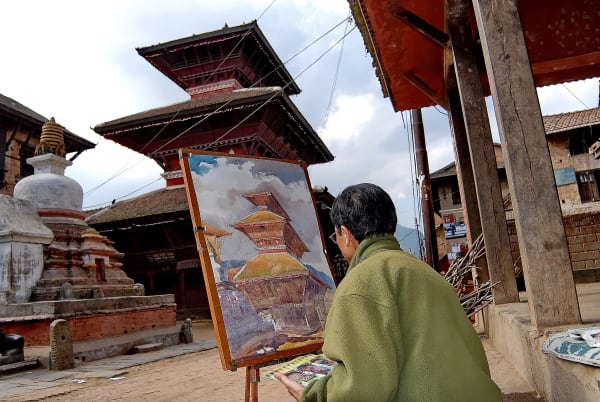
- Drying. The paddy is spread on woven mats in the sun and turned with the feet. In the old Newar towns of the Kathmandu valley whole temple squares are carpeted with it.
- Stacking. The straw, which is winter feed for the animals, is built into tall ricks or wound round the trunk of a tree above the reach of the cattle.
Labour is shared. Families work each other's fields in turn under an old exchange system called parma, and the day ends with a meal for everyone who helped. The first of the new rice is offered at the household shrine before anyone eats it.

Where to See It: Day Walks From Kathmandu
- Khokana and Bungamati. Two Newar farming villages on the southern edge of the valley, half an hour from Patan. Rice dries in the lanes and squares, and Khokana presses mustard oil in a traditional mill. Our Bungamati and Khokana village tour walks between them through the fields.
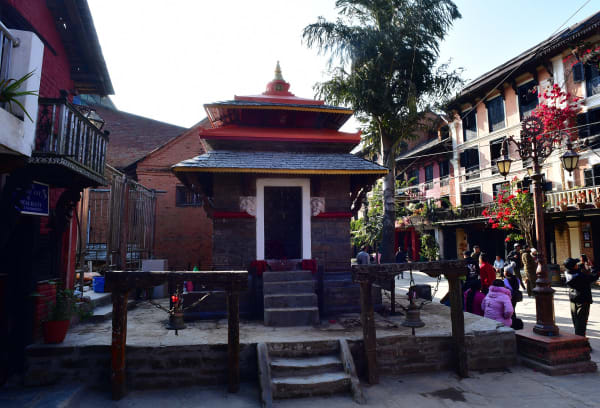
- Bhaktapur. In harvest weeks the brick squares — Pottery Square especially — are covered in drying grain, raked by women in the red-bordered black sari of the Newar farming caste. Combine it with the Bhaktapur day tour.
- Dhulikhel to Namobuddha. A ridge walk of four to five hours through terraces and small Tamang settlements to a hilltop monastery, with the Himalaya along the horizon. See the Dhulikhel to Namobuddha hike.
- Panauti and Balthali. An old temple town and a ridge-top village an hour beyond the valley rim, linked by a half-day walk across harvested fields.
- Nagarkot to Changu Narayan. Downhill for three hours from a sunrise viewpoint to the oldest temple in the valley, through terraces all the way. The Nagarkot sunrise tour can be extended to include it.
Where to See It: Villages Worth a Night
To see a harvest day from beginning to end you need to wake up in the village. These are places with organised homestays, where staying the night puts money directly into the households doing the work.
| Village | Where | Why |
|---|---|---|
| Ghalegaun | Lamjung, 2,100 m | A Gurung village on a ridge facing Lamjung Himal and Manaslu, with one of the country's best-run homestay programmes |
| Sirubari | Syangja, 1,700 m | The original community homestay in Nepal; stone-paved, immaculate, with an evening cultural programme |
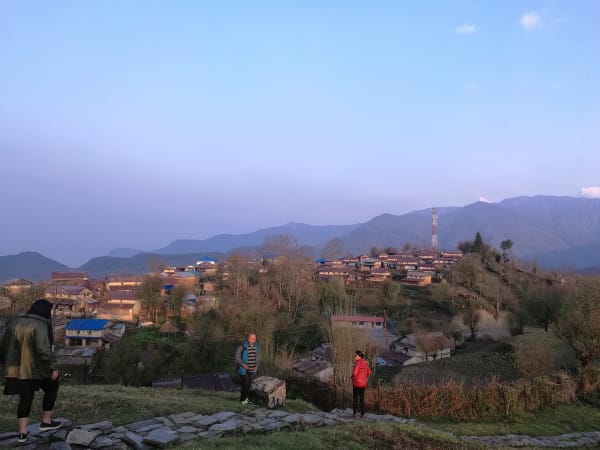
| Ghandruk | Kaski, 1,940 m | The big Gurung village on the Annapurna trails, with terraces dropping a thousand metres to the Modi Khola |
| Bandipur | Tanahun, 1,030 m | A preserved Newar hill town; the fields are in the valley below, a morning's walk away |
| Dhampus | Kaski, 1,650 m | An hour's climb from the road above Pokhara, with a full Annapurna panorama behind the terraces |
Our Himalayan Village Tour links several of these in six days. The individual villages are described in the Ghalegaun guide and the Sirubari guide.
Harvest on the Trekking Trails
You do not have to plan a village trip to see it. The first and last days of most treks pass through the same country, and in these weeks they are among the best of the walk.
- Annapurna foothills: the climb from Nayapul to Ghandruk, and the descent from Landruk, on the Poon Hill and Annapurna Base Camp routes.
- Manaslu: the lower Budhi Gandaki between Soti Khola and Jagat, where terraces climb impossibly steep valley sides.
- Annapurna Circuit: the Marsyangdi valley below Chamje.
- Langtang: the drive in through Trishuli and the terraces around Syabrubesi; and the villages of the Tamang Heritage Trail.
- Lower Solu: the walk to Pikey Peak, through Sherpa and Rai farmland.
If the fields matter to you as much as the peaks, a low route is the answer. The Lower Manaslu trek and the Mohare Danda community trek spend most of their days among working villages.
Visiting Well
- Stay on the bunds. The narrow earth walls between terraces are the paths. Do not step onto cut rice laid out to dry or onto mats of grain — it is somebody's food.
- Ask before photographing people at work, and accept a no. Showing the picture afterwards is always appreciated.
- Do not hand out sweets or money to children. If you want to give something, give to the village school or the homestay committee.
- Offer to help — briefly. You will be handed a sickle with great amusement. Ten minutes is a gift; an hour is in the way.
- Accept the tea. And the food, if it is offered. Eat with your right hand, and do not touch anyone else's plate or the cooking area.
- Greet first. A namaste with the palms together opens every conversation.
- Go with someone local. A guide who speaks the language turns a walk past a field into an introduction to the family in it.
Photographers will want the first and last hours of light, when the stubble glows and the dust from the threshing hangs in the air. Our Annapurna Photography Tour is timed for exactly these weeks. More on travelling considerately is in responsible trekking in Nepal.