
Three weeks after Dashain sends the country home, Tihar brings it back out into the street. For five evenings Nepal is lit from end to end — rows of clay oil lamps on window ledges, strings of electric lights down the fronts of buildings, patterns of coloured powder at every door with a candle burning in the middle. Dogs trot through Thamel wearing marigold garlands. Groups of children go from house to house singing for coins. On the last day sisters paint a stripe of seven colours down their brothers' foreheads and feed them until they cannot move.
It is the second-largest festival of the year and, for a visitor, the more accessible of the two. Dashain happens behind family doors. Tihar happens where you can see it. This guide covers the whole festival and links to the detailed articles on each part.
What Tihar Is
Tihar — also called Deepawali, Yamapanchak, and by the Newars of the Kathmandu valley Swanti — is the Nepali form of the festival known across India as Diwali. The central night is the same: the new moon of the month of Kartik, when lamps are lit to welcome Laxmi, the goddess of wealth and good fortune.
What makes the Nepali festival its own is everything around that night. The five days are named for Yama, the god of death, and the story told is of his sister Yamuna, who kept him at her house with ceremony after ceremony so that he could not leave to take a life. Each day honours a creature or a person connected with him: the crow that carries his messages, the dog that guards his gate, the cow, the ox, and finally the brother whom a sister's blessing protects.
It is observed by Hindus and Buddhists alike, in the hills, the valley and the plains, with local variations that are part of the interest. How it differs from the festival three weeks earlier is set out in Dashain vs Tihar.
The Five Days in 2026
| Date | Day | What happens |
|---|---|---|
| Saturday 7 November | Kaag Tihar — the crow | Food is left on rooftops for crows, the messengers of Yama, before the family eats. |
| Sunday 8 November | Kukur Tihar — the dog; Laxmi Puja in the evening | Dogs are garlanded, given a tika and fed. At dusk houses are lit with lamps and girls sing bhailo door to door. |
| Monday 9 November | Gai Tihar — the cow | The cow, sacred to Laxmi, is garlanded and fed. Lamps and singing continue. |
| Tuesday 10 November | Govardhan Puja, Mha Puja and the Nepal Sambat New Year | Oxen are honoured; Newar families worship the self; boys sing deusi. Processions mark the year 1147. |
| Wednesday 11 November | Bhai Tika | Sisters give their brothers a tika of seven colours, a garland and a feast; brothers give gifts. |
If you can be in Nepal for only one day of the five, make it Sunday 8 November, and be in a town. It has the dogs in the morning and the lamps at night.
What a Visitor Actually Sees
- Marigolds everywhere. In the week before, pavements disappear under heaps of orange sayapatri and purple makhamali, threaded into garlands by the metre. They go over doors, shop shutters, taxis, dogs and brothers.
- Garlanded dogs. Pets, street dogs and police dogs alike, each with a red tika. See Kukur Tihar: the day of the dogs.
- Lamps at dusk. On Laxmi Puja every household lights its doorway and windows, and paints a trail from the gate to the family shrine so the goddess can find her way in. See Laxmi Puja: the night of lights.
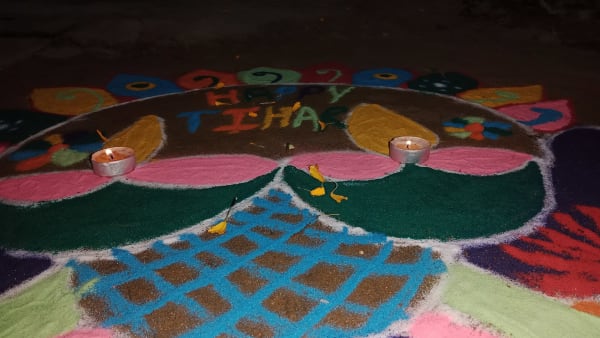
- Rangoli. Circular patterns in coloured powder, rice and petals on the ground in front of houses and shops, lit from the centre.
- Deusi and bhailo. Groups singing call-and-response blessings at each door and being paid in money, fruit and sel roti. See Deusi Bhailo.
- New Year processions. On the fourth day the Newar towns celebrate the start of their calendar year. See Mha Puja and Nepal Sambat.
- Seven-colour foreheads. After Bhai Tika, every man and boy you meet wears a vertical stripe of colours and a garland. See the Bhai Tika guide.

How Tihar Changes a Trip
Far less than Dashain does. The holiday is shorter, fewer people travel across the country for it, and the tourist economy keeps running. But it is still a national festival, and some things stop.
| What | During Tihar | What to do |
|---|---|---|
| Government offices | Closed for three to five days, centred on Laxmi Puja to Bhai Tika | Do visa extensions and restricted-area permits before 7 November |
| Banks | Closed on the main days; ATMs work but can run low | Withdraw cash before the 7th |
| Tourist shops and restaurants | Open, apart from the morning of Bhai Tika | Nothing — Thamel and Lakeside carry on |
| Local shops and markets | Open and very busy until Laxmi Puja; many shut on Bhai Tika | Shop early in the week |
| Buses and domestic flights | Busy on the days before Bhai Tika, quiet on the day itself | Book ahead; avoid travelling on 10 November |
| Heritage sites and museums | Monuments open; some museums close on the public holidays | See outdoor sites on holiday days |
| Trekking lodges | Open throughout | Nothing to arrange |
| Guides and porters | Many want to be home for Bhai Tika | Agree dates early; a trek ending by the 9th suits everyone |
What stays open in the capital, day by day, is in Kathmandu during Tihar.
Where to Be
| Place | Why |
|---|---|
| Kathmandu | The widest range: lit streets in the old city, the police dog ceremony, the Rani Pokhari temple that opens only on Bhai Tika, New Year rallies |
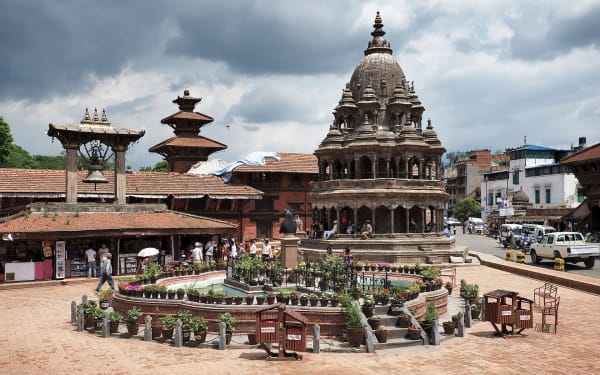
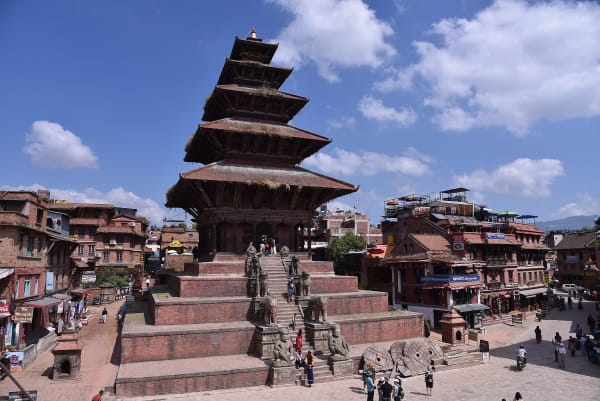
| Patan and Bhaktapur | The Newar festival of Swanti at its most traditional — Mha Puja mandalas, oil lamps on every temple plinth, brick squares lit by flame alone |
| Pokhara | Lakeside strung with lights and rangoli, and the liveliest deusi-bhailo in the country |
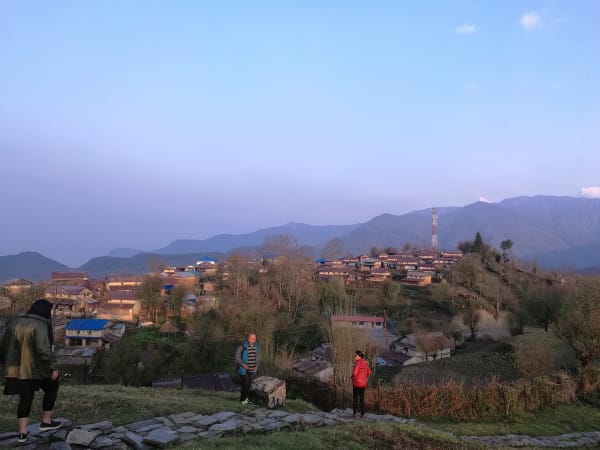
| A hill village | The festival at household scale: cows garlanded in the yard, the whole village singing deusi together |
| Janakpur and the Terai | Diwali in the Mithila style, with painted walls and clay lamps, followed days later by Chhath |
For most visitors the Kathmandu valley is the right answer, and two nights in Bhaktapur during the festival are worth more than a week at any other time. A Kathmandu Valley Tour over these dates can be arranged around the evenings, and a village homestay — Ghalegaun or Sirubari — gives you the other extreme.
Trekking During Tihar
November is the second half of the best trekking season and Tihar does not interrupt it. Lodges stay open, the weather is at its clearest, and for a few days there are slightly fewer people on the trail, because Nepali trekkers stay home and many groups time their trips to finish before the festival.
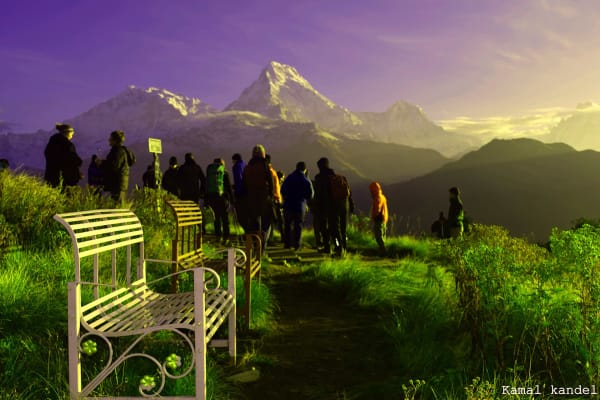
In the Buddhist high country — the Khumbu, Manang, Upper Mustang — you will see little of Tihar beyond a garland on a lodge dog. In the Hindu and Gurung villages of the Annapurna foothills it is everywhere: lamps on the stone walls, and deusi parties that will not let a trekker pass without dancing. The practicalities are in trekking during Tihar.
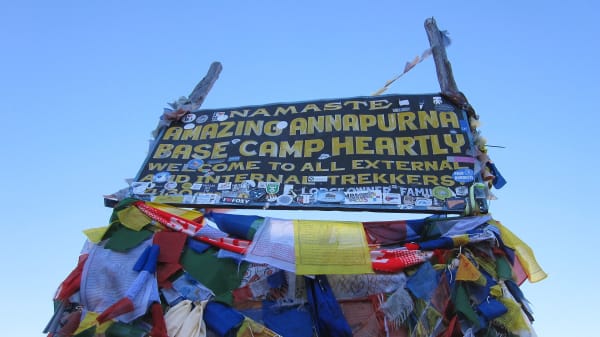
The best plan is often to trek first and come down for the lights. The Annapurna Base Camp trek, the Poon Hill trek and the Langtang Valley trek can all be timed to finish on 6 or 7 November.
Taking Part
Tihar is an easy festival to join, and people will go out of their way to include you.
- If a deusi or bhailo group sings at your table, give something — a small note is right — and you will be blessed at length. Join the dancing if you are pulled in.
- If you are invited for Bhai Tika, go. A guide's sister or a hotel owner's daughter may offer to give you tika as an honorary brother. Bring a small gift or an envelope. The etiquette is in the Bhai Tika guide.
- Do not step on or over a rangoli or the painted trail leading into a house.
- Ask before garlanding a dog that is not yours, and leave street dogs to the people who know them.
- Eat what is offered. Sel roti, sweets and dried fruit appear in every house; see the Tihar food guide.
- Be careful with firecrackers. They are officially banned and widely used anyway. Give them room.
And bring a camera with a good low-light setting. The festival is made of small flames in the dark; advice is in photographing Tihar.
A Sample Week Around Tihar 2026
| Date | Plan |
|---|---|
| Thu 5 November | Arrive in Kathmandu. Evening walk through Ason and Indra Chowk, where the marigold and lamp markets are at full stretch. |
| Fri 6 November | Swayambhunath, Patan Durbar Square and its museum. |
| Sat 7 November | Kaag Tihar. Boudhanath and Pashupatinath; move to Bhaktapur for the night. |
| Sun 8 November | Kukur Tihar in the morning. Laxmi Puja in Bhaktapur after dark — every square lit by oil lamps. |
| Mon 9 November | Sunrise at Nagarkot; walk down to Changu Narayan through the harvested terraces. |
| Tue 10 November | Nepal Sambat New Year: processions in Kathmandu and Patan. Mha Puja in the evening. |
| Wed 11 November | Bhai Tika. A quiet morning; the Rani Pokhari temple if you are in the city. |
Add two days at the end and you can fly to Janakpur for Chhath, which begins on the 13th. Tell us your dates and we will fit the week to them. The whole season is laid out in what's on in Nepal this autumn.