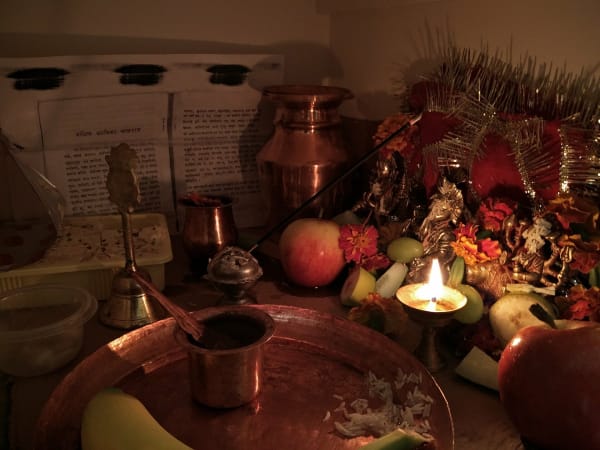
If you are coming to Nepal in autumn you will probably overlap with one of them and could, with some planning, see both. Dashain and Tihar are often mentioned in one breath, but they are different experiences for a visitor — one a family festival that empties the cities, the other a festival of light that fills the streets.
This guide compares them on the things that affect a trip. Dashain on its own is covered in our complete Dashain travel guide.
Two Festivals, Two and a Half Weeks Apart
| Dashain | Tihar | |
|---|---|---|
| 2026 dates | 11 – 25 October; tika on Wednesday 21st | 7 – 11 November; Lakshmi Puja on Sunday 8th, Bhai Tika on Wednesday 11th |
| 2027 dates (provisional) | 30 September – mid October; tika on Saturday 9th | Late October, ending around 1 November |
| Length | Fifteen days | Five days |
| Also called | Vijaya Dashami, Dasain, Mohani | Deepawali, Yamapanchak, Swanti |
| Honours | The goddess Durga's victory over evil | Lakshmi, goddess of wealth; and crows, dogs, cows and brothers |
The gap is fixed by the moon: Dashain ends on the full moon and Tihar is built around the next new moon. Full dates for Dashain are in our Dashain calendar.
What Each Festival Is
Dashain
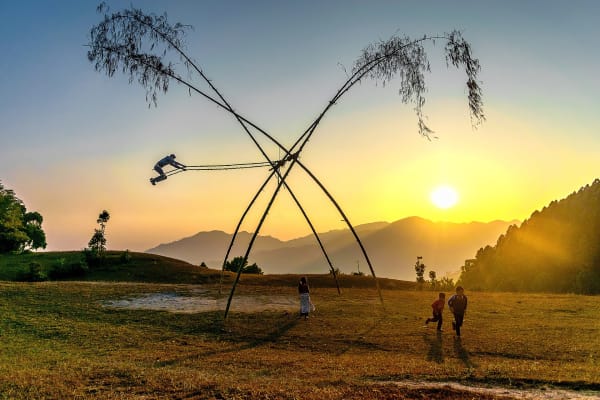
The great homecoming. People return to their family house, barley is grown in a dark room, a goat is slaughtered, and on the tenth day elders give the younger generation a red tika and a blessing. Most of it happens indoors. The public signs are bamboo swings, kites, a military parade in Kathmandu on the seventh day, and emptied cities. The whole sequence is in the fifteen days of Dashain.
Tihar
Five days, each with its own subject:
- Kaag Tihar — crows, the messengers of death, are fed on the rooftops.
- Kukur Tihar — dogs are garlanded with marigolds, given a tika and fed. Street dogs and police dogs included.
- Gai Tihar and Lakshmi Puja — cows are honoured in the morning. In the evening every doorway is lit with oil lamps and candles, patterns of coloured powder are drawn on the ground to guide the goddess of wealth inside, and groups of girls go from house to house singing bhailo.
- Govardhan Puja and Mha Puja — oxen are honoured; boys sing deusi; and the Newar community celebrates its own New Year with Mha Puja, the worship of the self.
- Bhai Tika — sisters give their brothers a tika of seven colours and a garland, and receive gifts in return.
Side by Side for a Traveller
| Dashain | Tihar | |
|---|---|---|
| What you see from the street | Swings, kites, parade, temple queues, tika on every forehead | Lamps in every window, marigold garlands, rangoli, singing groups, decorated dogs |
| How much is private | Most of it | Very little |
| Office and bank closures | A week or more | About three days |
| Shops and restaurants | Local ones closed for days | Mostly open; closed on Bhai Tika |
| Transport | Severely strained before and after | Busy on Bhai Tika, otherwise normal |
| Mood in the cities | Empty, quiet | Full, lit, noisy with firecrackers |
| Chance of being invited in | High, for the tika | High, especially on Lakshmi Puja evening |
| Animal sacrifice | Yes, on the eighth and ninth days | None |
| Trekking weather | Late monsoon to peak season, depending on the year | Peak season, colder nights |
| Best place to be | A village, or Kathmandu for the public days | Kathmandu valley old towns, Pokhara Lakeside |

Which Suits a Trek Better
Dashain sits at the start of the main season and complicates logistics: permits must be arranged before the offices close, and guides and porters would rather be home. On the trail itself it matters little, particularly in the Buddhist high valleys. See trekking during Dashain.
Tihar barely disturbs a trek. Offices are shut for only a few days, transport runs, and lodge families along the Annapurna and Langtang trails celebrate in the evening while continuing to serve dinner. You are likely to be sung to by a group of village children performing deusi, and expected to give a small donation.
Higher up, a third festival may matter more than either. Mani Rimdu, the masked-dance festival at Tengboche monastery, falls around the full moon between the two, on the Everest Base Camp route. See our Tengboche guide.
Seeing Both
The spacing makes a neat itinerary: arrive for the Dashain tika, trek for two weeks, and come down in time for Tihar. In 2026 that looks like this.
| Dates (2026) | Plan |
|---|---|
| 15 – 16 October | Arrive Kathmandu; permits and cash on the last working days |
| 17 – 21 October | Phulpati to the tika in the valley — Kathmandu Valley Tour and a day in Bhaktapur |
| 22 October – 5 November | A two-week trek: Everest Base Camp, Annapurna Circuit or, with the permit arranged beforehand, Manaslu |
| 6 – 8 November | Back in Kathmandu or Pokhara for Kukur Tihar and the lamps of Lakshmi Puja |
| 9 – 11 November | Mha Puja in the Newar towns of Patan and Bhaktapur; Bhai Tika; depart |
If the trek is shorter, the days between fill easily with Pokhara, a Chitwan safari or a village stay.
Our Verdict
- Choose Dashain if you want to be inside Nepali family life, are happy in a village, and have your logistics settled in advance.
- Choose Tihar if you want a festival you can see and photograph from the street, with almost no disruption to travel. For a first visit it is the easier of the two.
- Choose both if you have three weeks. A trek between them is the best-shaped autumn trip there is.
- Choose neither if what you want is the quietest trails: the first half of November after Tihar, or early December.
The rest of the year's festivals — Holi, Bisket Jatra, Indra Jatra, Tiji — are in our Nepal festival calendar, and is Dashain a good time to visit? goes deeper on the first of these choices.