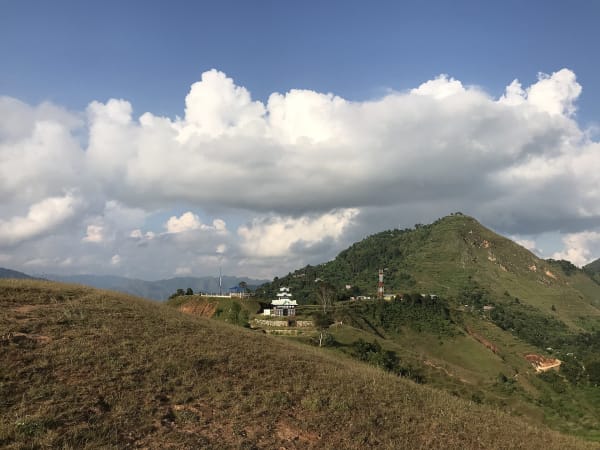
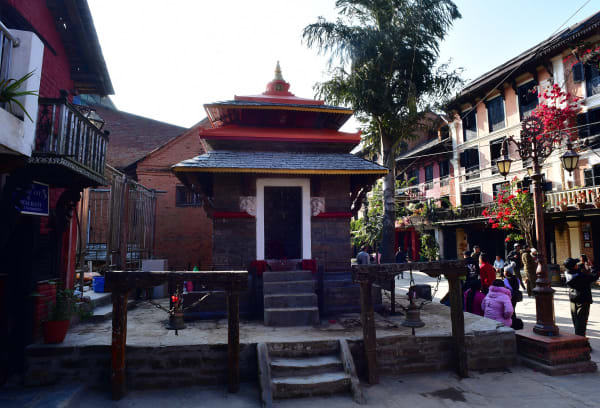
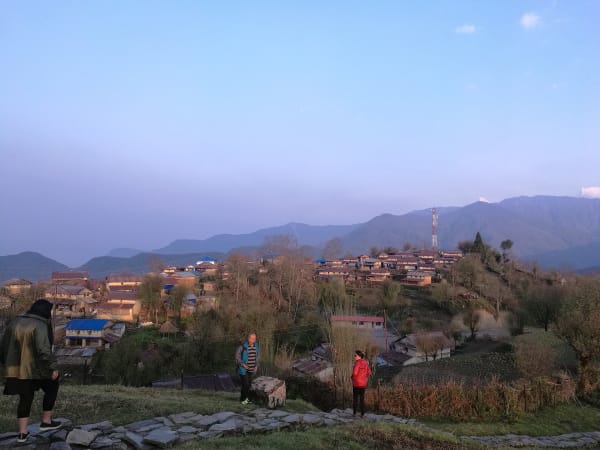
Sirubari is a Magar village of some fifty stone-and-slate houses on a ridge in Syangja, two and a half hours from Pokhara, and in 1997 it became the first organised homestay destination in Nepal. Everything that followed — Ghalegaun, and Sirubari's many imitators — was modelled on what this community set up.
The village is strikingly well kept: paved lanes, no litter, flowers at every doorway, and a protected forest of pine and rhododendron above it that the community forest user group has managed for decades. Guests arrive to a formal welcome with garlands and a Magar dance, stay in family houses on a strict rota, and leave with a send-off.
In between there are ridge walks, an Annapurna skyline, and a great many conversations with retired Gurkha soldiers.

The Tour at a Glance
| Duration | 3 days, 2 nights |
| Altitude | 1,700 m |
| Difficulty | Easy — one to three hours of optional walking a day |
| Best season | October to April |
| Accommodation | Community homestay, family houses on a rota |
| Access | 2.5 hours by private vehicle from Pokhara |
| Meals | All meals in the village, cooked by your host family |
| Price | From USD 325 per person |
We run it as a 3-day homestay tour from Pokhara. To combine it with Ghalegaun and Bandipur, see the Himalayan Village tour.
What Actually Happens
Arrival and welcome
A drive from Pokhara through Syangja, then the formal reception: garlands, tika, and a Magar dance in the village square. It is a set piece, and knowingly so — the community decided thirty years ago how it wanted to receive guests, and it has done it the same way since. Then you are handed over to the family you are staying with.
The full day
Walks in the community forest above the village, which is a genuine conservation success story rather than a label — pine and rhododendron protected and managed by the forest user group for decades, with the birdlife to show for it. Ridge walks with the Annapurna skyline. Time in the village watching millet being ground, buffalo fed, and the day run.
Much of Sirubari's prosperity comes from Gurkha service, and many of the older men served in the British or Indian army. If you want to understand the middle hills, the conversations here are the thing to come for.

The farewell
A formal send-off, and then the drive back to Pokhara. The structure is deliberate at both ends.
Where Your Money Goes
This is the part that makes Sirubari different from a lodge with a village view. The homestay fee is split between the host family and a village fund that pays for trail repair, the school and the water system.
- A strict host rota means bookings are distributed across households rather than concentrating on whoever is most visible.
- A community fund takes a fixed share of every booking.
- No hotels in the village, by the community's own decision.
- Village entry contribution is included in your package rather than collected at the door.
That structure is the reason the model worked and was copied. See our responsible travel guide for why it matters.
What to Expect from a Homestay
- A simple bedroom in the family house with a proper bed, mattress and blankets, usually shared with one other traveller from your group.
- Washing at a tap or with a bucket of hot water, and squat toilets. There are no showers as such.
- Mains electricity, though power cuts are routine, and Wi-Fi is rare or slow. NTC and Ncell both reach the village.
- A few words of English from younger family members. Your guide stays with the group and translates, which is what turns a night's accommodation into an actual exchange.
- Farm work if you ask — planting or cutting rice, grinding millet, feeding buffalo. Families are usually delighted.
House etiquette: do not enter the kitchen hearth area unless invited, do not step over food or someone's legs, use your right hand for eating and passing things, and ask before photographing anyone.
What It Costs
| Group size | Price per person |
|---|---|
| 1 traveller | USD 455 |
| 2 to 4 | USD 405 |
| 5 to 7 | USD 370 |
| 8 to 10 | USD 350 |
| 11 to 14 | USD 340 |
| 15 and over | USD 325 |
What Is Included
- Private transportation throughout — a vehicle and driver reserved for your party alone, Pokhara to Sirubari and back.
- Two nights in a community homestay in Sirubari.
- All meals in the village, cooked by your host family.
- Village entry contribution to the community fund.
- A professional English-speaking licensed tour guide who stays with the group and translates.
- Formal Magar welcome and cultural dance evening.
- Guided walks in the community forest and on the ridge.
- All government taxes and service charges.
What Is Not Included
- Travel insurance covering medical treatment and emergency evacuation.
- Meals not specified in the itinerary.
- Locally brewed raksi and other alcoholic drinks.
- Luxury vehicle upgrade — private transport is included as standard.
- Drinks, snacks, laundry, phone calls and souvenirs.
- Tips for the guide and driver.
- Any additional cost caused by roadblocks, weather or other circumstances beyond our control.
Note that transport is from Pokhara rather than Kathmandu. If you are starting from the capital, the Himalayan Village tour builds Sirubari into a longer route.