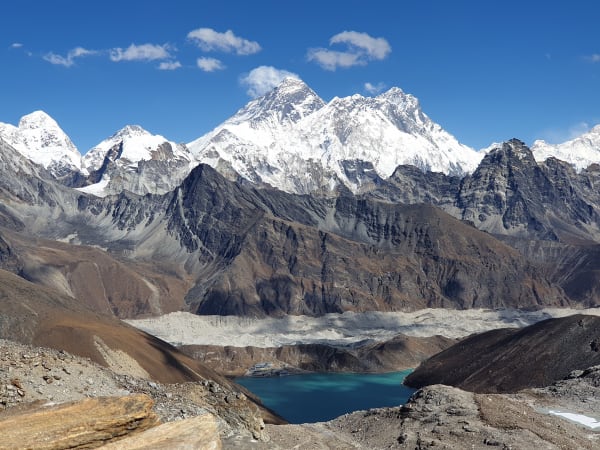
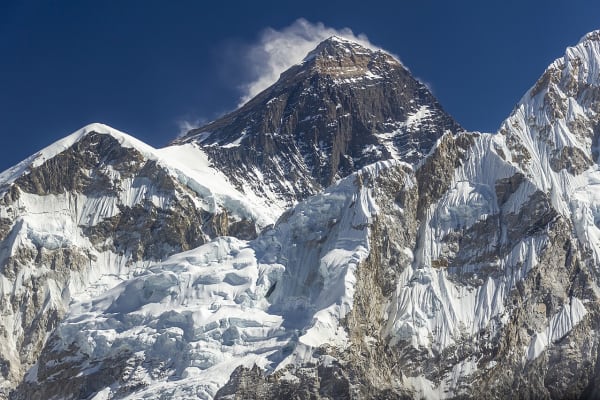
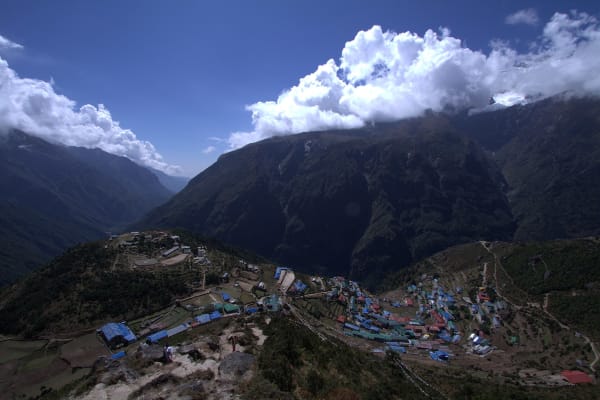
If the reason you are walking to Everest is to see it, November is the month. The air above the Khumbu is as dry and clean as it gets, the afternoon cloud that builds in spring mostly does not, and the view from Kala Patthar at dawn is the photograph you have seen — every ridge on Nuptse sharp, the plume blowing off the summit.
You pay for it after dark. November is where the trek stops being a cool-weather walk and becomes a cold-weather one, and by the last week the nights at Gorak Shep are as hard as anything most trekkers have slept through. With the right kit that is an inconvenience rather than a problem. Without it, it is the thing people remember.
Temperatures Stop by Stop
| Stop | Altitude | Day | Night |
|---|---|---|---|
| Lukla | 2,860 m | 10 – 15°C | 0 – 4°C |
| Namche Bazaar | 3,440 m | 8 – 12°C | −4 to 0°C |
| Tengboche | 3,867 m | 5 – 10°C | −7 to −3°C |
| Dingboche | 4,410 m | 2 – 8°C | −11 to −6°C |
| Lobuche | 4,940 m | 0 – 5°C | −15 to −9°C |
| Gorak Shep | 5,164 m | −2 to 4°C | −18 to −11°C |
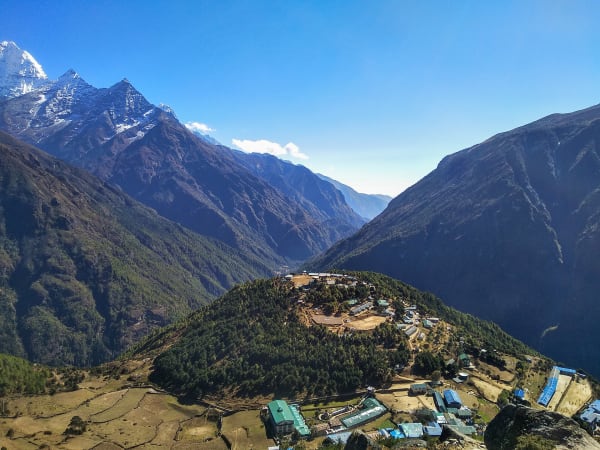
By day it is pleasant. The sun at this altitude is strong, the trail is dry, and most people walk in a base layer and a light fleece until mid-afternoon. The change comes fast when the sun leaves the valley, usually between three and four: within twenty minutes you want everything you own. Plan each day to be indoors by then.
Rain is not a factor and snow is unusual before the last week. When it comes it tends to be a single fall that the sun clears from the trail in a day or two, though it lingers on the shaded moraine above Lobuche.
How Busy Is the Trail?
The Everest Base Camp trail is the busiest in Nepal, and the first half of November is still part of its peak. Expect a steady line of trekkers and yak trains on the climb to Namche, full dining rooms, and competition for beds at Lobuche and Gorak Shep, where there are few lodges and nowhere else to go.
In 2026 the Tihar festival falls on 7 to 11 November. It has almost no effect in the Sherpa villages above Lukla, but it does thin the number of Nepali trekkers for a few days and it tightens flights either side. From about the 15th the trail quietens steadily, and by the last week you may share a lodge with only a handful of others — the reward for accepting the cold.
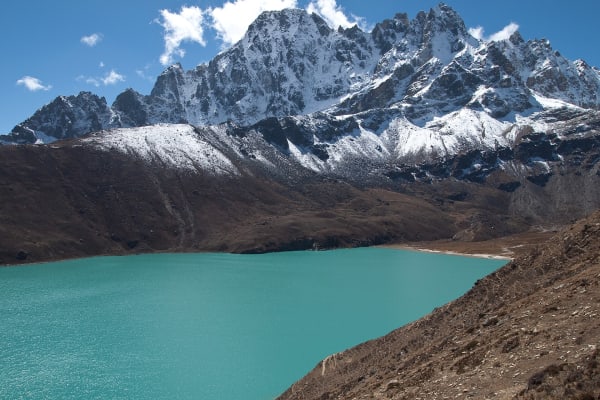
If the crowds matter to you more than the destination, the Gokyo valley next door has the same sky and a third of the people. The Gokyo Lakes trek is the usual alternative; see our Gokyo guide.
What the Cold Changes
- Early starts get earlier. With about ten and a half hours of daylight, the walk to Base Camp and back from Gorak Shep needs to begin by seven. Kala Patthar for sunrise means leaving at four, in the coldest hour of the night.
- Water freezes. Bottles left out overnight are solid by morning. Sleep with one inside your sleeping bag, and fill the other with hot water in the evening — it doubles as a foot warmer.
- Batteries drain. Phone and camera batteries lose charge quickly below freezing. Keep them in an inside pocket by day and in your sleeping bag by night. Charging is available in lodges for a fee.
- Washing stops. Above Dingboche the pipes are frozen. Showers are a bucket of hot water at best; most people use wet wipes and wait for Namche.
- The stove is the centre of life. Lodges light the dining-room stove in the late afternoon with dried yak dung, and that is where everyone sits until bed. Bedrooms are unheated plywood.
- Your throat suffers. Cold, dry air irritates the airways. A buff over the mouth and plenty of warm fluid are the best defence.
Altitude itself is no different in November, but cold makes its symptoms harder to read and dehydration easier to fall into, because nobody feels like drinking three litres of water at −5°C. Keep to the schedule in our day-by-day itinerary, with both acclimatisation days, and read the altitude sickness guide before you go.
Flights to Lukla in November
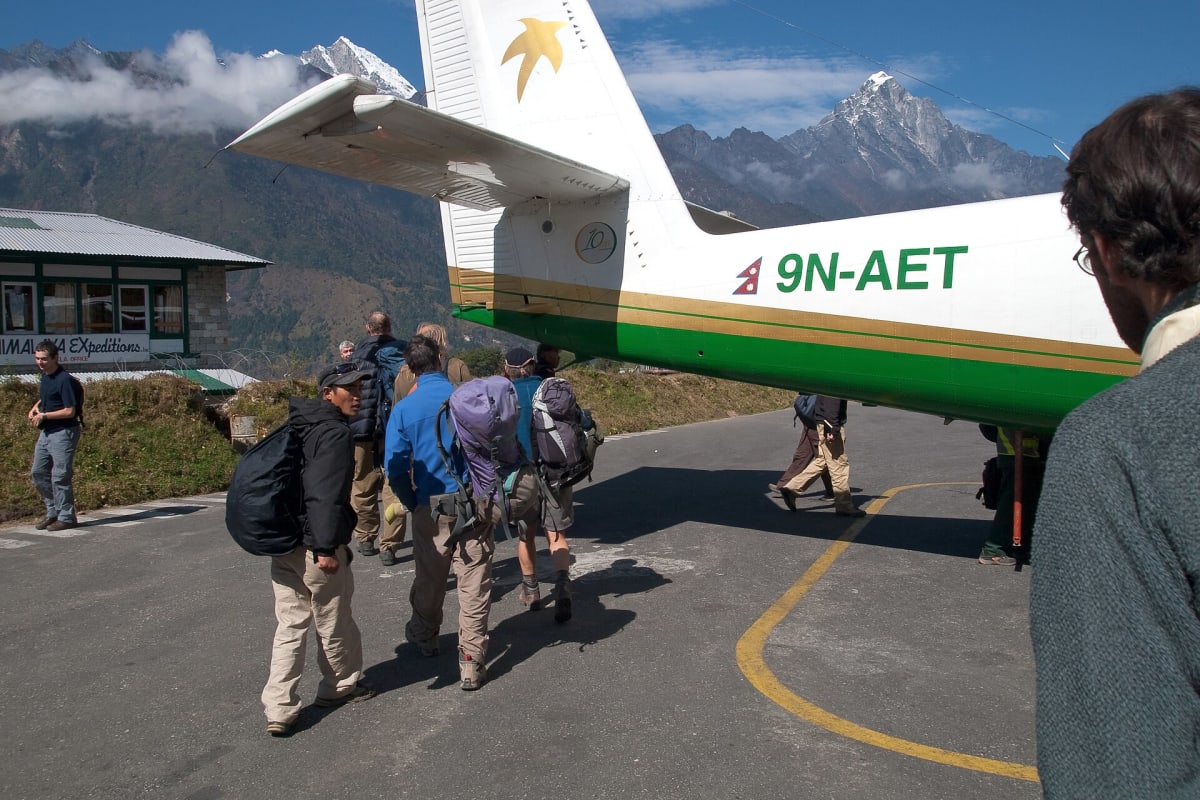
In the peak months most Lukla flights leave from Manthali airport in Ramechhap, four to five hours' drive east of Kathmandu, rather than from the capital. That usually means a departure from your hotel soon after midnight for a morning flight. The arrangement is set by the aviation authority each season and normally runs to the end of November.
November is a good month for the flight itself: mornings are clear and cancellations are fewer than in spring. They still happen — wind at Lukla, cloud in the valley, a backlog from the day before — and the first half of the month has very little slack in the schedule. Allow at least one buffer day before your international flight, and preferably two. What to do when the flight does not go is in Lukla flight delays and backup plans.
Gear for a November Trek
Start from our Everest Base Camp packing list and upgrade the warm end of it.
| Item | What November needs |
|---|---|
| Sleeping bag | Comfort rating of −15 to −20°C, with a liner. Hire in Kathmandu if you do not own one. |
| Down jacket | A real one with a hood, not a light layering piece. |
| Legs | Thermal leggings under trekking trousers from Dingboche up; insulated trousers for evenings if you feel the cold. |
| Hands | Thin liner gloves for walking, thick insulated gloves or mittens for the mornings on Kala Patthar. |
| Feet | Broken-in boots with room for a thick sock, and two pairs of warm socks kept only for sleeping. |
| Head and face | Warm hat, buff, and sunglasses with full UV protection. |
| Extras | Hand warmers for summit morning, a one-litre bottle that takes boiling water, lip balm and heavy moisturiser. |
Early, Mid or Late November?
| Start date | Good for | Bear in mind |
|---|---|---|
| 1 – 7 November | The mildest temperatures of the month | Peak-season crowds; return flights fall around Tihar |
| 8 – 18 November | The best balance of weather and space | Book the Lukla flight early if starting near the festival |
| 19 – 30 November | Empty trails, superb light | Hard cold at night; a few high lodges closing; small chance of snow |
For most people the middle of the month is the answer. If you are comfortable with cold and want the trail close to yourself, go late. Either way, the standard fourteen-day Everest Base Camp trek is the right length. Those short of time or wary of the walk back in the cold often choose the trek with a helicopter return from Gorak Shep.
And if you would rather look at Everest in November than sleep at 5,000 metres to do it, the week-long Everest View trek to Tengboche stays below 3,900 metres, where the nights are merely chilly.