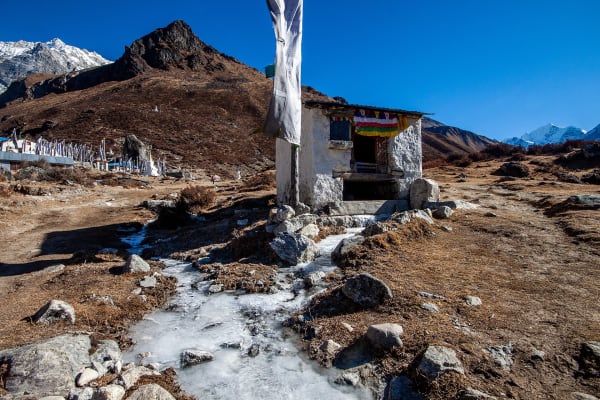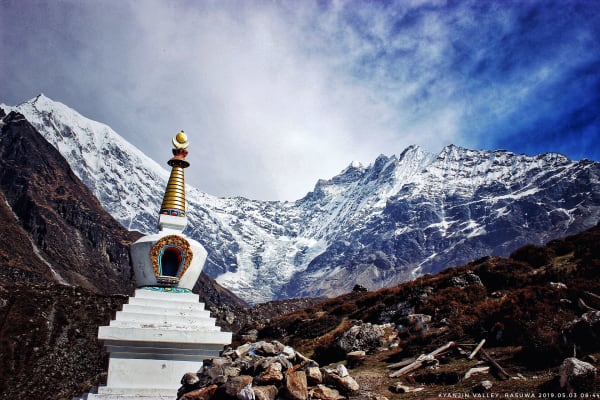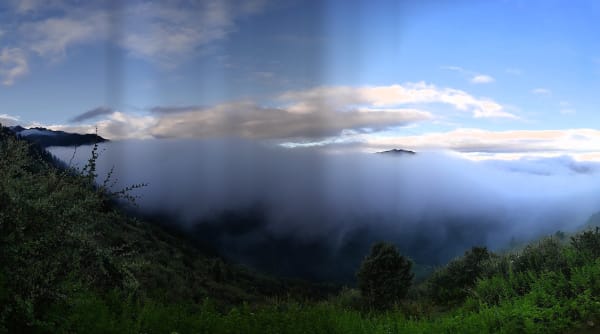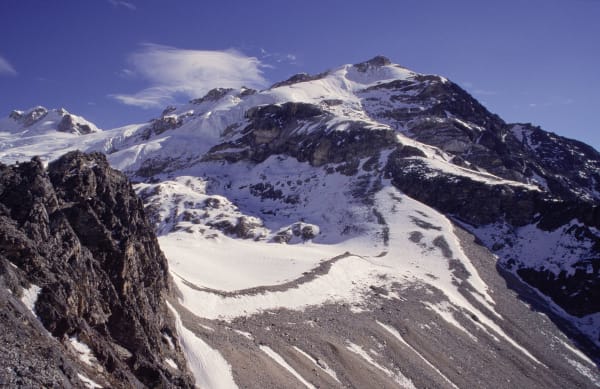

A day's drive north of Kathmandu, a valley runs east towards Tibet between two walls of six- and seven-thousand-metre peaks. You walk up it for three days through forest, past the rebuilt village that gives it its name, to a monastery and a cheese factory at 3,870 metres, and then you climb one of the hills behind and look at a horizon made entirely of ice.
The Langtang Valley trek has always been overshadowed by Everest and Annapurna, which is the best thing about it. In November it has the same weather they do, a fraction of the trekkers, no dependence on a mountain flight and no pass that can close. If something in your plan is fragile — a tight schedule, a festival week, a first trek — this is the route that absorbs it.
November Weather in the Valley
| Stage | Altitude | Day | Night |
|---|---|---|---|
| Syabrubesi | 1,460 m | 17 – 22°C | 7 – 11°C |
| Lama Hotel | 2,480 m | 10 – 15°C | 1 – 5°C |
| Langtang village | 3,430 m | 7 – 12°C | −5 to 0°C |
| Kyanjin Gompa | 3,870 m | 4 – 9°C | −9 to −4°C |
| Kyanjin Ri / Tserko Ri | 4,773 – 4,984 m | −4 to 3°C in the morning | — |
The valley runs east to west, so once you are above the forest the sun reaches the trail early and stays on it all day — a real advantage over the north-facing gorges of the Annapurna Sanctuary. Mornings are still and clear; a cold wind comes up the valley in the afternoon. Rain is very unlikely, and snow on the valley floor is unusual before December.
Why Langtang Works So Well in November
- No flight. The trek starts and ends with a seven- to eight-hour drive. Nothing about it depends on the weather at an airstrip.
- No restricted permit. A national park entry permit and a trekking card are all it needs, so the festival closures of the immigration office do not affect it.
- No pass. The route goes up the valley and back down. A snowfall can delay a viewpoint, not the trek.
- Quiet. Even at the height of the season Langtang sees a small share of the traffic on the Everest trail, and after mid-November lodges are half empty.
- Short. Seven to ten days from Kathmandu and back, which leaves room for it in a two-week holiday alongside the festivals.
In 2026 that combination is especially useful in two windows: the days around the Dashain tika on 21 October, and the Tihar week of 7 to 11 November, when flights are full and permit offices shut. Langtang can be started on any of them.
The Trail, Day by Day
| Day | Stage | Walking |
|---|---|---|
| 1 | Drive Kathmandu to Syabrubesi | 7 – 8 hours by road |
| 2 | Syabrubesi to Lama Hotel | 6 hours, mostly in forest beside the river |
| 3 | Lama Hotel to Langtang village | 6 hours; the valley opens at Ghoda Tabela |
| 4 | Langtang to Kyanjin Gompa | 3 – 4 hours; afternoon at the monastery and cheese factory |
| 5 | Kyanjin Ri or Tserko Ri | A day walk to a viewpoint, back to Kyanjin |
| 6 – 7 | Return to Syabrubesi | Two long downhill days |
| 8 | Drive to Kathmandu | 7 – 8 hours |
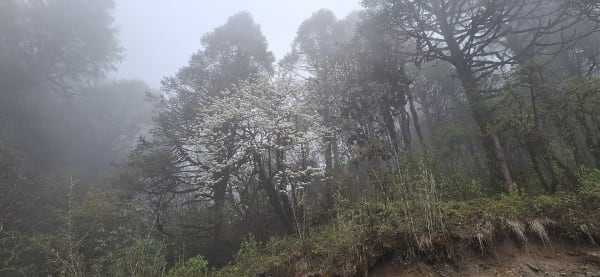
The forest section is at its best now: the oaks and maples have turned, langur monkeys are easy to spot in the bare branches, and red pandas — rarely seen, but present — are most active in the cold months. Above Ghoda Tabela the yak pastures are the colour of straw and the herds are being brought down for winter.
The walk through Langtang village passes the debris field left by the avalanche of April 2015, which buried the old settlement. The new village stands just beyond it. Trekkers staying in its lodges are a large part of how it was rebuilt; the story is in Langtang after the earthquake.
The Viewpoints in the Cold
The point of going all the way to Kyanjin Gompa is the day you spend above it. There are two choices, and November affects them differently.
| Kyanjin Ri | Tserko Ri | |
|---|---|---|
| Height | 4,773 m | 4,984 m |
| Round trip from Kyanjin | 3 – 4 hours | 7 – 8 hours |
| View | Langtang Lirung and its glacier close at hand, the valley below | A full circle of peaks, including Shishapangma in Tibet |
| In November | Clear of snow all month; go at sunrise | Usually clear early in the month; frost and some snow near the top later |
Go up Kyanjin Ri on your first morning and decide about Tserko Ri from the top of it. The higher summit is a serious day at nearly 5,000 metres: start at first light, carry more warm clothing than seems necessary, and turn round by noon whatever height you have reached. If you slept badly or have a headache, a walk up the valley floor to Langshisha Kharka is a fine alternative with almost no climbing.
Lodges, Food and What to Pack
Langtang's lodges are family-run, mostly by Tamang households whose kitchens you eat in. All are open through November. Rooms are unheated; the dining room has a stove lit in the evening. Kyanjin Gompa has the widest choice, several with attached bathrooms and one or two bakeries that are better than they have any right to be at that altitude.
- Sleeping bag rated to about −10°C.
- Down jacket, hat and gloves from Langtang village upwards.
- Microspikes only if you plan Tserko Ri after about the 20th.
- Sun protection. The upper valley is bright and exposed.
- Cash for the whole trek. There is no ATM after Kathmandu.
- A book. Evenings are long: it is dark before five and the stove room is where the day ends.
Try the yak cheese at Kyanjin, made in the small factory the Swiss helped set up in the 1950s, and the local sea-buckthorn juice, which is harvested in exactly these weeks.
Extending the Trek
| Trip | Days | In November |
|---|---|---|
| Langtang Valley trek | 10 | The standard route at an easy pace |
| Langtang and Gosaikunda | 15 | Adds the sacred lakes at 4,380 m and the Lauribina pass; best in the first three weeks |
| Gosaikunda Lake trek | 7 | The lakes alone. Very cold at the top; the water begins to freeze late in the month |
| Tamang Heritage Trail | 13 | Lower and warmer — villages, hot springs and homestays |
| Yala Peak | 15 | A 5,520 m trekking peak above Kyanjin for those who want a summit |
The Gosaikunda extension is the one that November changes. The Lauribina pass at 4,610 metres is normally open, but it is exposed, the lodges near the lakes are basic and very cold, and a late-month snowfall can make the crossing to Helambu awkward. Early in the month it is superb. The full route is in our Gosaikunda guide, and the valley itself in the complete Langtang guide.