
The Annapurna Circuit is a trek built around one day. Everything before it — the gorge of the Marsyangdi, the pine forests of Pisang, the long acclimatisation in Manang — is preparation for the morning you leave High Camp in the dark and climb to 5,416 metres. Whether that morning goes well depends on your acclimatisation and on the weather, and November looks after the second.
It is the driest month of the year on the north side of the range, the wind on the pass is lighter than in spring, and until the last days of the month the crossing is normally on bare trail. After that the odds change. This guide is about using the window while it is open.
November Weather Around the Circuit
| Stage | Altitude | Day | Night |
|---|---|---|---|
| Besisahar / Jagat | 760 – 1,300 m | 20 – 25°C | 10 – 14°C |
| Chame | 2,670 m | 10 – 15°C | −1 to 3°C |
| Manang | 3,540 m | 6 – 11°C | −7 to −2°C |
| Thorong Phedi | 4,450 m | 1 – 6°C | −13 to −8°C |
| High Camp | 4,880 m | −1 to 4°C | −16 to −10°C |
| Thorong La | 5,416 m | −8 to −2°C at dawn | — |
| Muktinath | 3,760 m | 7 – 12°C | −5 to 0°C |
The circuit crosses more climate zones than any other popular trek. You start in rice terraces and banana trees and are in a high-altitude desert a week later. Pack for both: light clothes for the first three days and the last two, full winter kit for the five in the middle.
The State of Thorong La
In a normal November the trail over the pass is dry, frozen dirt with patches of old ice in the shade. The crossing is long and high but not technical: about four hours up from High Camp, an hour less from the top to the first teahouse on the far side, and a knee-testing 1,600-metre descent to Muktinath.
The risk is an early winter storm. Thorong La has a serious history in exactly this season — the blizzard of October 2014 killed dozens of trekkers and local staff on and around the pass — and the lesson from it is plain. If heavy snow falls, or is forecast, you wait in Manang or at Phedi until it has settled and a trail has been broken. Nobody crosses in a whiteout to keep a schedule.
- Check the forecast in Manang. Lodges and the Himalayan Rescue Association post there have current information, and there is phone signal.
- Leave between four and five in the morning. The wind on the pass rises sharply from mid-morning. Aim to be on top by nine.
- Carry microspikes from about the 20th onwards. The descent on the Muktinath side holds ice in shadow.
- Keep a spare day in the schedule specifically for the pass.
The crossing itself — pacing, the choice between Phedi and High Camp, what the far side is like — is described step by step in our Thorong La guide.
Acclimatising in the Cold
The circuit's long approach is its great safety feature, and the temptation in November's short days is to shorten it by taking a jeep as far up the valley as the road allows. Resist the last part of that. A vehicle can now reach Manang, and people who are driven to 3,500 metres and walk on the next day are the ones who get into trouble at Phedi.
- Walk from Chame at the latest, which gives three days on foot before Manang.
- Spend two nights in Manang. Use the day between for a walk to Ice Lake or the Gangapurna viewpoint — climb high, sleep low.
- Break the next stage at Yak Kharka or Ledar; do not go from Manang to Phedi in one day.
- Drink more than you want to. Cold suppresses thirst and dry air strips water from every breath.
Where the road now runs, and how to avoid walking on it, is in the Annapurna Circuit road and jeep guide. The medical side is in our altitude sickness guide.
Tilicho Lake in November
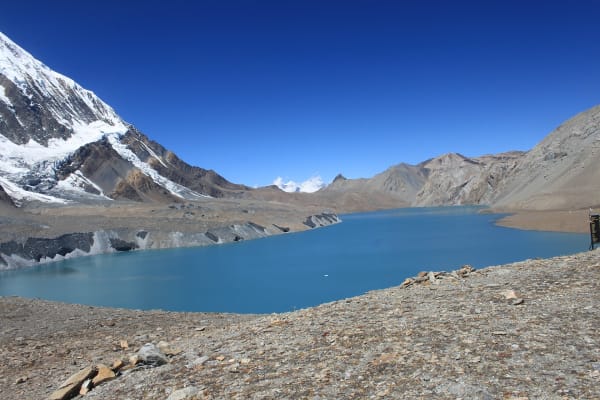
The side trip to Tilicho Lake, at 4,919 metres, adds three days from Manang and is the best acclimatisation for the pass there is. In the first half of November it is in excellent condition and the lake is still open water, a hard blue against the Great Barrier.
From about the third week the lake begins to freeze, the lodge at Tilicho Base Camp gets very cold, and the landslide section of the trail between Shree Kharka and base camp can hold ice. It is still done, with care. If the lake is the point of your trip, go early in the month on the Annapurna Circuit with Tilicho Lake or the Tilicho Lake trek.
How Late Can You Start?
| Leave Kathmandu | Cross the pass around | Verdict |
|---|---|---|
| 1 – 7 November | 10 – 16 November | Ideal. Stable, busy on the pass in the first week |
| 8 – 15 November | 17 – 24 November | Very good. Quieter, colder; carry microspikes |
| 16 – 22 November | 25 November – 1 December | Workable. Real cold and a rising chance of snow; allow two spare days |
| After 22 November | December | Winter conditions. Possible in a dry year, with a flexible plan |
Lodges at Thorong Phedi and High Camp stay open through November and usually into December, closing when snow or a lack of trekkers makes it pointless. Lower down, Manang and the villages of the Kali Gandaki are inhabited all year.
Which Version of the Circuit
Roads at both ends mean the circuit now comes in several lengths. With November's short daylight the middle options are the most comfortable.
| Trip | Days | Notes |
|---|---|---|
| Annapurna Circuit trek | 15 | The full approach on foot from the lower valley, with proper acclimatisation |
| Circuit with Tilicho Lake | 14 | Adds the lake; best in the first half of the month |
| Short Annapurna Circuit | 7 | Jeep to the upper valley and out from Muktinath; only for those already acclimatised or willing to add rest days |
After the pass, most people drive or fly out from Jomsom. If you have the days, walk on down the Kali Gandaki through Marpha — November is apple season's end, and the orchards and the local brandy are part of the trek. Our complete guide to the circuit covers every stage, and Manaslu vs Annapurna Circuit helps if you are choosing between the two.