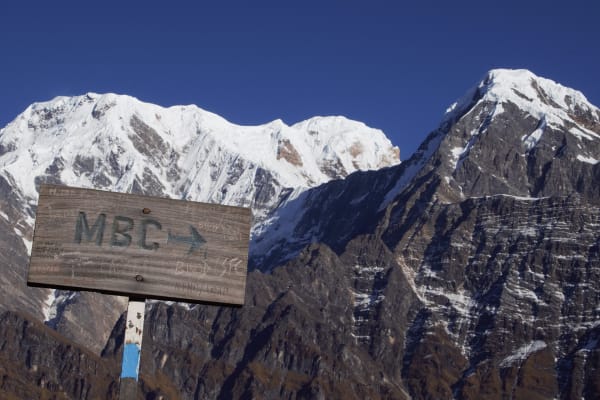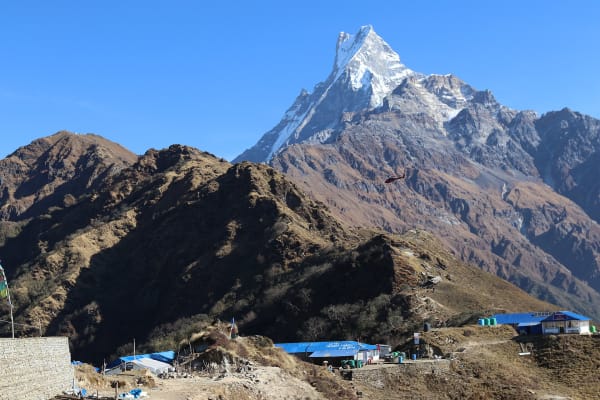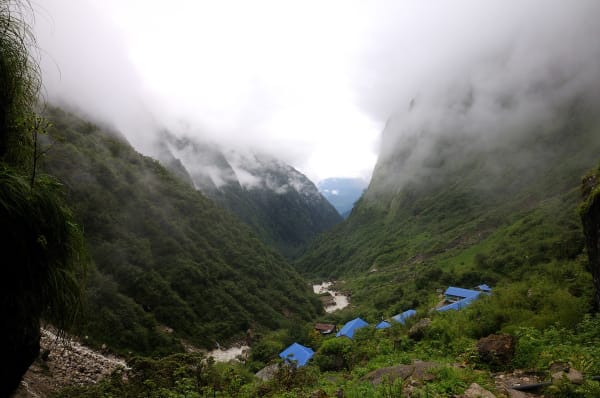

The Annapurna Sanctuary is a bowl. You walk up a narrowing gorge for three days and step out into an amphitheatre at 4,130 metres with a wall of ice on every side — Annapurna I, Annapurna South, Hiunchuli, Gangapurna and the fish-tail of Machhapuchhre closing the door behind you. Whether you see any of it depends on the cloud, and in November the cloud mostly stays away.
It is also the month when the trail is at its most straightforward. The leeches and landslides of the monsoon are long gone, the snow that complicates spring has not arrived, and the stone staircases are dry underfoot. Add a lower maximum altitude than Everest and no flight to worry about, and it is easy to see why this is the trek we most often suggest for a November first-timer.
November Weather on the Trail
| Stage | Altitude | Day | Night |
|---|---|---|---|
| Pokhara | 820 m | 22 – 26°C | 10 – 14°C |
| Ghandruk / Chhomrong | 1,940 – 2,170 m | 14 – 19°C | 4 – 8°C |
| Bamboo / Dovan | 2,300 – 2,600 m | 10 – 15°C | 1 – 5°C |
| Deurali | 3,230 m | 6 – 11°C | −4 to 0°C |
| Machhapuchhre Base Camp | 3,700 m | 4 – 9°C | −7 to −3°C |
| Annapurna Base Camp | 4,130 m | 2 – 7°C | −11 to −5°C |
The lower days are warm enough for a T-shirt. The climb through the bamboo and rhododendron forest is cool and damp-smelling even now, and above Deurali you are in winter clothing morning and evening. Rain is rare. A dusting of snow at base camp is possible late in the month and usually gone by midday.
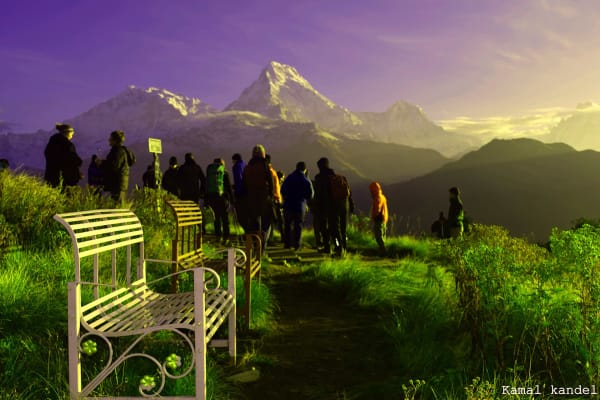
The pattern of the day matters here more than on most treks. The sanctuary is clearest from dawn until about ten; cloud often rises up the gorge in the afternoon and clears again after dark. Sleep at base camp rather than visiting from below, and be outside at first light.
Crowds and Lodges
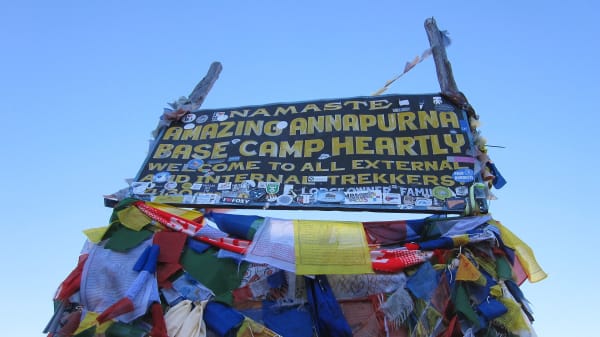
This is the second-busiest trek in Nepal, and the gorge funnels everyone onto one trail with a limited number of beds. The pinch points are the same every year: Chhomrong, Deurali, Machhapuchhre Base Camp and Annapurna Base Camp itself, where the lodges are a single cluster.
- First half of November: peak season. Beds at base camp need reserving, which a guide does by phone from the day before. Arriving without one can mean the dining-room floor.
- During Tihar, 7 – 11 November 2026: a brief dip in domestic trekkers, then a rush of Nepali groups on the days after Bhai Tika.
- Second half of November: the easiest time of the season. Rooms are available on arrival almost everywhere.
The lodges in the sanctuary are simpler than those lower down — shared rooms are common at base camp when it is full — and all of them stay open throughout the month. How lodge trekking works is explained in teahouse trekking in Nepal.
The Avalanche Zone in November
Between Deurali and Machhapuchhre Base Camp the trail passes beneath steep slopes on the flank of Hiunchuli. In late winter and spring, after heavy snowfall, avalanches cross the trail here and the section is the one real objective danger on the route.
In November that risk is at its lowest of the trekking year: the slopes carry little snow and the weather is settled. It rises again only if there is a significant early-winter snowfall, in which case lodge owners at Deurali know the state of the slopes and guides wait or use the alternative path on the far bank. It is worth knowing about and not worth worrying about this month.
Which Route, and How Long?
| Trip | Days | Best for |
|---|---|---|
| Annapurna Base Camp trek from Kathmandu | 9 | The standard route, with travel days and a sensible pace |
| Annapurna Base Camp from Pokhara | 5 | Fit walkers already in Pokhara and short of time |
| With Ghorepani and Poon Hill | 12 | Adding the classic sunrise viewpoint and better acclimatisation |
| With Mardi Himal | 14 | Two very different views of the same mountains |
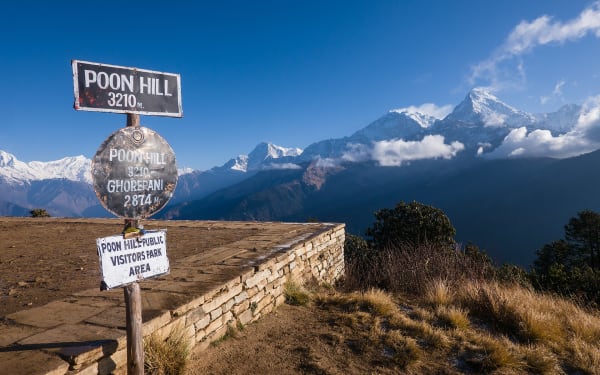
November's short days favour the longer versions. The five-day itinerary involves seven and eight hours of walking a day, and with dusk before five there is little margin. If you have the time, approach by Ghorepani: the extra days make the altitude gentler and Poon Hill at sunrise is a highlight in its own right. The full route description is in our Annapurna Base Camp guide.
What to Bring
- Sleeping bag rated to about −10°C. Blankets are provided but shared out thinly when lodges are full.
- Down jacket, warm hat and gloves for the two nights above Deurali.
- Light layers for the lower trail, where the afternoons are properly warm. The temperature range on this trek is wider than on Everest.
- Trekking poles. The route is thousands of stone steps, and the descent from Chhomrong is hard on knees.
- A head torch for the pre-dawn start at base camp.
- Cash. There are no ATMs after Pokhara, and prices rise with altitude.
The hot spring at Jhinu Danda, twenty minutes below the village on the way out, is at its most welcome in November. Plan the last day to leave an hour for it.
Permits, Transport and Timing Around Tihar
The trek needs an Annapurna Conservation Area permit, issued in Kathmandu or Pokhara; see our Annapurna permits guide. Offices close for the Tihar holidays, so collect permits before 7 November if your start date falls in the festival week. An agency handles this in advance.
No mountain flight is involved, which is the trek's great practical advantage in peak season: Pokhara is reached by a 25-minute flight or a day's drive from Kathmandu, and the trailhead is an hour or two beyond. Buses and flights between the two cities are busy just before Bhai Tika on the 11th, when half the country travels to a sibling's house.
A schedule that works well in 2026: trek from about 28 October and walk out on 6 or 7 November, in time to be in Pokhara for Kukur Tihar and the lamps of Laxmi Puja on the 8th. Lakeside lit up for the festival is a good way to end a trek. See our Pokhara guide for what to do with the days after.