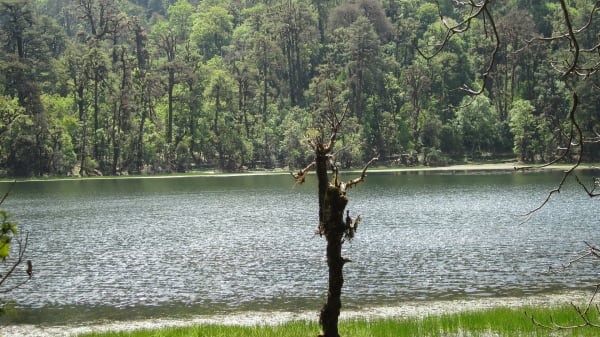
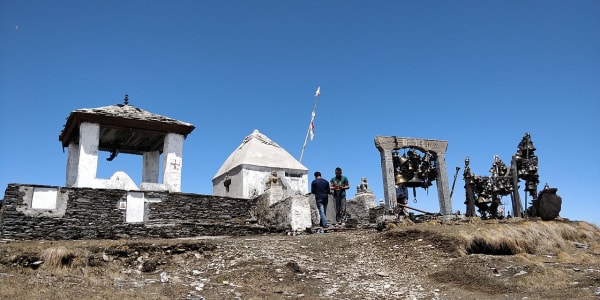
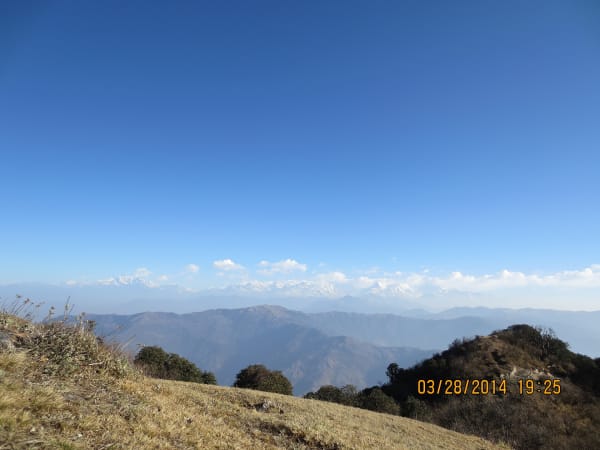
Ramaroshan is a high basin in Achham, far-western Nepal, where a scatter of small lakes and open meadows sits above the forest at around 3,000 m. Local tradition counts twelve lakes and eighteen meadows, and the place is sacred — a pilgrimage site associated with Rama and the goddess Roshan, with shrines at the water and festivals that draw people from across the far west.
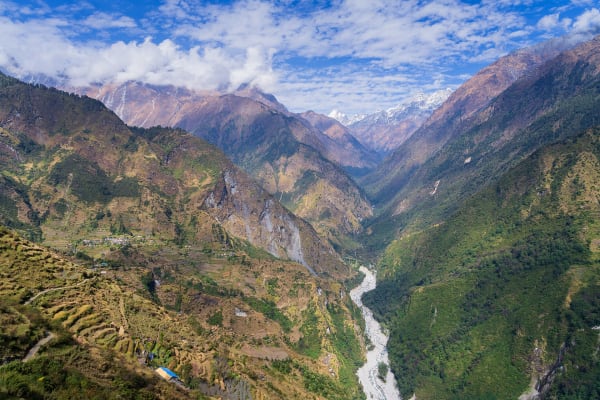
The walking is middle-hill country: terraced villages, oak and rhododendron forest, and grazing ground used through the summer. There is no trekking infrastructure whatsoever, so the group camps with a cook crew and stays in village households on the way in.
What you get in return is a landscape almost nobody photographs, a district with essentially no tourism, and a week of walking without meeting another visitor. You will be a novelty in every settlement you pass through.

The Trek at a Glance
| Duration | 11 days Kathmandu to Kathmandu, 5 of them walking |
| Highest point | Ramaroshan basin, around 3,200 m |
| Difficulty | Moderate — modest altitude, rough trails, no infrastructure |
| Best seasons | March to May, October to November |
| Accommodation | Tents and village households — there are no lodges |
| Access | Flight to Dhangadhi, then a full day by road to Mangalsen |
| Permits | Local entry fees and trekking registration — no restricted permit |
| Price | From USD 1,650 per person |
We run it as an 11-day trek. It is the gentlest introduction to far-western Nepal — considerably less committing than the Api Himal Base Camp trek or Humla.
The Route
Getting to Achham
A flight from Kathmandu to Dhangadhi on the far-western Terai, then a full day's drive north into the hills to Mangalsen (1,400 m), the district headquarters. The road is long and rough in sections; there is no shortcut and no closer airstrip in regular use.
Mangalsen to Ramaroshan (1,400 m to 3,000 m)
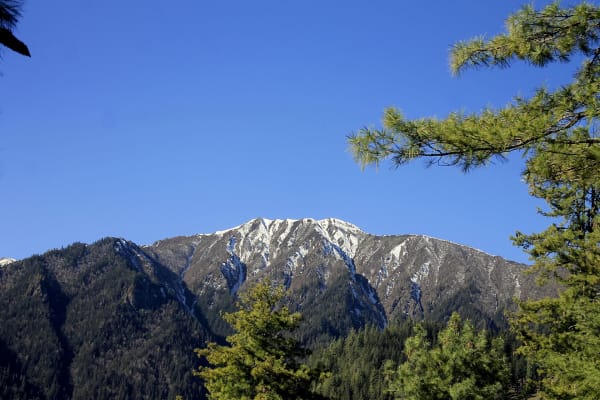
A short drive to the trailhead and then two walking days up through terraced farmland into oak and rhododendron forest, camping at Kuina Kharka (2,300 m) before the climb onto the basin. The trails are working village and herding paths — direct, steep in places, and not maintained for visitors.
The exploration day at the lakes (3,000 m)
A full day walking between the lakes and meadows. The basin is open grazing ground with small bodies of water scattered across it and shrines at several of them. It is more subtle country than the high Himalaya — the appeal is the emptiness, the light on the meadows, and the sense of a sacred landscape that has never been packaged for anyone.

Down through Dhamali to Mangalsen (2,100 m to 1,400 m)
A different line out rather than a retrace: down through Dhamali and back to Mangalsen in two days, then the drive to Dhangadhi and the flight to Kathmandu.
Difficulty and Who It Suits
Graded moderate, and genuinely so. The maximum altitude is around 3,200 m, the walking days are manageable, and the camping is fully supported. What makes it a serious trip is the absence of any infrastructure and the distance from medical care.
- Five walking days, five to seven hours each, on rough village and herding trails.
- Modest altitude — nothing high enough for altitude sickness to be a real concern.
- No lodges, shops or trekking facilities at any point. Tents, cook crew and village homestays throughout.
- Nights around -5 °C at the lake camps in spring and autumn, with no shelter beyond your tent.
- Long travel days at each end — a flight and a full day's drive in both directions.
This is a good first camping trek. The altitude is modest, the support is full, and the interest is cultural rather than alpine.
Culture and Wildlife
Achham is predominantly Chhetri and Thakuri with a strong far-western character — deuda song and circle dance, local dialects distinct from standard Nepali, and household and village shrines everywhere. It has historically been one of the most marginalised districts in the country, and that context matters to how you travel through it.
- The forest belt holds langur, barking deer, Himalayan black bear and a great deal of birdlife including monal and several pheasant species.
- Leopard are present in the forest but very rarely seen.
- Above the treeline, herders' stock is more common than wildlife.
- Festivals at the lakes draw pilgrims from across the far west — ask us about dates if you want to coincide with one.
Our responsible trekking guide is worth reading before travelling in a district with this little tourism income.
What It Costs
The price is driven by the return flight to Dhangadhi, two long road days, and a full camp crew for a route with nowhere to stay.
| Group size | Price per person |
|---|---|
| 1 trekker | USD 1,775 |
| 2 to 4 | USD 1,750 |
| 5 to 7 | USD 1,725 |
| 8 to 10 | USD 1,700 |
| 11 to 14 | USD 1,675 |
| 15 and over | USD 1,650 |
There are ATMs in Dhangadhi and, less reliably, in Mangalsen. Draw everything you need before leaving the road, in small denominations.
What Is Included
- Airport pickup and drop-off in Kathmandu.
- Kathmandu to Dhangadhi return domestic flights with airport transfers.
- Private jeep transport between Dhangadhi, Mangalsen and the trailhead.
- Hotel accommodation in Kathmandu, Dhangadhi and Mangalsen with breakfast.
- Two-person tents, mess tent, toilet tent and all group camping equipment, plus village homestay arrangements.
- A cook and kitchen crew.
- Three meals a day during the trek.
- Local entry fees and trekking registration.
- A licensed English-speaking guide, group map, first aid kit, and all government taxes and service charges.
What Is Not Included
- International flights and the Nepal entry visa fee.
- Travel insurance including emergency helicopter evacuation.
- Personal trekking equipment and clothing, including a bag rated to -10 °C.
- Porter services, available at additional cost.
- Lunch and dinner in Kathmandu, Dhangadhi and Mangalsen.
- Snacks, bottled water, hot showers, Wi-Fi, charging and drinks.
- Laundry, phone calls, souvenirs and personal expenses.
- Tips for guides, drivers and support staff.
- Extra accommodation or rescheduled flights caused by road blockages or weather delays, or anything else outside the itinerary.
The road between Dhangadhi and Mangalsen is the weak link rather than the flight — landslides close it in the shoulder seasons. Keep a spare day at the Kathmandu end.