From mid-June to mid-September, the standard advice is not to trek in Nepal. For the teahouse classics that advice is right: the Annapurna Sanctuary and the Khumbu spend the summer in cloud, the forest sections fill with leeches, hill roads slide, and domestic flights become a lottery.
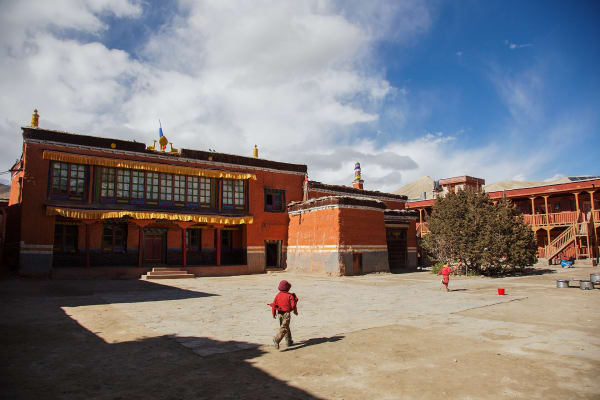
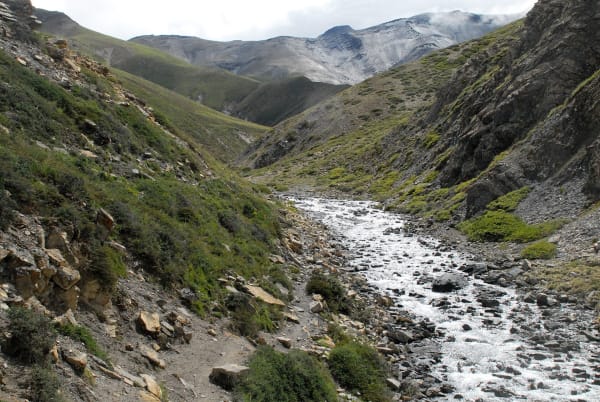
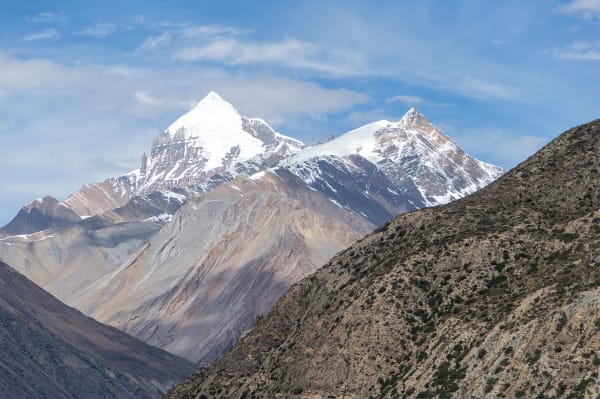
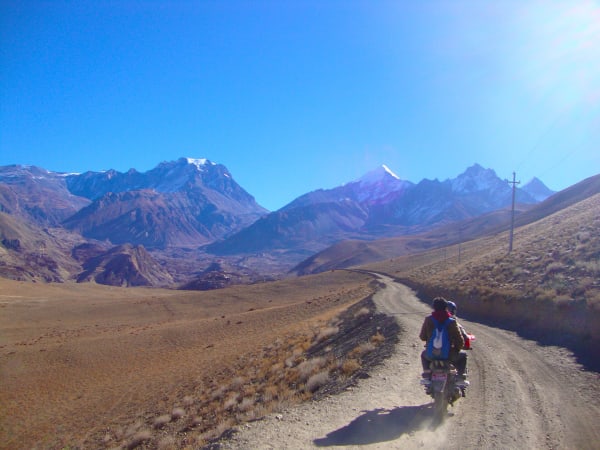
But the advice ignores geography. The main Himalayan chain is a wall 7,000 to 8,000 m high, and it stops the monsoon dead. North of it lies a high desert — Mustang, Dolpo, Nar Phu, upper Manang — where July rainfall is measured in millimetres, not metres. Those regions are at their best in exactly the months everyone avoids.
Where the Rain Shadow Actually Is
| Region | Trek | Why it works in monsoon |
|---|---|---|
| Upper Mustang | Upper Mustang Trek | Behind Annapurna and Dhaulagiri. Barley harvest, walled villages, ochre cliffs, almost no rain |
| Lower Mustang | Jomsom Muktinath | Same rain shadow, shorter and cheaper, reachable by road or flight |
| Upper Dolpo | Upper Dolpo Trek | The driest inhabited region in Nepal, and the classic summer expedition |
| Lower Dolpo | Shey Phoksundo Lake | Phoksundo is at its most turquoise in summer, and the high meadows are in flower |
| Nar Phu | Nar Phu Valley | Tucked behind the Annapurnas north of Manang, dry and almost empty |
| Upper Manang | Sections of the Annapurna Circuit | From Manang northward the rain drops off sharply, though the lower approach is wet |
| Rara and the far west | Rara Lake | Wetter than Dolpo but at its greenest, with alpine flowers around the lake |
The transition is abrupt. On the Annapurna Circuit you can walk out of grey drizzle at Manang and into blue sky and dust at Kagbeni in two days. Crossing that line is one of the more startling things you can do on foot in Nepal.
What Monsoon Actually Looks Like Up There
Expect sun, wind, and dust rather than rain. Daytime temperatures in Mustang in July sit comfortably in the low twenties, nights are cool rather than cold, and the wind picks up reliably after midday — the Kali Gandaki is one of the windiest valleys in the Himalaya from about 11 a.m.
Three things make summer the best season in these regions:
- The fields are green. Mustang and Dolpo irrigate from snowmelt, and July is when barley and buckwheat stand high against red cliffs. In October the same villages are brown.
- Flowers. The high meadows and passes carry alpine flowers — blue poppies, primulas, gentians — that are gone by autumn.
- Nobody is there. Lo Manthang in July has a handful of trekkers. In October it has a stream of them.
There is occasional rain. The monsoon does leak over the divide, usually as an afternoon shower or a grey day every week or so, and the far west gets more of it than Mustang. Carry a shell jacket and accept one wet day in seven.
The Catch: Getting There
Rain-shadow regions are dry, but the journey to them usually is not. This is the single most important planning fact about monsoon trekking in Nepal.
- Flights. Pokhara–Jomsom and Nepalgunj–Juphal both fly in the morning and both cancel in cloud. The cloud is on the southern side, not your destination.
- Roads. The highways to Pokhara, Beni, and Nepalgunj are landslide-prone in July and August, and a single slip can add a day.
- Leeches and mud on any approach that starts south of the divide — the lower Annapurna Circuit, the walk in to Dolpo from Juphal in a wet spell.
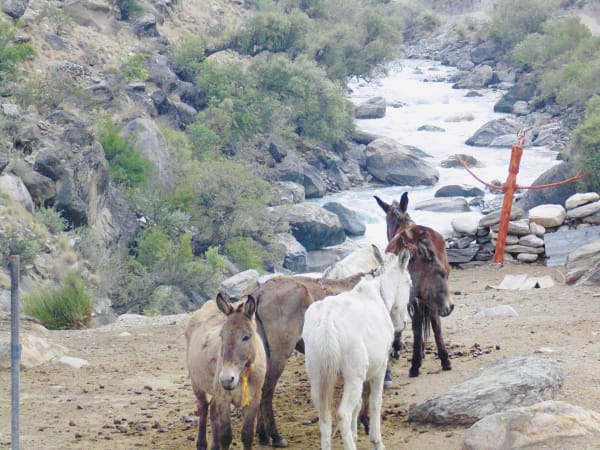
- River crossings. Side streams run high. Our guides reroute where a bridge has gone, which happens more often in summer than in autumn.
Build in two or three spare days. That is not pessimism; it is the difference between a delayed flight being an inconvenience and it being the end of the trip. See our flights guide for how delays actually play out.
Monsoon Options That Are Not Trekking
If your dates are in July and August and a restricted-area permit is beyond the budget, there are good alternatives south of the divide:
- Rafting. Rivers are at their highest and most powerful. The Marsyangdi and Bhote Koshi are serious whitewater in summer; the Trishuli stays friendly.
- Kathmandu Valley culture. The monsoon is festival season — Janai Purnima, Gai Jatra, Krishna Janmashtami, Teej, and Indra Jatra all fall between July and September.
- Gosaikunda at Janai Purnima. Thousands of pilgrims walk to the sacred lake at 4,380 m in August. It rains, and it is one of the most extraordinary things to witness in Nepal — see the Gosaikunda trek.
- Lumbini and the Terai. Hot and humid, but the birth place of the Buddha is quiet and green.
- Pokhara. Phewa Lake in the rain, with cloud tearing off the Annapurnas between downpours, is better than its reputation.
Jungle safaris are the one thing we would not recommend in high summer: Chitwan and Bardia have tall grass, high water, and poor wildlife visibility until the October cut. Save those for winter.