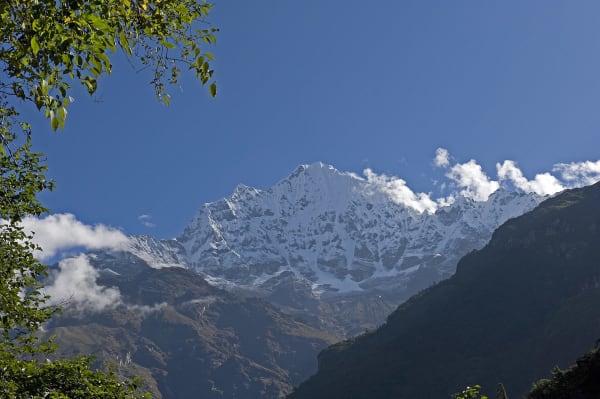
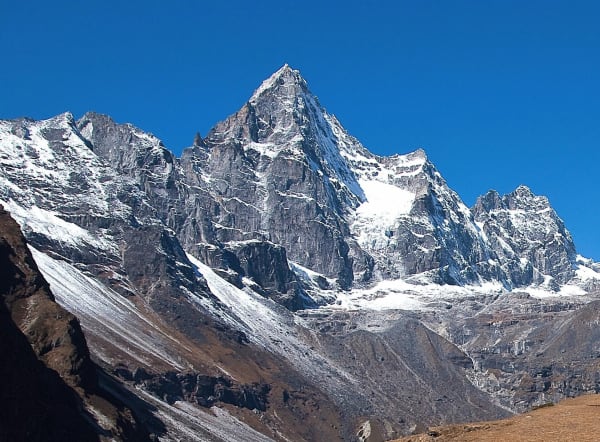
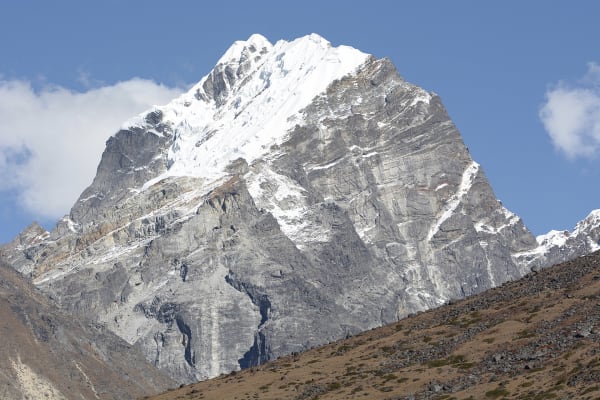
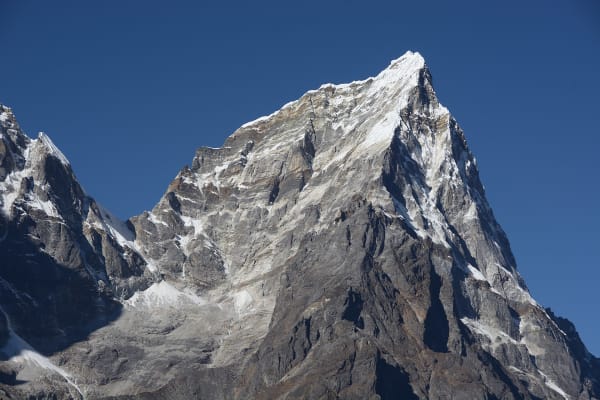
Kusum Kanguru (6,367 m) is officially a trekking peak, which is one of the more misleading pieces of classification in Nepalese mountaineering. It is widely regarded as the hardest of the NMA peaks, graded D, with a summit success rate far below any other peak in this catalogue and seasons in which nobody reaches the top at all.
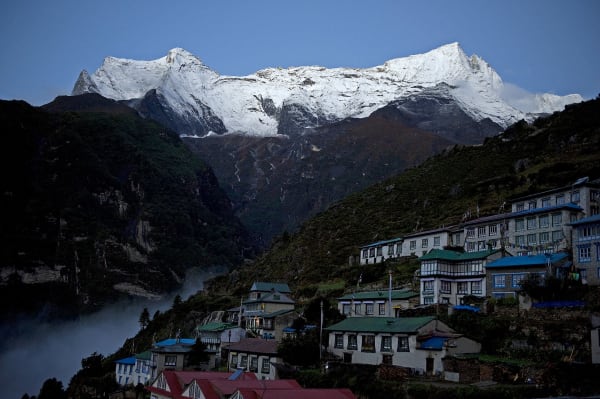
Its name means three snow-white gods in Sherpa, for the three summits on its long ridge. Every trekker walking from Lukla toward Namche sees it — the sharp triple-summited peak filling the eastern side of the Dudh Koshi — and almost none of them realise it can be climbed at all.
The route is a sustained mixed line of steep ice, rock steps and a knife-edge ridge, climbed with two camps above base and fixed rope on almost everything above 5,300 m. This is an expedition in everything but permit category, and we sell it to experienced alpinists only.

The Climb at a Glance
| Summit | 6,367 m |
| Grade | D — steep ice, rock steps and a knife-edge ridge |
| Duration | 17 days Kathmandu to Kathmandu |
| Camps | Base camp 4,500 m, Camp 1 5,300 m, high camp 5,800 m |
| Summit success rate | 20 to 40 percent, with blank seasons |
| Structure | An acclimatisation rotation to Camp 1 before the summit push |
| Who we take | Experienced alpinists only |
| Price | From USD 4,450 per person |
We run it as a 17-day expedition. The honest progression toward it runs Island Peak or Mera, then Lobuche East, then Kyajo Ri, then this.
Why a Grade D Peak Is Called a Trekking Peak
Because the NMA classification is administrative rather than technical — it reflects the permit category and the fee, not the difficulty. Kusum Kanguru sits on the trekking-peak list alongside Island Peak and Yala Peak, and it is in a completely different league from both.
The practical consequences of that mismatch matter:
- Climbers arrive underprepared because the permit category suggests a trekking-peak objective.
- Insurance written against 'trekking peaks' may not anticipate grade D mixed ground. Check the wording, not the category.
- Operators quote it cheaply alongside Island Peak, which is only possible by cutting the staffing this route needs.
The Route
Lukla to base camp (2,840 m to 4,500 m)
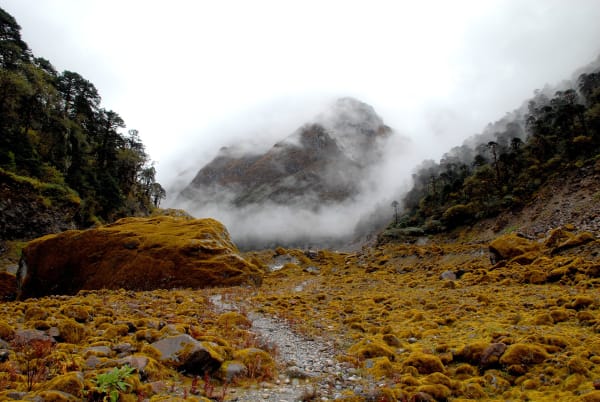
Phakding, Namche with an acclimatisation day, then east into the Kusum Khola, the side valley running off the Dudh Koshi below Monjo. Base camp at 4,500 m is a full tented camp with a cook crew, and there is nobody else in the valley.
Assessment, rotation and the summit push
An assessment and training day at base camp, then an acclimatisation rotation: up to Camp 1 at 5,300 m, a night there, and back down to base camp to rest. That is expedition practice applied to a peak the permit system calls a trekking peak, and it is the reason the itinerary is seventeen days rather than twelve.
The summit push climbs base camp to high camp at 5,800 m, then the summit day on the mixed ground. Almost everything above 5,300 m is fixed by our Sherpas in stages as the group rotates; the exception is short connecting sections climbed as a roped pair.

Hazards and Honest Numbers
Between 20 and 40 percent of our departures summit, depending on the season, and there are years in which no commercial party reaches the top. We publish that figure because the alternative is selling a trip on a false premise.
- Rockfall on the mixed sections once the sun is on the face.
- Serac danger on the lower glacier.
- Both are managed by timing — moving through the exposed ground in the cold hours — rather than avoided.
- The descent is by abseil down the fixed line and takes a large share of summit day.
If a climber cannot go above Camp 1, they descend to base camp with their Sherpa and wait. That is the guide's decision and it is not negotiable on the day; we tell every climber at booking that it can happen.
Who We Take
We decline bookings on this peak regularly, and it is better to say so in advance than at the briefing.
- Island Peak and Mera are not preparation for grade D mixed ground. They are excellent peaks and they are not this.
- The honest progression is Island or Mera, then Lobuche East, then Kyajo Ri or Kwangde, then Kusum Kanguru.
- Alpine experience at D, or comparable ground outside Nepal, counts.
- A climbing CV with routes and dates is required at booking.
Read our fixed rope and jumar guide and the gear list before enquiring.
What It Costs
| Group size | Price per person |
|---|---|
| 1 climber | USD 5,430 |
| 2 to 4 | USD 5,030 |
| 5 to 7 | USD 4,760 |
| 8 to 10 | USD 4,630 |
| 11 to 14 | USD 4,520 |
| 15 and over | USD 4,450 |
What Is Included
- Airport transfers, a climbing briefing, permit and equipment-check day in Kathmandu.
- Kathmandu–Lukla return flights.
- Hotel accommodation in Kathmandu with breakfast, and teahouses on the approach.
- Tented base camp (4,500 m), Camp 1 (5,300 m) and high camp (5,800 m), with mess, kitchen and toilet tents and a cook and kitchen crew.
- Three meals a day throughout.
- NMA climbing permit for Kusum Kanguru, Sagarmatha National Park entry and the Khumbu municipality fee.
- A government-licensed climbing guide and a high climbing-Sherpa ratio above base camp.
- Progressive rope fixing of almost everything above 5,300 m, laid in stages as the group rotates.
- An assessment and training day, an acclimatisation rotation to Camp 1, and a reserve day.
- Porter transport of group equipment, NMA garbage deposit, summit certificate and all taxes.
What Is Not Included
- International flights and the Nepal entry visa fee.
- Insurance covering technical mountaineering at grade D to 6,367 m — check the wording, not the 'trekking peak' category.
- Personal climbing equipment, including technical tools for steep mixed ground.
- Personal clothing, double boots and a bag rated to -25 °C.
- Porter services for your personal duffel.
- Lunch and dinner in Kathmandu.
- Snacks, bottled water, hot showers, Wi-Fi, charging and drinks.
- Laundry, phone calls, souvenirs and personal expenses.
- Tips and summit bonus for the guide and climbing Sherpas.
- Extra accommodation or transport caused by a cancelled Lukla flight, weather or an early descent.